


A tale of two gases: NO and H2S, foes or friends for life?
- PMID: 24024166
- PMCID: PMC3757701
- DOI: 10.1016/j.redox.2013.05.001
A tale of two gases: NO and H2S, foes or friends for life?
Abstract
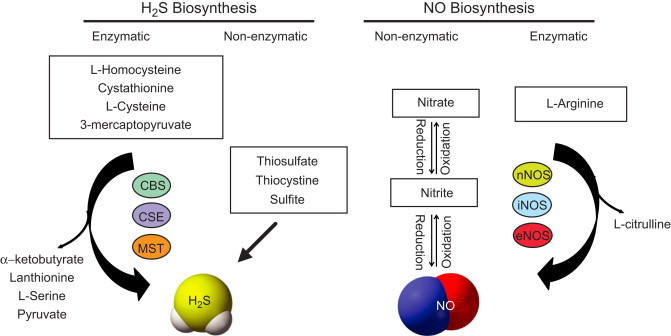
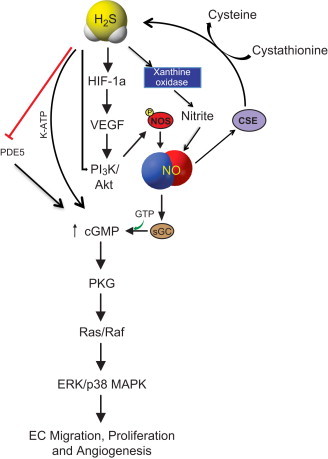
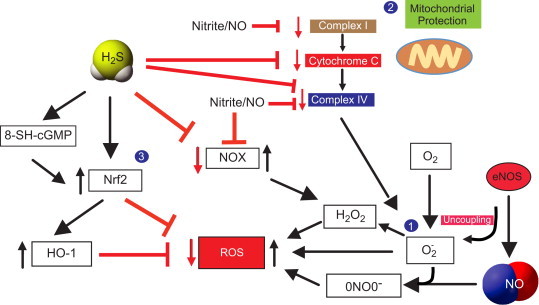
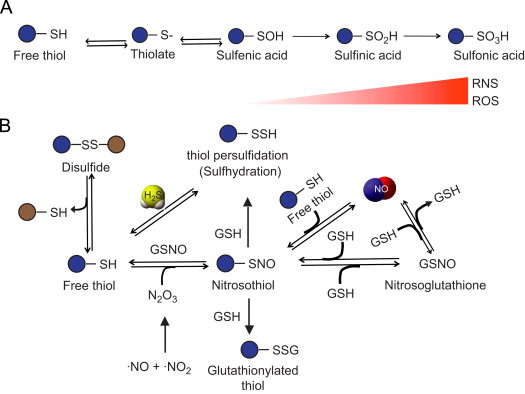
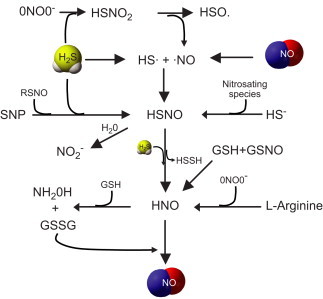
Nitric oxide (NO) and hydrogen sulfide (H2S) have emerged as dominant redox regulators of numerous aspects of cellular and physiological functions within several organ systems included cardiovascular, immune and neurological tissues. Recent studies have begun to reveal that these two gaseous molecules may have redundant or overlapping pathophysiological functions often involving similar molecular targets. However, it remains less clear when and how NO and H2S may interact under biological and disease processes. In this graphical review, we discuss the current understanding of NO and H2S interactions and how they may functionally influence each other and what this may mean for biology and mechanisms of disease.
Keywords: Cardiovascular disease; Chemistry; Redox biology; Thiol; Vascular biology.
Figures
References
-
- Marsh N., Marsh A. A short history of nitroglycerine and nitric oxide in pharmacology and physiology. Clinical and Experimental Pharmacology and Physiology. 2000;27:313–319. - PubMed
-
- Kolluru G.K., Siamwala J.H., Chatterjee S. eNOS phosphorylation in health and disease. Biochimie. 2010;92:1186–1198. - PubMed
-
- Lundberg J.O., Weitzberg E., Gladwin M.T. The nitrate–nitrite–nitric oxide pathway in physiology and therapeutics. Nature Reviews Drug Discovery. 2008;7:156–167. - PubMed
-
- Moncada S., Palmer R.M., Higgs E.A. Nitric oxide: physiology, pathophysiology, and pharmacology. Pharmacological Reviews. 1991;43:109–142. - PubMed
-
- Li L., Rose P., Moore P.K. Hydrogen sulfide and cell signaling. Annual Review of Pharmacology and Toxicology. 2011;51:169–187. - PubMed
Publication types
MeSH terms
Substances
Grants and funding
LinkOut - more resources
Full Text Sources
Other Literature Sources
