. 2013 Sep 13;62(36):741-3.

Measles - United States, January 1-August 24, 2013

Measles - United States, January 1-August 24, 2013

Centers for Disease Control and Prevention (CDC). MMWR Morb Mortal Wkly Rep. .

Erratum in

  • MMWR Morb Mortal Wkly Rep. 2013 Sep 20;62(37):774

Abstract

Measles is a highly contagious, acute viral illness that can lead to complications and death. Although measles elimination (i.e., interruption of continuous transmission lasting ≥12 months) was declared in the United States in 2000, importation of measles cases continues to occur. During 2001-2012, the median annual number of measles cases reported in the United States was 60 (range: 37-220), including 26 imported cases (range: 18-80). The median annual number of outbreaks reported to CDC was four (range: 2-16). Since elimination, the highest numbers of U.S. cases were reported in 2008 (140 cases) and 2011 (220). To update measles data, CDC evaluated cases reported by 16 states during January 1-August 24, 2013. A total of 159 cases of measles were reported during this period. Most cases were in persons who were unvaccinated (131 [82%]) or had unknown vaccination status (15 [9%]). Forty-two importations were reported, and 21(50%) were importations from the World Health Organization (WHO) European Region. Eight outbreaks accounted for 77% of the cases reported in 2013, including the largest outbreak reported in the United States since 1996 (58 cases). These outbreaks demonstrate that unvaccinated persons place themselves and their communities at risk for measles and that high vaccination coverage is important to prevent the spread of measles after importation.


Figures
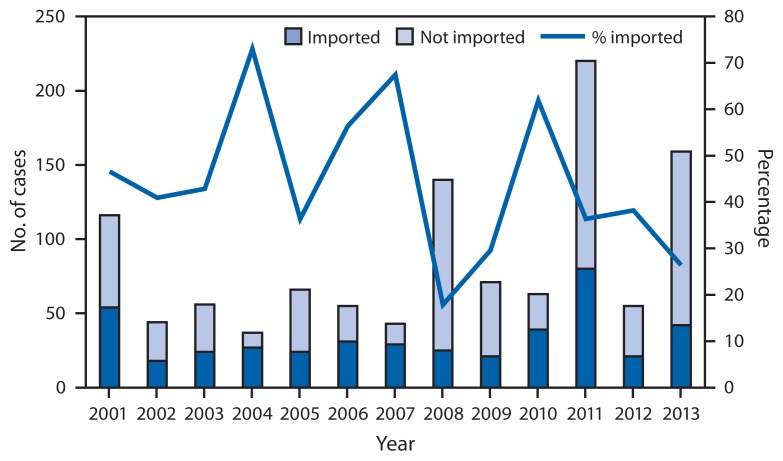
FIGURE 1
FIGURE 1
Number and percentage of measles cases that were directly imported and number of cases that were not directly imported* — United States, 2001–2013 * Directly imported cases are those in patients who acquired measles outside the United States and brought their infection into the United States. Cases not directly imported include those that were acquired in the United States but linked to directly imported cases, imported virus, and cases with unknown sources. As of Aug 24, 2013.
FIGURE 2
FIGURE 2
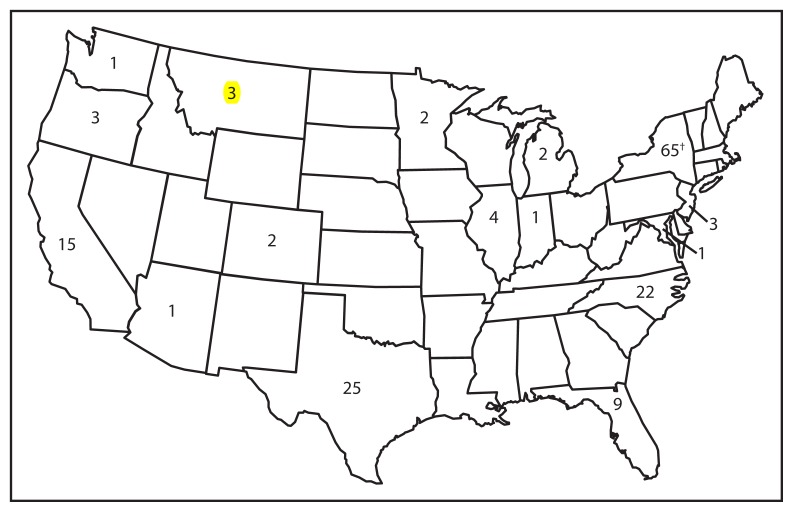
Number of measles cases (N = 159), by state — United States, 2013* * As of August 24, 2013. Includes New York City.
FIGURE 3
FIGURE 3
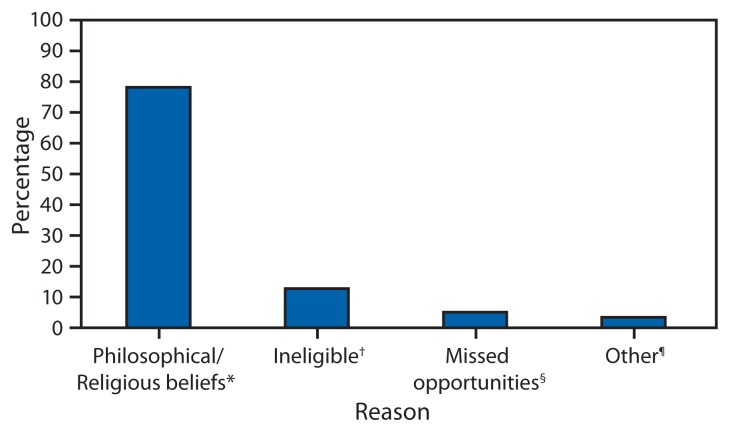
U.S residents with measles who were unvaccinated (n = 117), by reasons for not receiving measles vaccine — United States, January 1–July 13, 2013 * Includes persons who were unvaccinated because of their own or their parents’ beliefs. Includes persons ineligible for measles vaccination, generally those aged <12 months. § Includes children aged 16 months–4 years who had not been vaccinated and international travelers aged ≥6 months who were unvaccinated but had no exemption. Includes persons who were known to be unvaccinated and the reason was unknown.

References

    1. Katz SL, Hinman AR. Summary and conclusions: measles elimination meeting, 16–17 March 2000. J Infect Dis. 2004;189(Suppl 1):S43–7. - PubMed
    1. CDC. Summary of notifiable diseases—United States, 2008. MMWR. 2010;57(54)
    1. CDC. Summary of notifiable diseases—United States, 2011. MMWR. 2013;60(53) - PubMed
    1. CDC. Notes from the field: measles outbreak among members of a religious community—Brooklyn, New York, March–June 2013. MMWR. 2013;62:752–3. - PMC - PubMed
    1. CDC. Notes from the field: measles outbreak associated with a traveler returning from India—North Carolina. MMWR. 2013;62:753. - PMC - PubMed

Substances