


Early postweaning exercise improves central leptin sensitivity in offspring of rat dams fed high-fat diet during pregnancy and lactation
- PMID: 24026073
- PMCID: PMC3840316
- DOI: 10.1152/ajpregu.00566.2012
Early postweaning exercise improves central leptin sensitivity in offspring of rat dams fed high-fat diet during pregnancy and lactation
Abstract
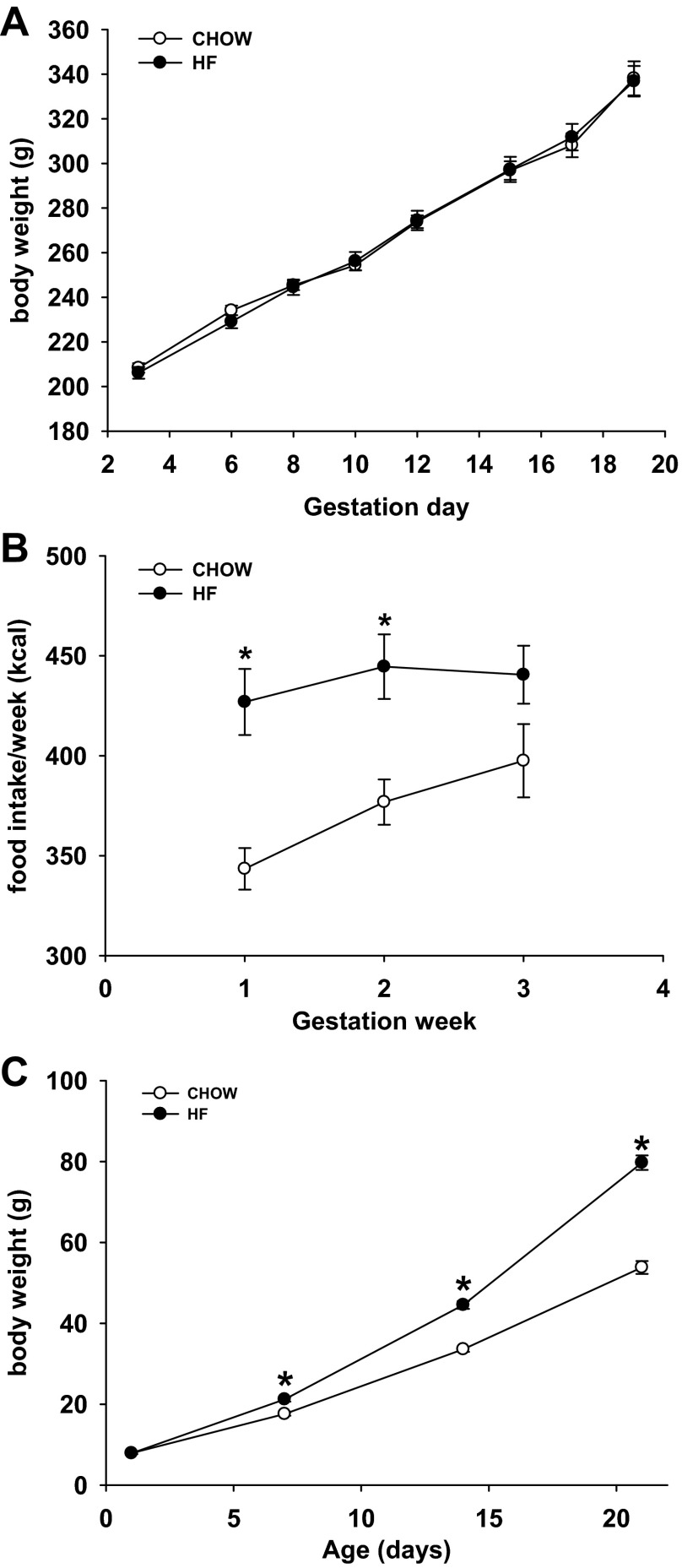
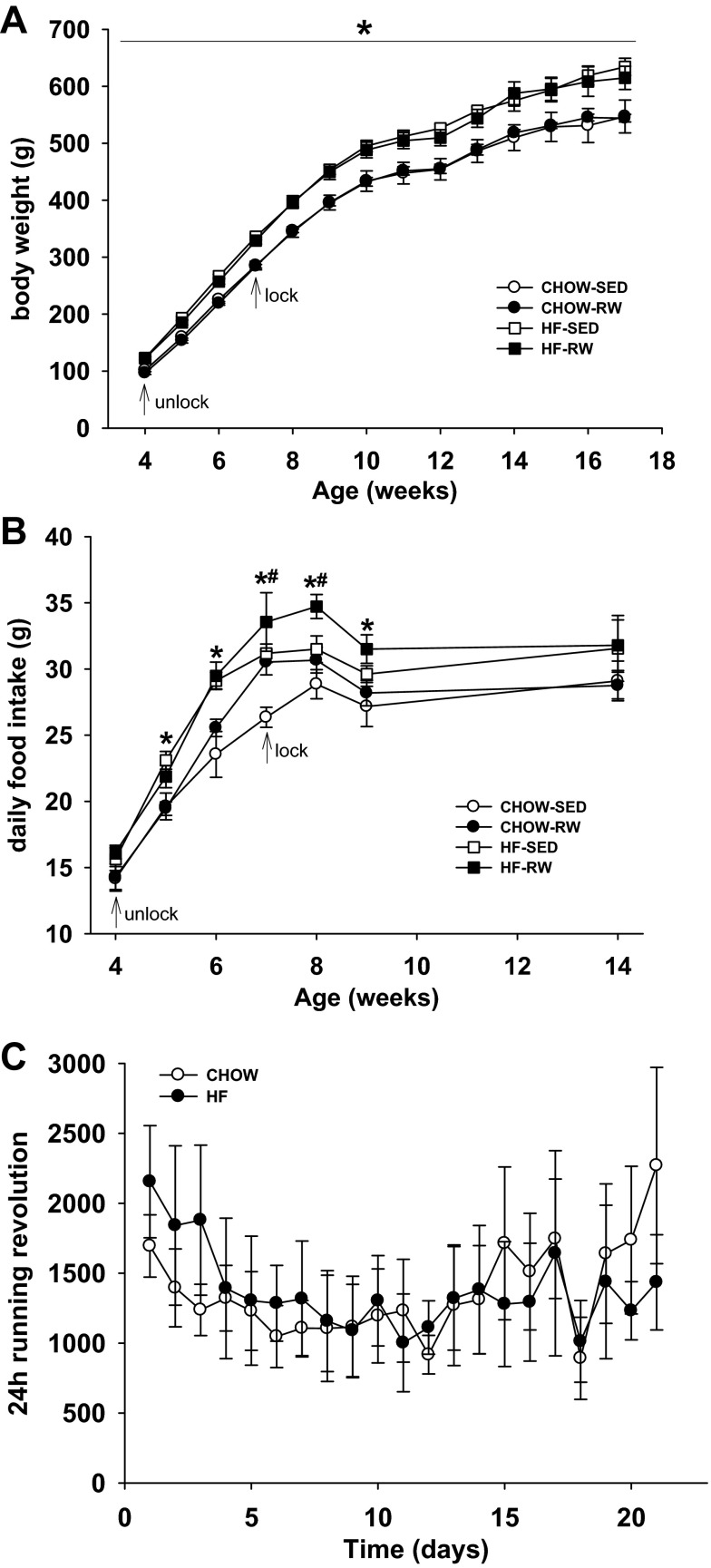
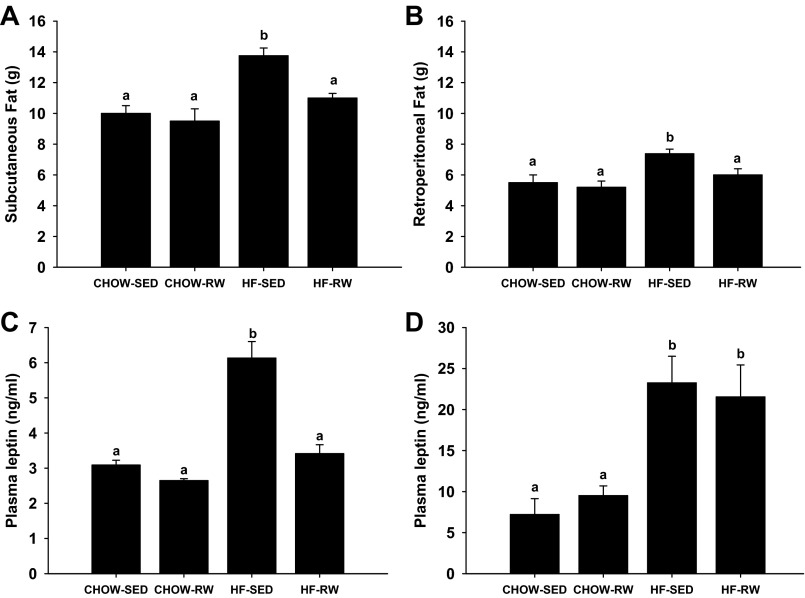
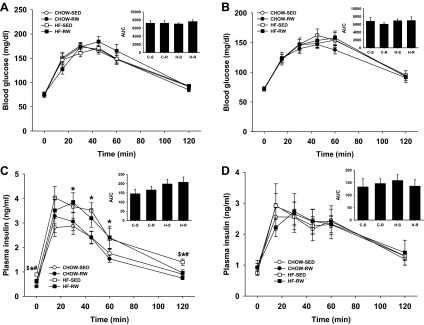
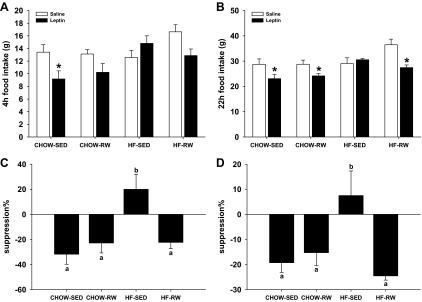
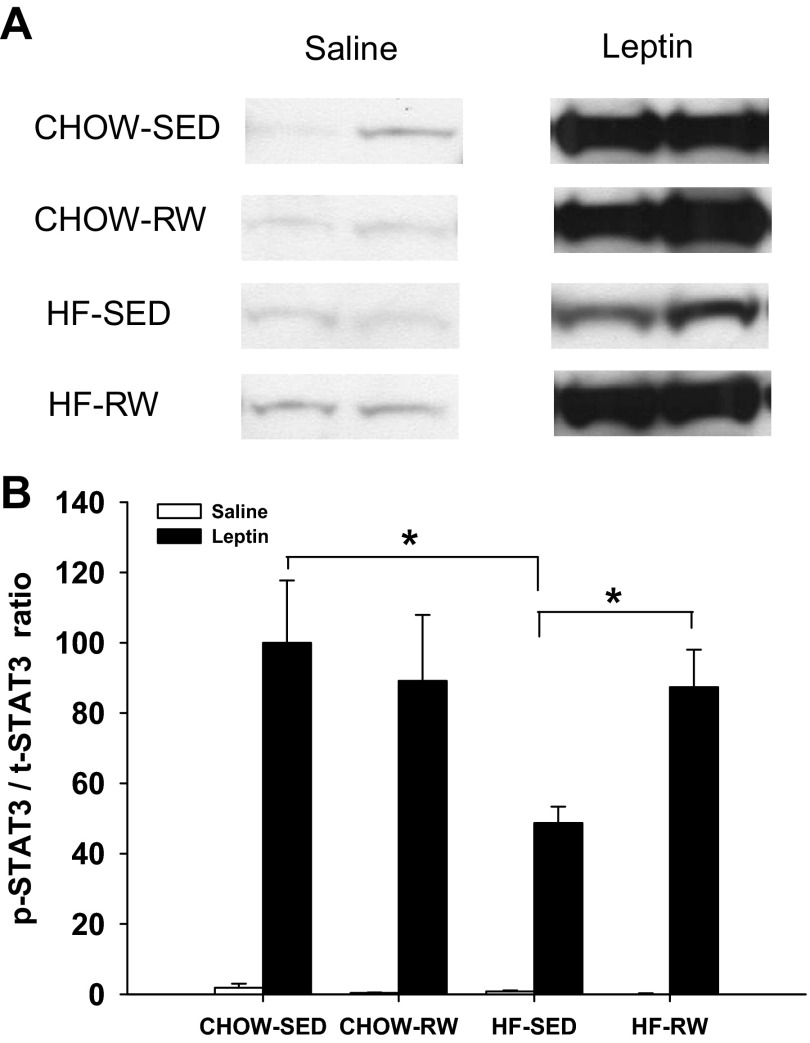
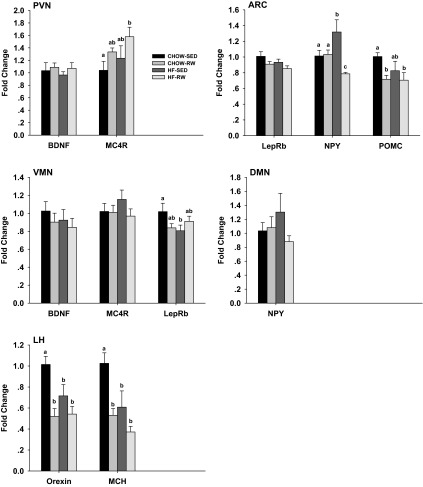
Maternal high-fat (HF) diet has long-term consequences on the metabolic phenotype of the offspring. Here, we determined the effects of postweaning exercise in offspring of rat dams fed HF diet during gestation and lactation. Pregnant Sprague-Dawley rats were maintained on chow or HF diet throughout gestation and lactation. All pups were weaned onto chow diet on postnatal day (PND) 21. At 4 wk of age, male pups were given free access to running wheels (RW) or remained sedentary (SED) for 3 wk, after which all rats remained sedentary, resulting in four groups: CHOW-SED, CHOW-RW, HF-SED, and HF-RW. Male HF offspring gained more body weight by PND7 compared with CHOW pups and maintained this weight difference through the entire experiment. Three weeks of postweaning exercise did not affect body weight gain in either CHOW or HF offspring, but reduced adiposity in HF offspring. Plasma leptin was decreased at the end of the 3-wk running period in HF-RW rats but was not different from HF-SED 9 wk after the exercise period ended. At 14 wk of age, intracerebroventricular injection of leptin suppressed food intake in CHOW-SED, CHOW-RW, and HF-RW, while it did not affect food intake in HF-SED group. At death, HF-RW rats also had higher leptin-induced phospho-STAT3 level in the arcuate nucleus than HF-SED rats. Both maternal HF diet and postweaning exercise had effects on hypothalamic neuropeptide and receptor mRNA expression in adult offspring. Our data suggest that postweaning exercise improves central leptin sensitivity and signaling in this model.
Keywords: development; exercise; leptin; maternal diet; obesity.
Figures
References
-
- Ainge H, Thompson C, Ozanne SE, Rooney KB. A systematic review on animal models of maternal high fat feeding and offspring glycaemic control. Int J Obes (Lond) 35: 325–335, 2011 - PubMed
-
- Banks WA. Is obesity a disease of the blood-brain barrier? Physiological, pathological, and evolutionary considerations. Curr Pharm Des 9: 801–809, 2003 - PubMed
-
- Banks WA, Coon AB, Robinson SM, Moinuddin A, Shultz JM, Nakaoke R, Morley JE. Triglycerides induce leptin resistance at the blood-brain barrier. Diabetes 53: 1253–1260, 2004 - PubMed
-
- Banks WA, DiPalma CR, Farrell CL. Impaired transport of leptin across the blood-brain barrier in obesity. Peptides 20: 1341–1345, 1999 - PubMed
-
- Banks WA, Farrell CL. Impaired transport of leptin across the blood-brain barrier in obesity is acquired and reversible. Am J Physiol Endocrinol Metab 285: E10–E15, 2003 - PubMed
Publication types
MeSH terms
Substances
Grants and funding
LinkOut - more resources
Full Text Sources
Other Literature Sources
Medical
Research Materials
Miscellaneous
