


Hepatic insulin clearance is closely related to metabolic syndrome components
- PMID: 24026549
- PMCID: PMC3816867
- DOI: 10.2337/dc12-1203
Hepatic insulin clearance is closely related to metabolic syndrome components
Abstract
Objective: Insulin clearance is decreased in type 2 diabetes mellitus (T2DM) for unknown reasons. Subjects with metabolic syndrome are hyperinsulinemic and have an increased risk of T2DM. We aimed to investigate the relationship between hepatic insulin clearance (HIC) and different components of metabolic syndrome and tested the hypothesis that HIC may predict the risk of metabolic syndrome.
Research design and methods: Individuals without diabetes from the Metabolic Syndrome Berlin Brandenburg (MeSyBePo) study (800 subjects with the baseline examination and 189 subjects from the MeSyBePo recall study) underwent an oral glucose tolerance test (OGTT) with assessment of insulin secretion (insulin secretion rate [ISR]) and insulin sensitivity. Two indices of HIC were calculated.
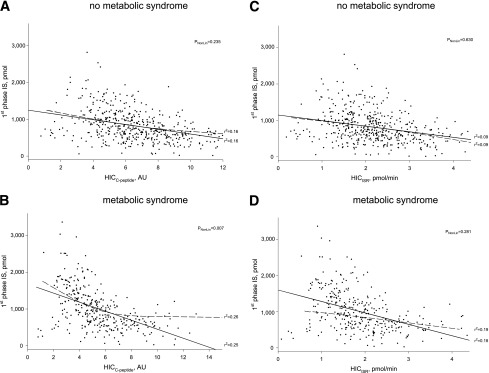
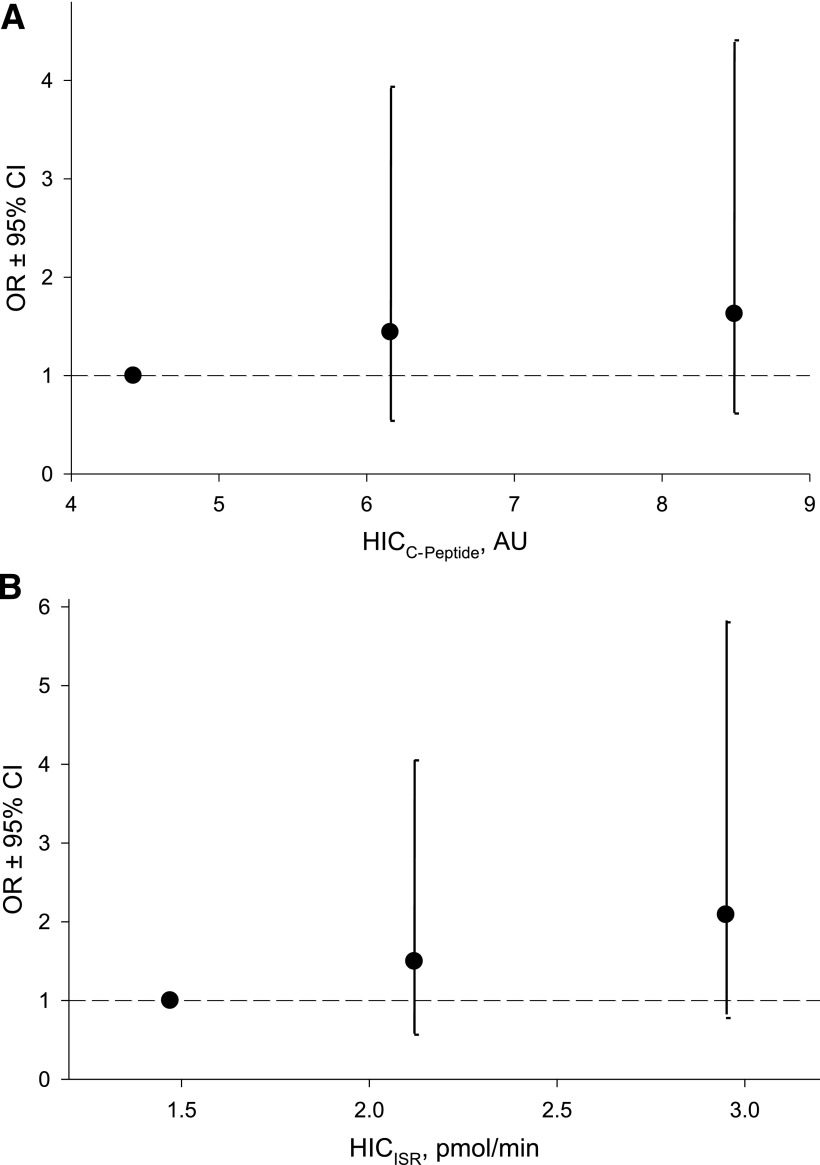
Results: Both HIC indices showed lower values in subjects with metabolic syndrome (P < 0.001) at baseline. HIC indices correlate inversely with waist circumference, diastolic blood pressure, fasting glucose, triglycerides, and OGTT-derived insulin secretion index. During a mean follow-up of 5.1 ± 0.9 years, 47 individuals developed metabolic syndrome and 33 subjects progressed to impaired glucose metabolism. Both indices of HIC showed a trend of an association with increased risk of metabolic syndrome (HICC-peptide odds ratio 1.13 [95% CI 0.97-1.31], P = 0.12, and HICISR 1.38 [0.88-2.17], P = 0.16) and impaired glucose metabolism (HICC-peptide 1.12 [0.92-1.36], P = 0.26, and HICISR 1.31 [0.74-2.33] P = 0.36), although point estimates reached no statistical significance.
Conclusions: HIC was associated with different components of metabolic syndrome and markers of insulin secretion and insulin sensitivity. Decreased HIC may represent a novel pathophysiological mechanism of the metabolic syndrome, which may be used additionally for early identification of high-risk subjects.
Figures
References
-
- Reaven GM. Banting lecture 1988. Role of insulin resistance in human disease. Diabetes 1988;37:1595–1607 - PubMed
-
- Haffner SM, Valdez RA, Hazuda HP, Mitchell BD, Morales PA, Stern MP. Prospective analysis of the insulin-resistance syndrome (syndrome X). Diabetes 1992;41:715–722 - PubMed
-
- Meigs JB. Invited commentary: insulin resistance syndrome? Syndrome X? Multiple metabolic syndrome? A syndrome at all? Factor analysis reveals patterns in the fabric of correlated metabolic risk factors. Am J Epidemiol 2000;152:908–911 - PubMed
-
- Mittelman SD, Van Citters GW, Kim SP, et al. Longitudinal compensation for fat-induced insulin resistance includes reduced insulin clearance and enhanced beta-cell response. Diabetes 2000;49:2116–2125 - PubMed
Publication types
MeSH terms
Substances
LinkOut - more resources
Full Text Sources
Other Literature Sources
Medical
