


Type 3 deiodinase and consumptive hypothyroidism: a common mechanism for a rare disease
- PMID: 24027558
- PMCID: PMC3761349
- DOI: 10.3389/fendo.2013.00115
Type 3 deiodinase and consumptive hypothyroidism: a common mechanism for a rare disease
Abstract
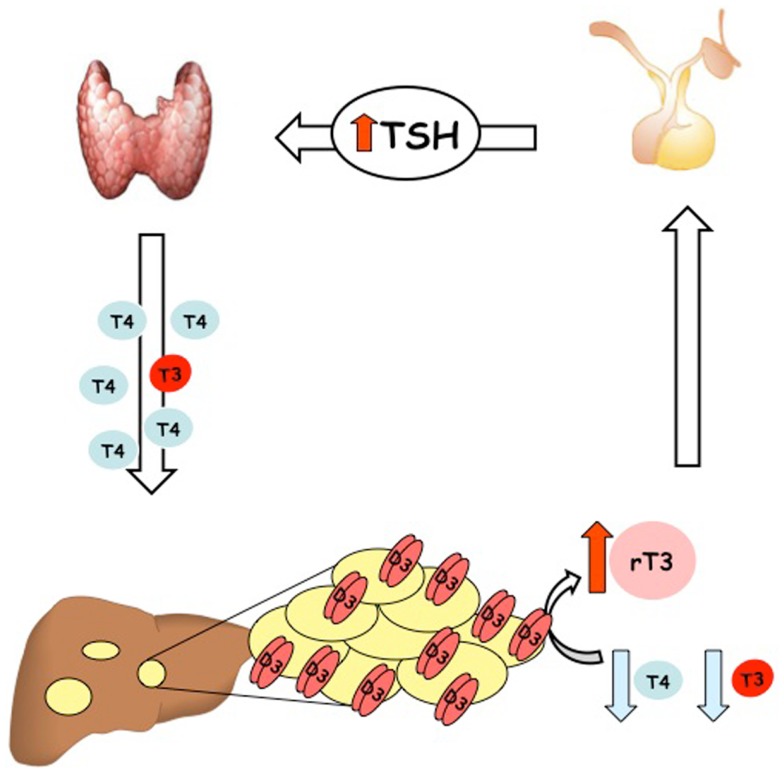
The major product secreted by the thyroid is thyroxine (T4), whereas most of the biologically active triiodothyronine (T3) derives from the peripheral conversion of T4 into T3. The deiodinase enzymes are involved in activation and inactivation of thyroid hormones (THs). Type 1 and type 2 deiodinase (D1 and D2) convert T4 into T3 whereas D3 degrades T4 and T3 into inactive metabolites and is thus the major physiological TH inactivator. The hypothalamic-pituitary-thyroid axis maintains circulating TH levels constant, while the deiodinases tissue-specifically regulate intracellular thyroid status by controlling TH action in a precise spatio-temporal fashion. Here we review the data related to the recent identification of a paraneoplastic syndrome called "consumptive hypothyroidism," which exemplifies how deiodinases alter substantially the concentration of TH in blood. This syndrome results from the aberrant uncontrolled expression of D3 that can induce a severe form of hypothyroidism by inactivating T4 and T3 in defined tumor tissue. This rare TH insufficiency generally affects patients in the first years of life, and has distinct features in terms of diagnosis, treatment, and prognosis with respect to other forms of hypothyroidism.
Keywords: deiodinase; hypothyroidism; thyroid gland; thyroid hormones; thyroid neoplasms.
Figures
References
Publication types
LinkOut - more resources
Full Text Sources
Other Literature Sources
