


Antioxidant Activity of Three Honey Samples in relation with Their Biochemical Components
- PMID: 24027653
- PMCID: PMC3763360
- DOI: 10.1155/2013/313798
Antioxidant Activity of Three Honey Samples in relation with Their Biochemical Components
Abstract
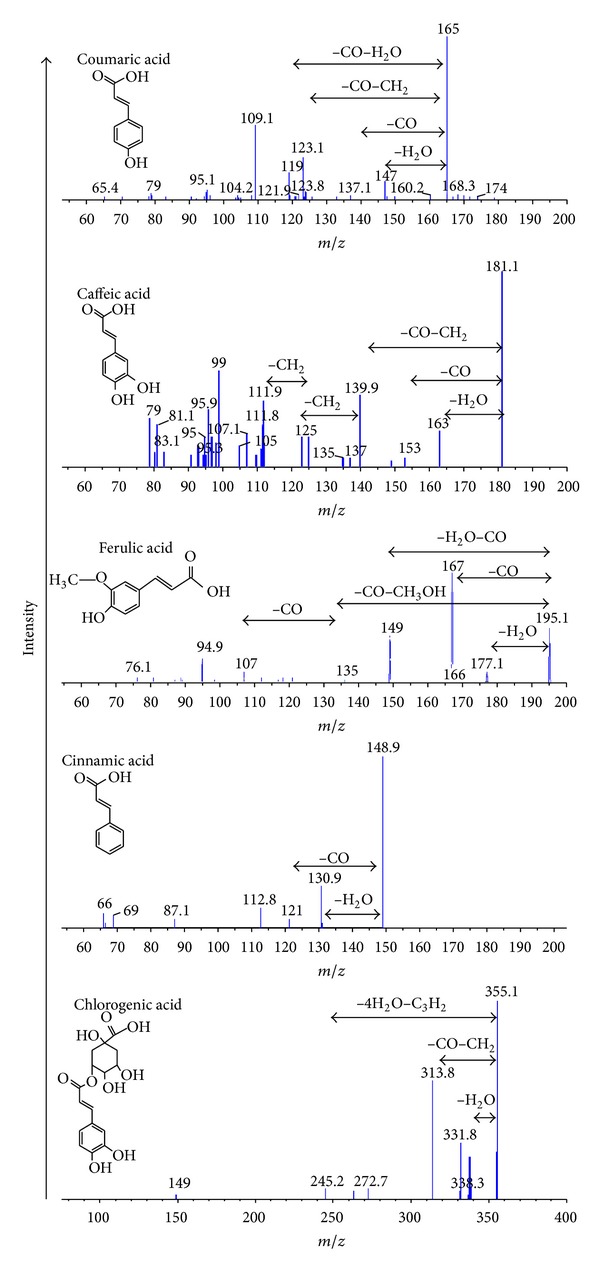
The antioxidant activities based on the free radical scavenging, reducing power, and bleaching inhibition were investigated for the three commonly used honeys in Malaysia, namely, tualang, gelam, and acacia honey. The antioxidant capacity of the honey samples was correlated with their biochemical constituents such as total phenol, total flavonoid content, and total water-soluble vitamins (vitamin B1, B2, B3, B9, B12, and vitamin C). The total flavonoid content of honey samples was strongly correlated with the three antioxidative processes (r = 0.9276-0.9910). In contrast, the total water-soluble vitamins was found to be well correlated with the free radical scavenging activity (r = 0.8226). Vitamin B3 was likely to be in the highest concentration, which covered for 69-80% of the total vitamin content. A number of five phenolic acids, three flavonoids, and two organic acids had also been detected from the honey samples using UPLC-MS/MS, without sugar-removal procedure.
Figures
References
-
- Erlund I. Review of the flavonoids quercetin, hesperetin, and naringenin. Dietary sources, bioactivities, bioavailability, and epidemiology. Nutrition Research. 2004;24(10):851–874.
-
- Meda A, Lamien CE, Romito M, Millogo J, Nacoulma OG. Determination of the total phenolic, flavonoid and proline contents in Burkina Fasan honey, as well as their radical scavenging activity. Food Chemistry. 2005;91(3):571–577.
-
- Gheldof N, Wang X, Engeseth NJ. Identification and quantification of antioxidant components of honeys from various floral sources. Journal of Agricultural and Food Chemistry. 2002;50(21):5870–5877. - PubMed
-
- Ferreira ICFR, Aires E, Barreira JCM, Estevinho LM. Antioxidant activity of Portuguese honey samples: different contributions of the entire honey and phenolic extract. Food Chemistry. 2009;114(4):1438–1443.
LinkOut - more resources
Full Text Sources
Other Literature Sources
