Environmental conditions in low-income urban housing: clustering and associations with self-reported health
- PMID: 24028244
- PMCID: PMC3954449
- DOI: 10.2105/AJPH.2013.301253
Environmental conditions in low-income urban housing: clustering and associations with self-reported health
Abstract
Objectives: We explored prevalence and clustering of key environmental conditions in low-income housing and associations with self-reported health.
Methods: The Health in Common Study, conducted between 2005 and 2009, recruited participants (n = 828) from 20 low-income housing developments in the Boston area. We interviewed 1 participant per household and conducted a brief inspection of the unit (apartment). We created binary indexes and a summed index for household exposures: mold, combustion by-products, secondhand smoke, chemicals, pests, and inadequate ventilation. We used multivariable logistic regression to examine the associations between each index and household characteristics and between each index and self-reported health.
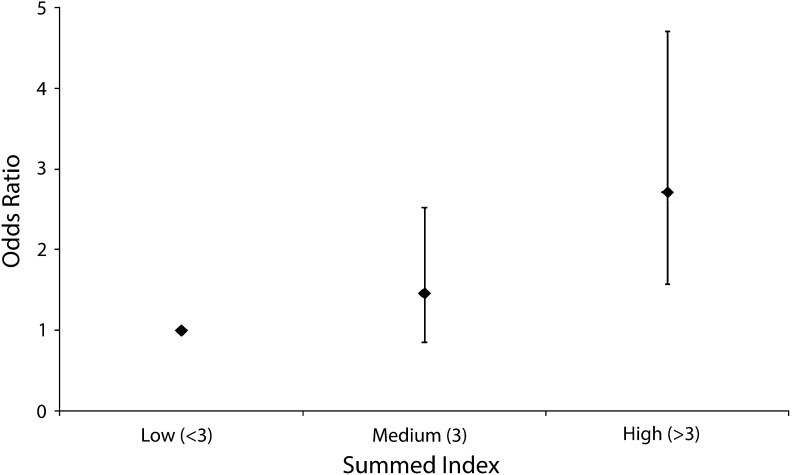
Results: Environmental problems were common; more than half of homes had 3 or more exposure-related problems (median summed index = 3). After adjustment for household-level demographics, we found clustering of problems in site (P < .01) for pests, combustion byproducts, mold, and ventilation. Higher summed index values were associated with higher adjusted odds of reporting fair-poor health (odds ratio = 2.7 for highest category; P < .008 for trend).
Conclusions: We found evidence that indoor environmental conditions in multifamily housing cluster by site and that cumulative exposures may be associated with poor health.
Figures
References
-
- Weich S, Blanchard M, Prince M, Burton E, Erens B, Sproston K. Mental health and the built environment: cross-sectional survey of individual and contextual risk factors for depression. Br J Psychiatry. 2002;180:428–433. - PubMed
-
- Rauh VA, Landrigan PJ, Claudio L. Housing and health: intersection of poverty and environmental exposures. Ann N Y Acad Sci. 2008;1136:276–288. - PubMed
-
- Evans GW, Kantrowitz E. Socioeconomic status and health: the potential role of environmental risk exposure. Annu Rev Public Health. 2002;23:303–331. - PubMed
Publication types
MeSH terms
Substances
Grants and funding
LinkOut - more resources
Full Text Sources
Other Literature Sources