


Understanding cognitive deficits in Alzheimer's disease based on neuroimaging findings
- PMID: 24029445
- PMCID: PMC3947610
- DOI: 10.1016/j.tics.2013.08.007
Understanding cognitive deficits in Alzheimer's disease based on neuroimaging findings
Abstract
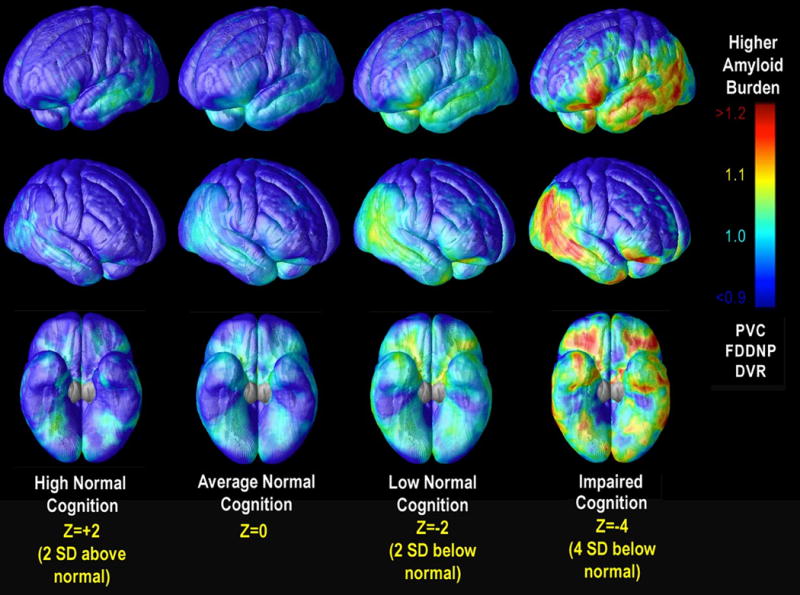
Brain amyloid can be measured using positron emission tomography (PET). There are mixed reports regarding whether amyloid measures are correlated with measures of cognition (in particular memory), depending on the cohorts and cognitive domains assessed. In Alzheimer's disease (AD) patients and those at heightened risk for AD, cognitive performance may be related to the level and extent of classical AD pathology (amyloid plaques and neurofibrillary angles), but it is also influenced by neurodegeneration, neurocognitive reserve, and vascular health. We discuss what recent neuroimaging research has discovered about cognitive deficits in AD and offer suggestions for future research.
Keywords: MRI; PET; dementia; executive function; memory; mild cognitive impairment.
Copyright © 2013 Elsevier Ltd. All rights reserved.
Conflict of interest statement
Figures
References
-
- Petersen RC. Mild cognitive impairment: transition between aging and Alzheimer's disease. Neurologia. 2000;15:93–101. - PubMed
-
- Ouchi Y, Kikuchi M. A review of the default mode network in aging and dementia based on molecular imaging. Rev Neurosci. 2012;23:263–268. - PubMed
-
- Thompson PM, Vinters HV. Pathologic Lesions in Neurodegenerative Diseases. In: Teplow D, editor. The Molecular Biology of Neurodegenerative Diseases. Elsevier; 2012. pp. 1–40. - PubMed
Publication types
MeSH terms
Substances
Grants and funding
LinkOut - more resources
Full Text Sources
Other Literature Sources
Medical
