


Effect of weight and maturation on busulfan clearance in infants and small children undergoing hematopoietic cell transplantation
- PMID: 24029650
- PMCID: PMC3848313
- DOI: 10.1016/j.bbmt.2013.08.014
Effect of weight and maturation on busulfan clearance in infants and small children undergoing hematopoietic cell transplantation
Abstract
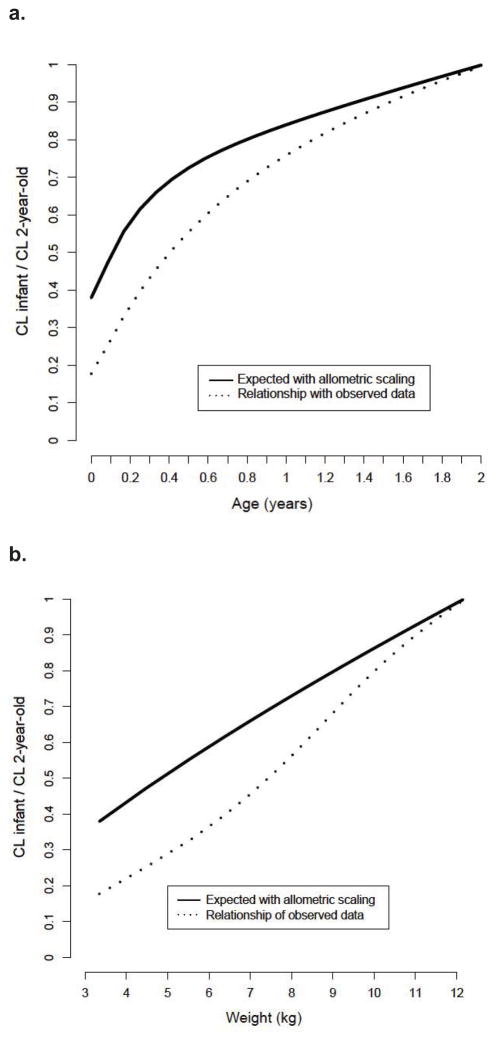
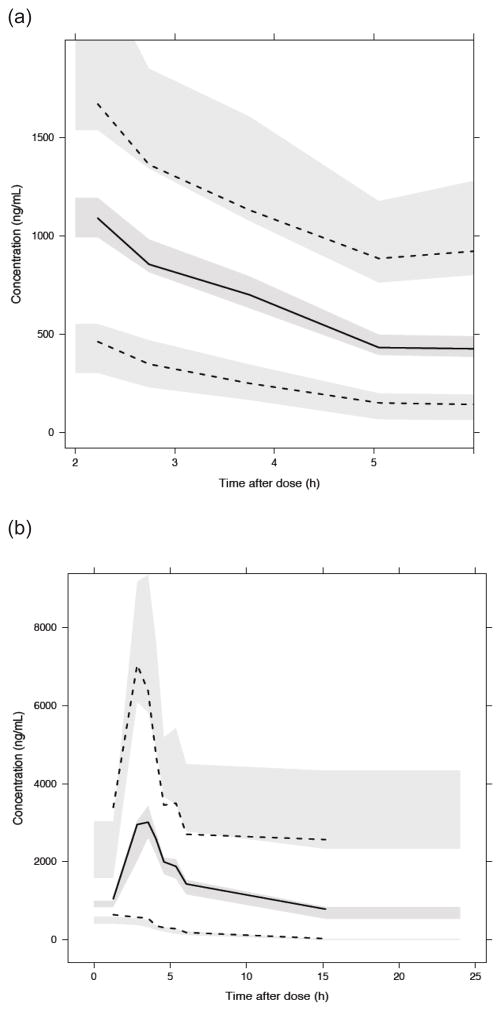
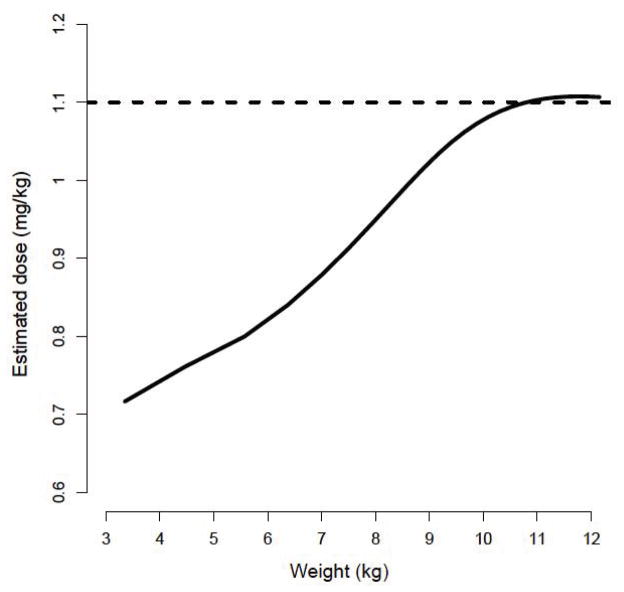
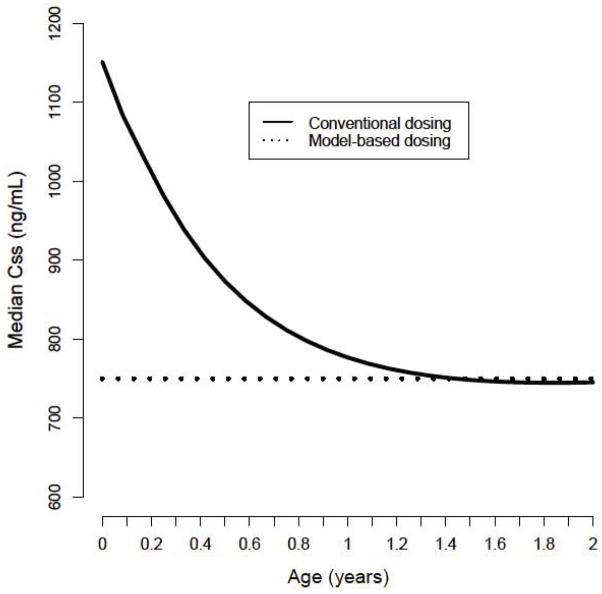
Little information is currently available regarding the pharmacokinetics (PK) of busulfan in infants and small children to help guide decisions for safe and efficacious drug therapy. The objective of this study was to develop an algorithm for individualized dosing of i.v. busulfan in infants and children weighing ≤12 kg, that would achieve targeted exposure with the first dose of busulfan. Population PK modeling was conducted using intensive time-concentration data collected through the routine therapeutic drug monitoring of busulfan in 149 patients from 8 centers. Busulfan PK was well described by a 1-compartment base model with linear elimination. The important clinical covariates affecting busulfan PK were actual body weight and age. Based on our model, the predicted clearance of busulfan increases approximately 1.7-fold between 6 weeks to 2 years of life. For infants age <5 months, the model-predicted doses (mg/kg) required to achieve a therapeutic concentration at steady state of 600-900 ng/mL (area under the curve range, 900-1350 μM·min) were much lower compared with standard busulfan doses of 1.1 mg/kg. These results could help guide clinicians and inform better dosing decisions for busulfan in young infants and small children undergoing hematopoietic cell transplantation.
Keywords: Busulfan; Hematopoietic cell transplantation; Pediatrics; Pharmacokinetics.
Copyright © 2013 American Society for Blood and Marrow Transplantation. Published by Elsevier Inc. All rights reserved.
Conflict of interest statement
Peter J Shaw (Expert for Orphan Australia Pty, to assist in registration of IV Busulfex in Australia, June 2006; member of Busulfex Global Steering Committee, Otsuka Pharmaceutical Development and Commercialization, Inc, 2009, 2010)
Figures
References
-
- Kearns GL, Abdel-Rahman SM, Alander SW, Blowey DL, Leeder JS, Kauffman RE. Developmental pharmacology--drug disposition, action, and therapy in infants and children. N Engl J Med. 2003;349(12):1157–67. Epub 2003/09/19. - PubMed
-
- van den Anker JN, Schwab M, Kearns GL. Developmental pharmacokinetics. Handbook of experimental pharmacology. 2011;205:51–75. Epub 2011/09/02. - PubMed
-
- Bartelink IH, Rademaker CM, Schobben AF, van den Anker JN. Guidelines on paediatric dosing on the basis of developmental physiology and pharmacokinetic considerations. Clin Pharmacokinet. 2006;45(11):1077–97. Epub 2006/10/20. - PubMed
-
- Hines RN. The ontogeny of drug metabolism enzymes and implications for adverse drug events. Pharmacol Ther. 2008;118(2):250–67. Epub 2008/04/15. - PubMed
-
- Barrett JS, Della Casa Alberighi O, Laer S, Meibohm B. Physiologically based pharmacokinetic (PBPK) modeling in children. Clinical pharmacology and therapeutics. 2012;92(1):40–9. Epub 2012/06/07. - PubMed
Publication types
MeSH terms
Substances
Grants and funding
LinkOut - more resources
Full Text Sources
Other Literature Sources
