Triceps skinfold as a prognostic predictor in outpatient heart failure
- PMID: 24029960
- PMCID: PMC4081167
- DOI: 10.5935/abc.20130185
Triceps skinfold as a prognostic predictor in outpatient heart failure
Abstract
Background: Most reports regarding the obesity paradox have focused on body mass index (BMI) to classify obesity and the prognostic values of other indirect measurements of body composition remain poorly examined in heart failure (HF).
Objective: To evaluate the association between BMI and other indirect, but easily accessible, body composition measurements associated with the risk of all-cause mortality in HF.
Methods: Anthropometric parameters of body composition were assessed in 344 outpatients with a left ventricular ejection fraction (LVEF) of <50% from a prospective HF cohort that was followed-up for 30 ± 8.2 months. Survival was evaluated using the Kaplan-Meier method and Cox proportional hazard regression analysis.
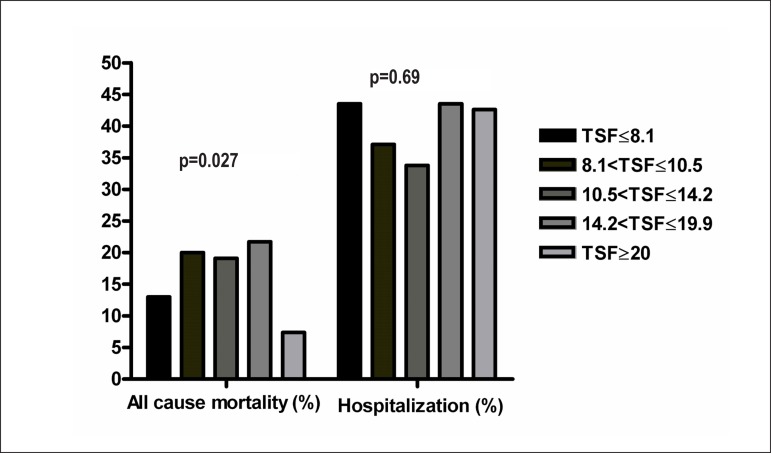
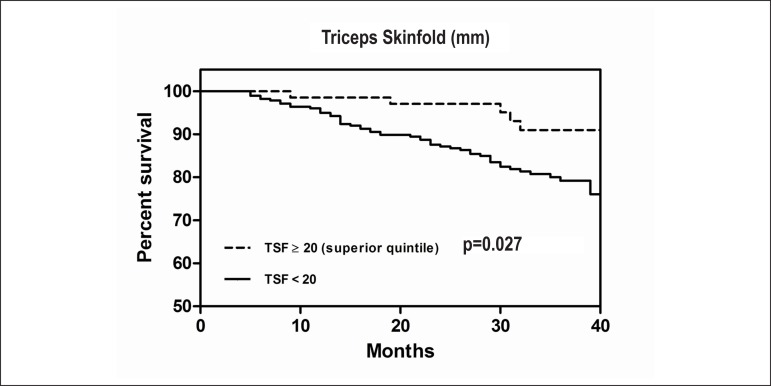
Results: HF patients were predominantly male, of non-ischemic etiology, and had moderate to severe LV systolic dysfunction (mean LVEF = 32 ± 9%). Triceps skinfold (TSF) was the only anthropometric index that was associated with HF prognosis and had significantly lower values in patients who died (p = 0.047). A TSF > 20 mm was present in 9% of patients that died and 22% of those who survived (p = 0.027). Univariate analysis showed that serum creatinine level, LVEF, and NYHA class were associated with the risk of death, while Cox proportional hazard regression analysis showed that TSF > 20 was a strong independent predictor of all-cause mortality (hazard ratio = 0.36; 95% confidence interval = 0.13-0.97, p = 0.03).
Conclusion: Although BMI is the most widely used anthropometric parameter in clinical practice, our results suggested that TSF is a better predictive marker of mortality in HF outpatients.
Conflict of interest statement
No potential conflict of interest relevant to this article was reported.
Figures
References
-
- Contaldo F, Pasanisi F, Finelli C, de Simone G. Obesity, heart failure and sudden death. Nutr Metab Cardiovasc Dis. 2002;12(4):190–197. - PubMed
-
- Kenchaiah S, Evans JC, Levy D, Wilson PW, Benjamin EJ, Larson MG, et al. Obesity and the risk of heart failure. N Engl J Med. 2002;347(5):305–313. - PubMed
-
- Calle EE, Thun MJ, Petrelli JM, Rodriguez C, Heath CW., Jr Body-mass index and mortality in a prospective cohort of U.S. adults. N Engl J Med. 1999;341(15):1097–1105. - PubMed
-
- Haslam DW, James WP. Obesity. Lancet. 2005;366(9492):1197–1209. - PubMed
MeSH terms
LinkOut - more resources
Full Text Sources
Other Literature Sources
Medical
Research Materials
Miscellaneous