


The complement cascade and renal disease
- PMID: 24030732
- PMCID: PMC3898353
- DOI: 10.1007/s00005-013-0254-x
The complement cascade and renal disease
Abstract
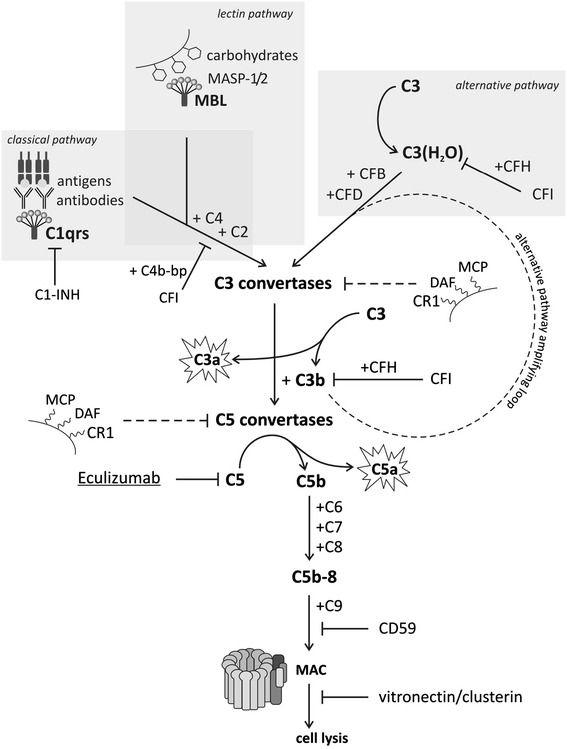
Serum complement cascade, a part of innate immunity required for host protection against invading pathogens, is also a mediator of various forms of disease and injury. It is activated by classical, lectin, and alternative pathways that lead to activation of C3 component by C3 convertases, release of C3b opsonin, C5 conversion and eventually membrane attack complex formation. The tightly regulated activation process yields also C3a and C5a anaphylatoxins, which target a broad spectrum of immune and non-immune cells. The review discusses the involvement of the complement cascade in kidney disease pathogenesis and injury. The role of the complement pathways in autoantibody-mediated forms of glomerulonephritis (lupus nephritis, anti-glomerular basement membrane disease, anti-neutrophil cytoplasmic autoantibody-induced or membranoproliferative glomerulonephritis, membranous nephropathy), C3 glomerulopathy, atypical forms of hemolytic uremic syndrome, ischemic-reperfusion injury of transplanted kidney, and antibody-mediated renal allograft rejection are discussed. The disturbances in complement activation and regulation with underlying genetics are presented and related to observed pathology. Also promising strategies targeting the complement system in complement-related disorders are mentioned.
Figures
References
-
- Appel GB, Cook HT, et al. Membranoproliferative glomerulonephritis type II (dense deposit disease): an update. J Am Soc Nephrol. 2005;16:1392–1403. - PubMed
-
- Beck LH, Jr, Salant DJ. Membranous nephropathy: recent travels and new roads ahead. Kid Int. 2010;77:765–770. - PubMed
-
- Besbas N, Karpman D, et al. A classification of hemolytic uremic syndrome and thrombotic thrombocytopenic purpura and related disorders. Kid Int. 2006;70:423–431. - PubMed
-
- Bienaime F, Dragon-Durey MA, et al. Mutations in components of complement influence the outcome of factor I-associated atypical hemolytic uremic syndrome. Kid Int. 2009;77:339–349. - PubMed
Publication types
MeSH terms
Substances
LinkOut - more resources
Full Text Sources
Other Literature Sources
Medical
Miscellaneous
