


The Biological Residue of Childhood Poverty
- PMID: 24032051
- PMCID: PMC3766848
- DOI: 10.1111/cdep.12021
The Biological Residue of Childhood Poverty
Abstract
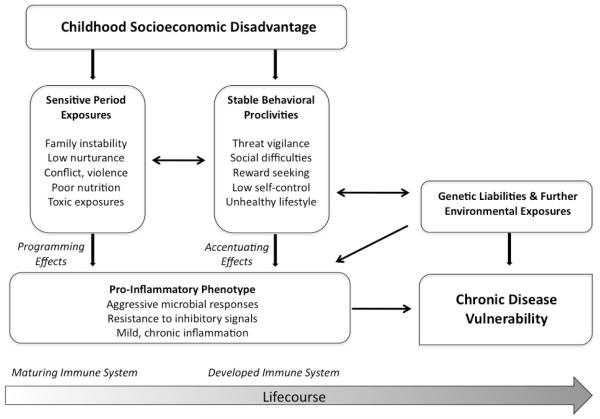
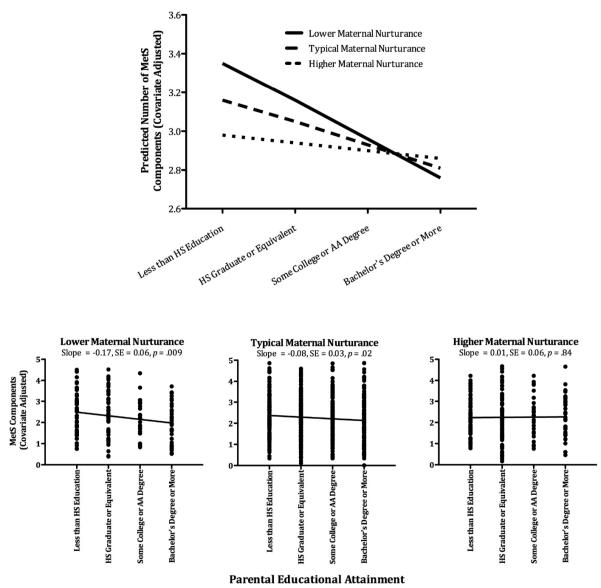
Children raised in poverty are prone to physical health problems late in life. To understand these findings and address the scientific challenge they represent, we must formulate integrative conceptual frameworks at the crossroads of behavioral and biomedical science, with a strong developmental emphasis. In this article, we outline such a framework and discuss research bearing on its validity. We address how childhood poverty gets under the skin, at the level of tissues and organs, in a manner that affects later disease risks. We also tackle questions about resilience; Even with lengthy exposure to childhood poverty, why do only a subset of people acquire diseases? Why are some individuals protected while others remain vulnerable? Maternal nurturance might be a source of resilience, buffering children from the long-term health consequences of poverty. We conclude with research priorities.
Figures
References
-
- Avitsur R, Hunzeker J, Sheridan JF. Role of early stress in the individual differences in host response to viral infection. Brain, Behavior, and immunity. 2006;20(4):339–348. doi:10.1016/j.bbi.2005.09.006. - PubMed
-
- Blair C, Raver CC. Child development in the context of adversity: experiential canalization of brain and behavior. American Psychologist. 2012;67(4):309–318. Retrieved from http://www.ncbi.nlm.nih.gov/entrez/query.fcgi?cmd=Retrieve&db=PubMed&dop.... - PMC - PubMed
-
- Caspi A. The child is father of the man: Personality continuities from childhood to adulthood. Journal of Personality and Social Psychlogy. 2000;78:158–172. doi:10.1037/0022-3514.78.1.158. - PubMed
-
- Chen E, Langer DA, Raphaelson YE, Matthews KA. Socioeconomic status and health in adolescents: the role of stress interpretations. Child Development. 2004;75(4):1039–1052. doi:10.1111/j.1467-8624.2004.00724.x. - PubMed
Grants and funding
LinkOut - more resources
Full Text Sources
Other Literature Sources