


Hypoglossal nerve stimulation improves obstructive sleep apnea: 12-month outcomes
- PMID: 24033656
- PMCID: PMC4323268
- DOI: 10.1111/jsr.12079
Hypoglossal nerve stimulation improves obstructive sleep apnea: 12-month outcomes
Abstract
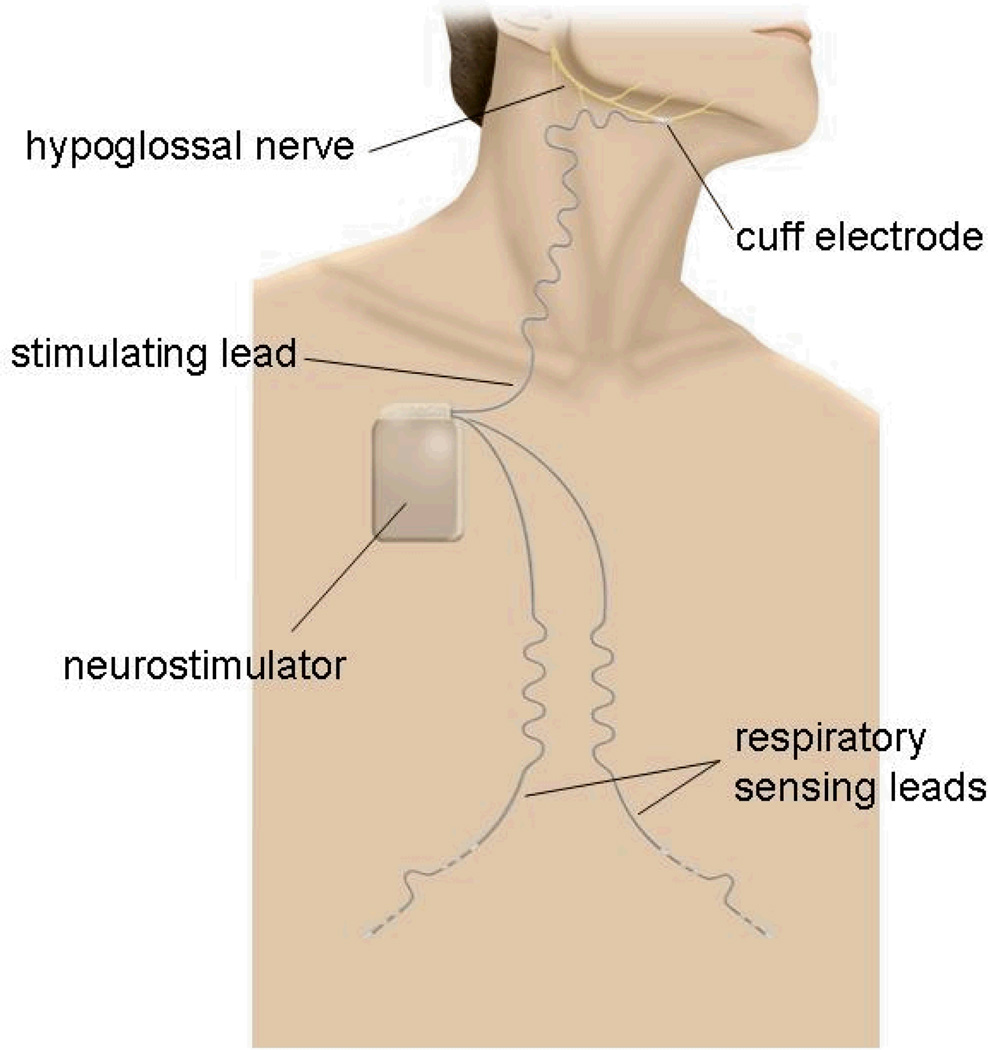
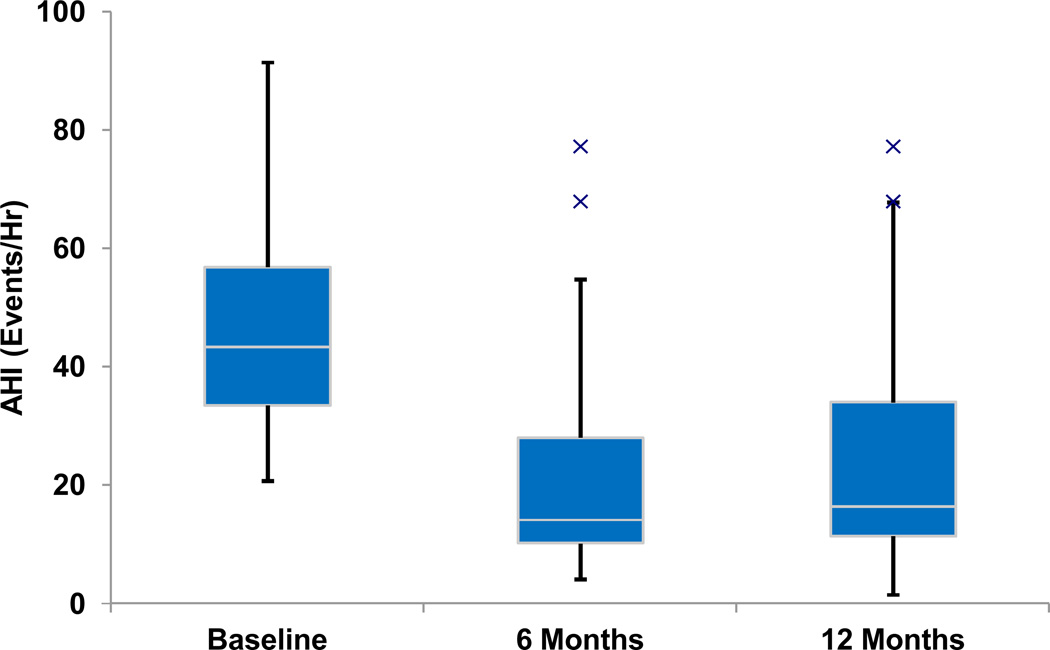
Reduced upper airway muscle activity during sleep is a key contributor to obstructive sleep apnea pathogenesis. Hypoglossal nerve stimulation activates upper airway dilator muscles, including the genioglossus, and has the potential to reduce obstructive sleep apnea severity. The objective of this study was to examine the safety, feasibility and efficacy of a novel hypoglossal nerve stimulation system (HGNS; Apnex Medical, St Paul, MN, USA) in treating obstructive sleep apnea at 12 months following implantation. Thirty-one subjects (35% female, age 52.4 ± 9.4 years) with moderate to severe obstructive sleep apnea and unable to tolerate positive airway pressure underwent surgical implantation and activation of the hypoglossal nerve stimulation system in a prospective single-arm interventional trial. Primary outcomes were changes in obstructive sleep apnea severity (apnea-hypopnea index, from in-laboratory polysomnogram) and sleep-related quality of life [Functional Outcomes of Sleep Questionnaire (FOSQ)]. Hypoglossal nerve stimulation was used on 86 ± 16% of nights for 5.4 ± 1.4 h per night. There was a significant improvement (P < 0.001) from baseline to 12 months in apnea-hypopnea index (45.4 ± 17.5 to 25.3 ± 20.6 events h(-1) ) and Functional Outcomes of Sleep Questionnaire score (14.2 ± 2.0 to 17.0 ± 2.4), as well as other polysomnogram and symptom measures. Outcomes were stable compared with 6 months following implantation. Three serious device-related adverse events occurred: an infection requiring device removal; and two stimulation lead cuff dislodgements requiring replacement. There were no significant adverse events with onset later than 6 months following implantation. Hypoglossal nerve stimulation demonstrated favourable safety, feasibility and efficacy.
Keywords: hypoglossal nerve; neurostimulation; sleep apnea; surgery.
© 2013 European Sleep Research Society.
Conflict of interest statement
EJK: Apnex Medical (Medical Advisory Board, consultant); ReVENT Medical (Medical Advisory Board); ArthroCare (consultant); Medtronic (consultant); Pavad Medical (consultant). GSG: Apnex Medical (consultant). AM: has consulting/research income from Philips, Apnex, Apnicure, Pfizer, SHC, and SGS but has relinquished all outside personal income since May 2012. GZ: grants/research support (Abbott, Actelion, Ancile, Apnex, Arena, Astra-Zeneca, Aventis, Banyu, Biomarin, BMS, Catalyst, Cephalon Inc., CHDI, Elan, Epix, Eisal, Elminda, Evotec, Forest, Galderma, GlaxoSmithKline, Gilead, H. Lundbeck A/s, King, Merck and Co., National Institutes of Health, Neurim, Neurocrine Biosciences, Naurex, Neurogen, Novo Nordisk, Organon, Orphan Medical, Otsuka, Pfizer, Predix, Respironics, Saladax, Sanofi-Aventis, Sanofi-Synthelabo, Schering-Plough, Sepracor, Shire, Somaxon, Takeda Pharmaceuticals North America, Targacept, Teva, Thymon, Transcept, UCB Pharma, Ultragenyx, Predix, Venda, Wyeth-Ayerst Research; consultant: Acorda, Actelion, Alexza, Arena, Aventis, Biovail, Boehringer-Ingelheim, Cephalon, Elan, Eli Lilly, Evotec, Forest, GlaxoSmithKline, Jazz, King Pharmaceuticals, Ligand, McNeil, Merck, Neurocrine Biosciences, Organon, Pfizer, Purdue, Renovis, Sanofi-Aventis, Select Comfort, Sepracor, Shire, Somnus, Takeda Pharmaceuticals, Vela, Wyeth; honoraria: Neurocrine Biosciences, King Pharmaceuticals, McNeil, Sanofi-Aventis, Sanofi-Synthelabo, Sepracor, Takeda Pha rmaceuticals, Vela Pharmaceuticals, Wyeth-Ayerst Research; ownership, directorship: Clinilabs Inc., Clinilabs IPA, Clinilabs Physician Services. PLS: Apnex Medical (Medical Advisory Board). ARS: Apnex Medical (Scientific Advisory Board). TH: Apnex Medical (Medical Advisory Board, compensated surgical proctor). SYP: Apnex Medical (compensated surgical proctor). CEP: Apnex Medical (consultant). CI: Apnex Medical (salary support). PRE: Apnex Medical (Medical Advisory Board, consultant). DRH: Apnex Medical (Medical Advisory Board). MB: Fisher & Paykel (attendance at Clinical Research Forum), Bird Pty Ltd (salary support for research assistant for investigator driven research project), ResMed (provision of equipment for investigator driven research project),sponsored clinical trials with no direct monies received (Actelion, Boehringer-Ingelheim, Apnex Medical, GlaxoSmithKline, Novartis, Hunter Immunology, Pearl Therapeutics, Sanofi-Aventis).
Figures
References
-
- Sleep-related breathing disorders in adults: recommendations for syndrome definition and measurement techniques in clinical research: the Report of an American Academy of Sleep Medicine Task Force. Sleep. 1999;22:667–689. - PubMed
-
- Buysse DJ, Reynolds CF, 3rd, Monk TH, Berman SR, Kupfer DJ. The Pittsburgh Sleep Quality Index: a new instrument for psychiatric practice and research. Psychiatry Res. 1989;28:193–213. - PubMed
-
- Eisele DW, Schwartz AR, Smith PL. Tongue neuromuscular and direct hypoglossal nerve stimulation for obstructive sleep apnea. Otolaryngol Clin North Am. 2003;36:501–510. - PubMed
-
- Eisele DW, Smith PL, Alam DS, Schwartz AR. Direct hypoglossal nerve stimulation in obstructive sleep apnea. Arch Otolaryngol Head Neck Surg. 1997;123:57–61. - PubMed
Publication types
MeSH terms
Grants and funding
LinkOut - more resources
Full Text Sources
Other Literature Sources
Medical
