


The impact of crystalloidal and colloidal infusion preparations on coronary vascular integrity, interstitial oedema and cardiac performance in isolated hearts
- PMID: 24034366
- PMCID: PMC4057311
- DOI: 10.1186/cc12898
The impact of crystalloidal and colloidal infusion preparations on coronary vascular integrity, interstitial oedema and cardiac performance in isolated hearts
Abstract
Introduction: Recent data suggested an interaction between plasma constituents and the endothelial glycocalyx to be relevant for vascular barrier function. This might be negatively influenced by infusion solutions, depending on ionic composition, pH and binding properties. The present study evaluated such an influence of current artificial preparations.
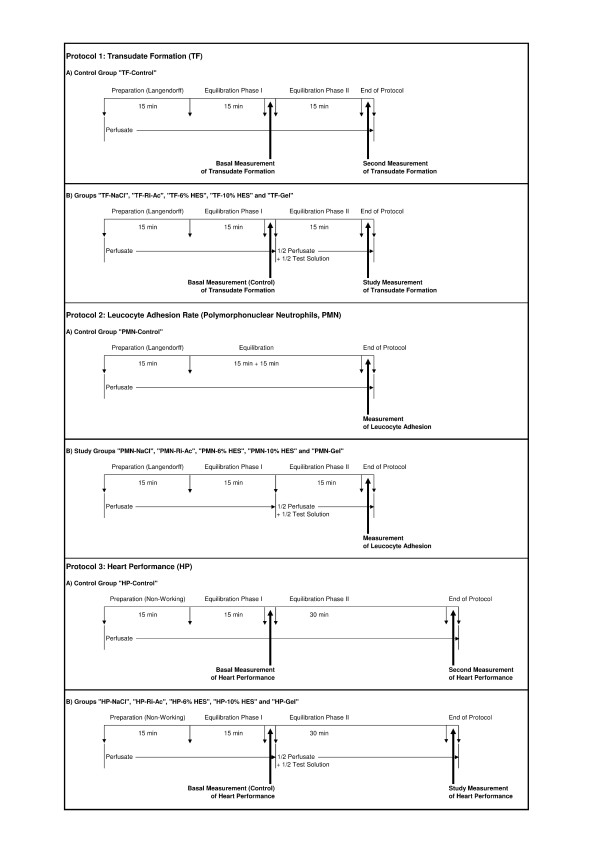
Methods: Isolated guinea pig hearts were prepared in a modified Langendorff mode and perfused with Krebs-Henseleit buffer augmented with 1g% human albumin. After equilibration the perfusion was switched to replacement of one half buffer by either isotonic saline (NaCl), ringer's acetate (Ri-Ac), 6% and 10% hydroxyethyl starch (6% and 10% HES, resp.), or 4% gelatine (Gel), the artificial colloids having been prepared in balanced solution. We analysed glycocalyx shedding, functional integrity of the vascular barrier and heart performance.
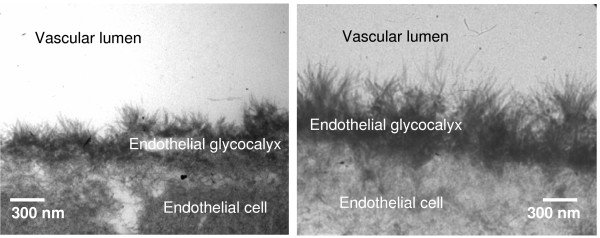
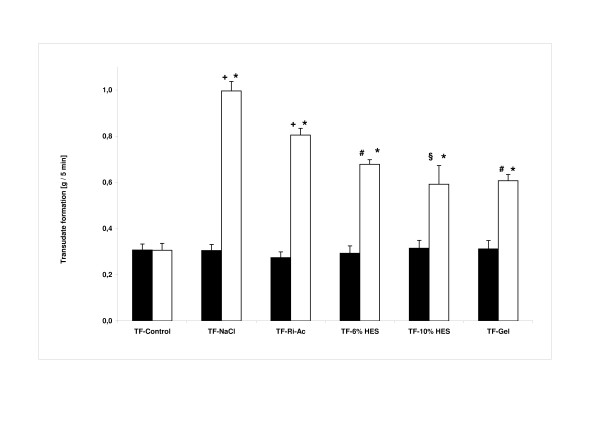
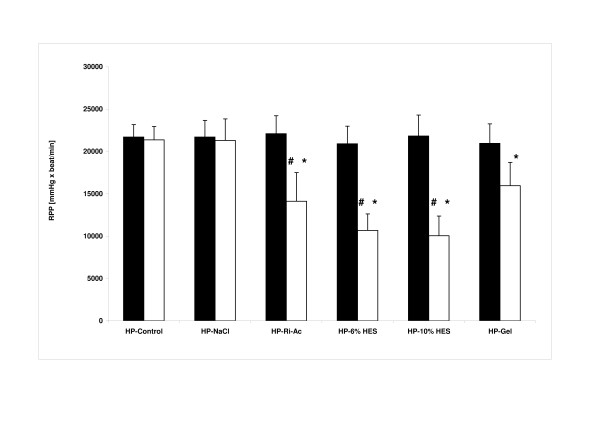
Results: While glycocalyx shedding was not observed, diluting albumin concentration towards 0.5g% by artificial solutions was associated with a marked functional breakdown of vascular barrier competence. This effect was biggest with isotonic saline and significantly attenuated with artificial colloids, the difference in the pressure dependent transvascular fluid filtration (basal vs. during infusion in groups NaCl, Ri-Ac, 6% HES, 10% HES and Gel, n = 6 each) being 0.31 ± 0.03 vs. 1.00 ± 0.04; 0.27 ± 0.03 vs. 0.81 ± 0.03; 0.29 ± 0.03 vs. 0.68 ± 0.02; 0.32 ± 0.03 vs. 0.59 ± 0.08 and 0.31 ± 0.04 vs. 0.61 ± 0.03 g/5min, respectively. Heart performance was directly related to pH value (7.38 ± 0.06, 7.33 ± 0.03, 7.14 ± 0.04, 7.08 ± 0.04, 7.25 ± 0.03), the change in the rate pressure product being 21,702 ± 1969 vs. 21,291 ± 2,552; 22,098 ± 2,115 vs. 14,114 ± 3,386; 20,897 ± 2,083 vs. 10,671 ± 1,948; 21,822 ± 2,470 vs. 10,047 ± 2,320 and 20,955 ± 2,296 vs. 15,951 ± 2,755 mmHg × bpm, respectively.
Conclusions: It appears important to maintain the pH value within a physiological range to maintain optimal myocardial contractility. Using colloids prepared in calcium-containing, balanced solutions for volume replacement therapy may attenuate the breakdown of vascular barrier competence in the critically ill.
Figures
References
-
- Rehm M, Zahler S, Lotsch M, Welsch U, Conzen P, Jacob M, Becker BF. Endothelial glycocalyx as an additional barrier determining extravasation of 6% hydroxyethyl starch or 5% albumin solutions in the coronary vascular bed. Anesthesiology. 2004;17:1211–1223. doi: 10.1097/00000542-200405000-00025. - DOI - PubMed
-
- Becker BF, Chappell D, Jacob M. Endothelial glycocalyx and coronary vascular permeability: the fringe benefit. Basic Res Cardiol. 2010;17:687–701. - PubMed
Publication types
MeSH terms
Substances
LinkOut - more resources
Full Text Sources
Other Literature Sources
Medical
