. 2013 Sep 11;14(3):340-5.
doi: 10.1016/j.chom.2013.08.005.

SIV-induced instability of the chimpanzee gut microbiome

Affiliations

SIV-induced instability of the chimpanzee gut microbiome

Andrew H Moeller et al. Cell Host Microbe. .

Abstract

Simian immunodeficiency virus of chimpanzees (SIVcpz) is the ancestor of human immunodeficiency virus type 1 (HIV-1), the etiologic agent of acquired immunodeficiency syndrome (AIDS) in humans. Like HIV-1-infected humans, SIVcpz-infected chimpanzees can develop AIDS-like symptoms. Because SIVcpz/HIV-1 may disrupt regulation of the gut microbiome and because it has not been possible to sample individual humans pre- and postinfection, we investigated the influence of infection on gut communities through long-term monitoring of chimpanzees from Gombe National Park, Tanzania. SIVcpz infection accelerated the rate of change in gut microbiota composition within individuals for periods of years after the initial infection and led to gut communities marked by high frequencies of pathogen-containing bacterial genera absent from SIVcpz-negative individuals. Our results indicate that immune function maintains temporally stable gut communities that are lost when individuals become infected with SIVcpz.


Figures

Figure 1
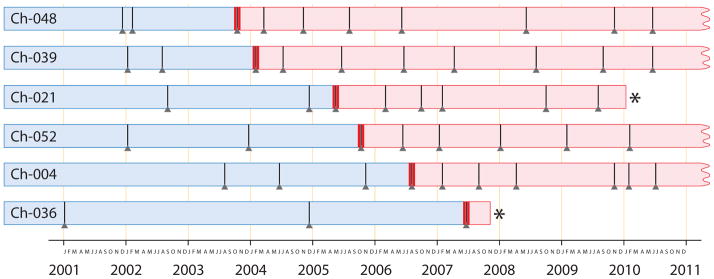
Figure 1. Time-line of samples from Gombe chimpanzees that became naturally infected with SIVcpz
Horizontal bars correspond to individual chimpanzees whose gut microbiota were sampled during the past decade, with vertical slashes marking the time points at which fecal samples (triangles) were collected. Thick red verticals indicate the first sample for each chimpanzee in which SIVcpz was detected. Blue shading denotes periods when chimpanzees were uninfected, and red shading denotes periods after SIVcpz infection. Asterisks mark when infected chimpanzees died of AIDS-like symptoms; all other chimpanzees are still alive. Additional details about samples and hosts in Figure 1 are provided in Supplemental Table S1. See also Supplemental Figure S1.
Figure 2
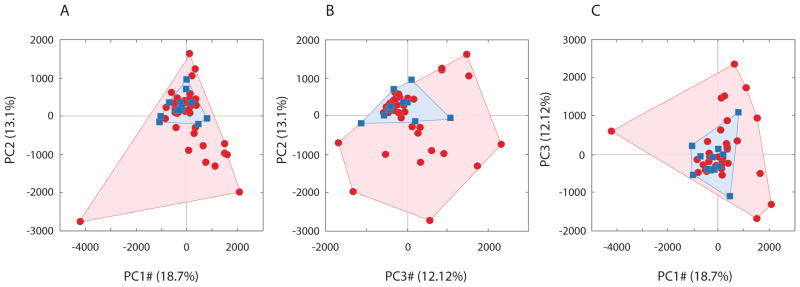
Figure 2. Compositional divergence of SIV-positive gut microbiomes
Principal-coordinate plots of Euclidean distances among samples. Panels (A, B, C) show all pairwise comparisons involving the first three principal axes, which together explain over 40% of the variance. Dots and surrounding contours correspond to gut communities recovered from individuals before (blue) and after (red) SIV infection.
Figure 3
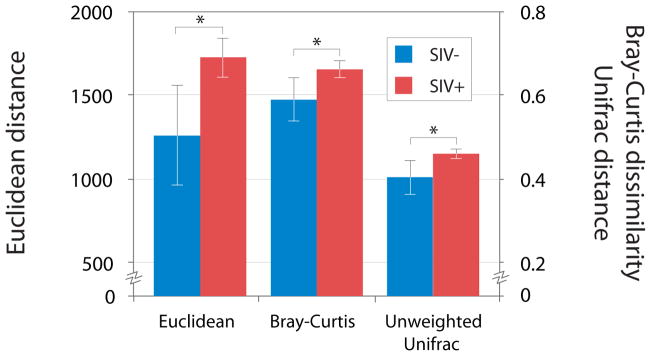
Figure 3. Temporal destabilization of gut microbiomes after SIV-infection
Shown are pairwise distances and dissimilarities between consecutive samples recovered from individuals either before (blue bars) or after (red bars) SIV infection. Asterisks indicate statistically significant differences (p < 0.05), and error bars denote 95% confidence intervals for mean values. For all indices of dissimilarity and distance, gut microbiomes were less stable over time when individuals were SIV-positive than when the same individuals were uninfected.
Figure 4
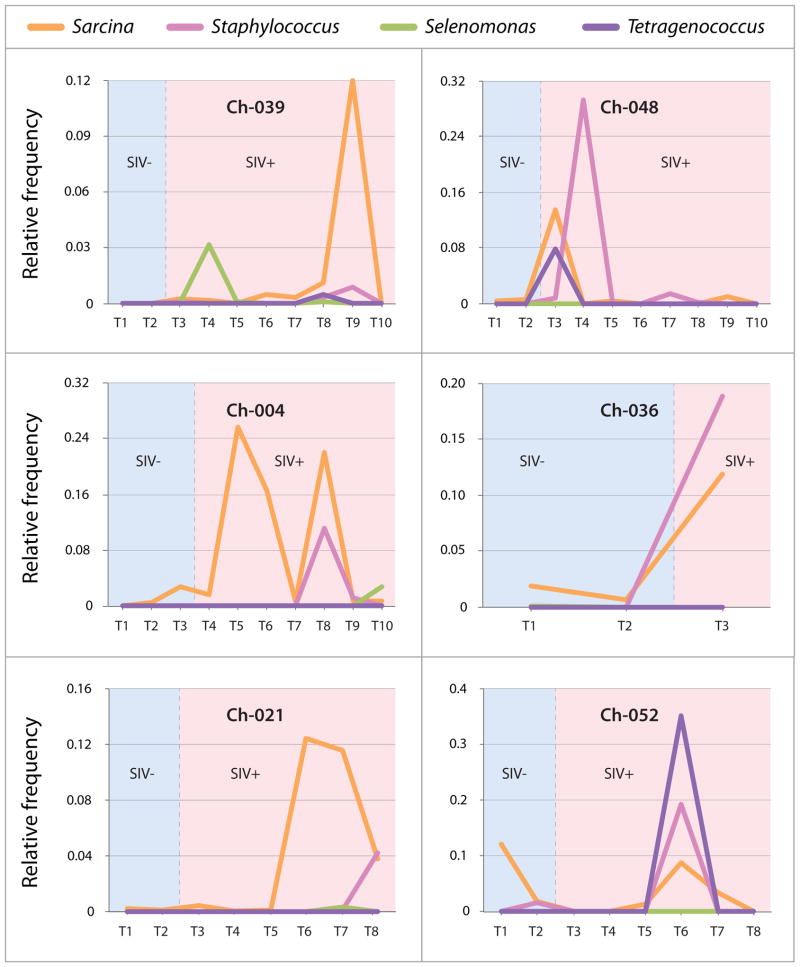
Figure 4. Increases in frequencies of bacteria from disease-associated genera in SIV-infected chimpanzees
Shown are relative abundances of Sarcina, Staphylococcus and Selenomonas pre- and post-infection. Graphs are partitioned into two sections denoting samples collected before (blue shading) and samples collected after (red shading) SIV infection. Longitudinal samples (TN) are arranged temporally; dates of sampling shown in Figure 4 are listed in Table S1. See also Supplemental Figure S2.

References

    1. Archer GL. Staphylococcus aureus: a well-armed pathogen. Clin Infect Dis. 1998;5:1179–1181. - PubMed
    1. Arumugam M, Raes J, Pelletier E, Paslier DL, Yamada T, Mende DR, Fernandes GR, Tap J, Bruls T, Batto J, et al. Enterotypes of the human gut microbiome. Nature. 2011;473:174–180. - PMC - PubMed
    1. Caporaso JG, Kuczynski J, Stombaugh J, Bittinger K, Bushman FD, Costello EK, Fierer N, Pena AG, Goodrich JK, Gordon JI, et al. QIIME allows analysis of high-throughput community sequencing data. Nat Methods. 2010;7:335–336. - PMC - PubMed
    1. Chahroudi A, Bosinger SE, Vanderford TH, Paiardin M, Silvestri G. Natural SIV hosts: showing AIDS the door. Science. 2012;335:1188–1193. - PMC - PubMed
    1. Degnan PH, Pusey AE, Lonsdorf EV, Goodall J, Wroblewski EE, Wilson ML, Rudicell RS, Hahn BH, Ochman H. Factors associated with the diversification of the gut microbial communities within chimpanzees from Gombe National Park. Proc Natl Acad Sci USA. 2012;109:13034–13039. - PMC - PubMed

Publication types

Associated data