. 2013 Dec 6;314(1):100-11.
doi: 10.1016/j.tox.2013.09.002. Epub 2013 Sep 10.

Evaluation of propargyl alcohol toxicity and carcinogenicity in F344/N rats and B6C3F1/N mice following whole-body inhalation exposure

Affiliations

Evaluation of propargyl alcohol toxicity and carcinogenicity in F344/N rats and B6C3F1/N mice following whole-body inhalation exposure

Sheetal A Thakur et al. Toxicology. .

Abstract

Propargyl alcohol (PA) is a high production volume chemical used in synthesis of many industrial chemicals and agricultural products. Despite the potential for prolonged or accidental exposure to PA in industrial settings, the toxicity potential of PA was not well characterized. To address the knowledge gaps relevant to the toxicity profile of PA, the National Toxicology Program (NTP) conducted 2-week, 14-week and 2-year studies in male and female F344/N rats and B6C3F1/N mice. For the 2-week inhalation study, the rats and mice were exposed to 0, 31.3, 62.5, 125, 250 or 500ppm. Significant mortality was observed in both rats and mice exposed to ≥125ppm of PA. The major target organ of toxicity in both mice and rats was the liver with exposure-related histopathological changes (250 and 500ppm). Based on the decreased survival in the 2-week study, the rats and mice were exposed to 0, 4, 8, 16, 32 or 64ppm of PA in the 14-week study. No treatment-related mortality was observed. Mean body weights of male (≥8ppm) and female mice (32 and 64ppm) were significantly decreased (7-16%). Histopathological changes were noted in the nasal cavity, and included suppurative inflammation, squamous metaplasia, hyaline droplet accumulation, olfactory epithelium atrophy, and necrosis. In the 2-year inhalation studies, the rats were exposed to 0, 16, 32 and 64ppm of PA and the mice were exposed to 0, 8, 16 and 32ppm of PA. Survival of male rats was significantly reduced (32 and 64ppm). Mean body weights of 64ppm male rats were significantly decreased relative to the controls. Both mice and rats showed a spectrum of non-neoplastic changes in the nose. Increased neoplastic incidences of nasal respiratory/transitional epithelial adenoma were observed in both rats and mice. The incidence of mononuclear cell leukemia was significantly increased in male rats and was considered to be treatment-related. In conclusion, the key findings from this study indicated that the nose was the primary target organ of toxicity for PA. Long term inhalation exposure to PA led to nonneoplastic changes in the nose, and increased incidences of respiratory/transitional epithelial adenomas in both mice and rats. Increased incidences of harderian gland adenoma may also have been related to exposure to PA in male mice.

Keywords: Carcinogenicity; Chronic; Occupational; Propargyl alcohol; Respiratory; Toxicity.


Figures

Figure 1
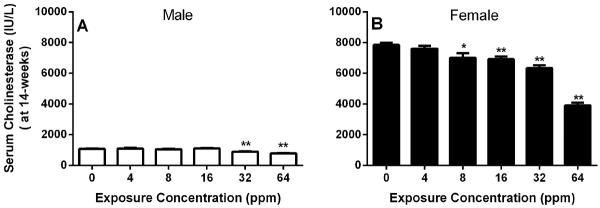
Figure 1. Serum cholinesterase levels in F344/N rats following 14-weeks of inhalation exposure to PA
Each bar represents the average serum cholinesterase levels in F344/N rats exposed to varying concentrations of propargyl alcohol for 14-weeks. For simplification, the data from Day 4 and Day23 time-points was omitted. However at each time point there was an exposure-dependent significant decrease in serum cholinesterase levels (see text). Data expressed as Mean ± SEM. n=9–10. * Significantly different (p≤0.05) from the control group by Dunn's or Shirley's test. ** p<0.01. Ratios were calculated and statistical errors were performed on rounded data.
Figure 2
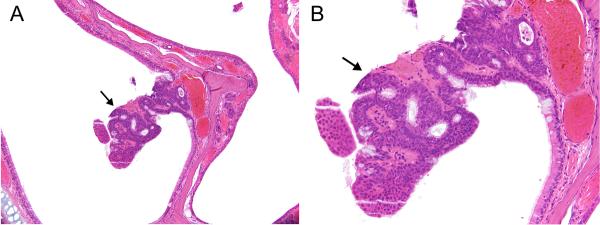
Figure 2. Respiratory/transitional adenoma
A) A small, polypoid (arrow) adenoma projects from the medial side of a nasoturbinate in Level I in a female rat exposed to 32ppm PA for 2-years. B) The adenoma is composed of epithelium having mixed transitional and respiratory features. Original objective magnification: A) 10×, B) 20×.
Figure 3
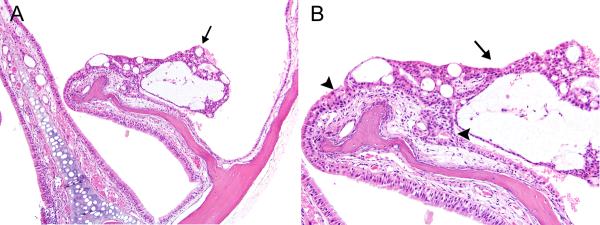
Figure 3. Respiratory/transitional adenoma, cystic
A) A small, polypoid, multicystic adenoma (arrow) projects from the lateral side of a nasoturbinate in Level I in a female mouse exposed to 16ppm PA for 2-years. B) The adenoma (arrow) exhibits predominantly transitional epithelial features, and is bordered by hyperplastic epithelium (arrowheads) on both sides. Original objective magnification: A) 10×, B) 20×.
Figure 4
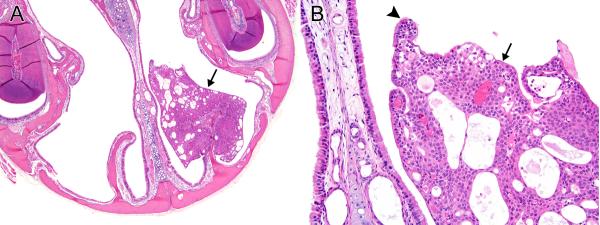
Figure 4. Respiratory/transitional adenoma, solid and cystic
A) A large adenoma (arrow) surrounds the major portion of a nasoturbinate in Level I in a female mouse exposed to 16ppm PA for 2-years. The adenoma is solid in the basal portion, microcystic in the peripheral portions, and partially fills the dorsal meatus and the dorsal portion of the lateral meatus on this side of the nasal cavity. B) The adenoma exhibits both transitional (arrow) and respiratory, ciliated (arrowhead) epithelial features. Original objective magnification: A) 4×, B) 20×.
Figure 5
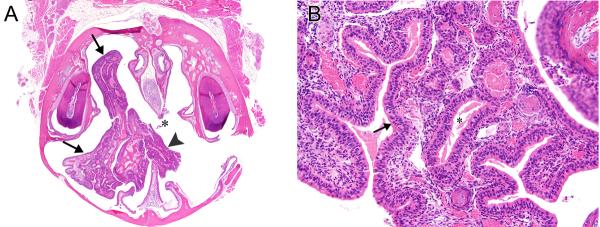
Figure 5. Respiratory/transitional adenoma, with expansion to opposite nasal cavity
A) This large adenoma (arrows) surrounds a nasoturbinate in Level I, fills much of the nasal cavity on this side, and extends through a perforated nasal septum (asterisk) into the opposite nasal cavity (arrowhead). Female mouse exposed to 16ppm PA for 2-years. B) This adenoma is lined by a tall, columnar epithelium (arrow) that has more of a respiratory epithelial appearance. Glands (asterisk), or invaginations of the surface epithelium, are present in the stroma of the tumor, and are lined by epithelium similar to that on the surface of the tumor. Original objective magnification: A) 2×, B) 20×.
Figure 6
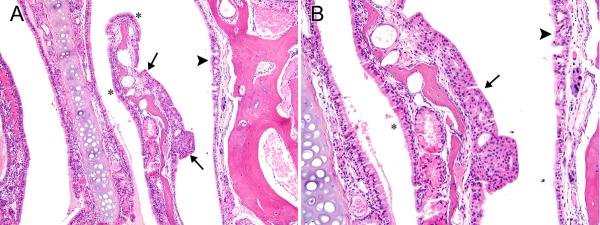
Figure 6. Respiratory/transitional epithelial hyperplasia
A) Epithelial hyperplasia, with transitional features (arrows) forms a plaque-like thickening of the epithelial lining on the lateral side of a nasoturbinate in Level II of the same female mouse with the adenoma in Level I (2-year studies) that is shown in Fig. 4. Respiratory hyperplasia is also noted on the lateral wall (arrowhead). Normal appearing respiratory epithelium is indicated by asterisks for comparison. B) The stratified, non-ciliated epithelium with transitional features (arrow), and the hyperplastic, ciliated epithelium with respiratory epithelial features (arrowhead) are better shown in this higher magnification image. The more normal columnar, ciliated respiratory epithelium is marked with an asterisk for comparison. Original objective magnification: A) 10×, B) 20×.
Figure 7
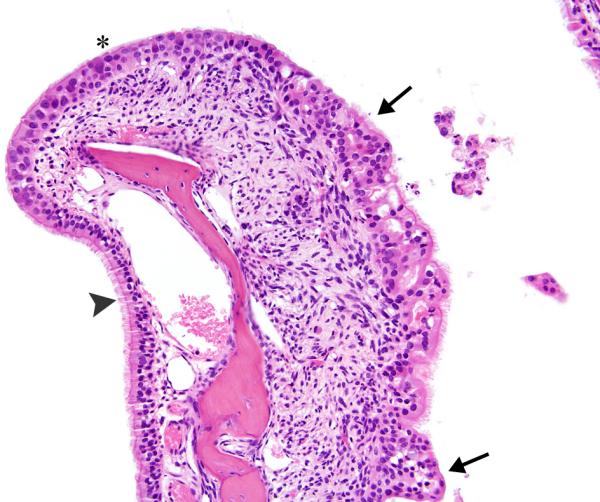
Figure 7. Respiratory/transitional epithelial hyperplasia
The epithelium lining this nasoturbinate in Level II exhibits variation from normal respiratory, ciliated epithelium (arrowhead) to hyperplastic transitional epithelium (asterisk) to hyperplastic, ciliated epithelium with mixed respiratory and transitional epithelial features (arrows). The subepithelial stroma of the nasoturbinate shows inflammation and fibroplasia. Male mouse exposed to 32ppm PA for 2-years. Original objective magnification: 20×.

References

    1. American Conference of Governmental Industrial Hygienists (ACGIH) 2005 TLVs and BEIs. Threshold Limit Values of Chemical Substances & Physical Agents and Biological Exposure Indices. American Conference of Governmental Industrial Hygienists, Inc; Cinncinnati, Ohio. 2005. p. 48.
    1. Beratergremium fur Altstoffe (BUA) Propargyl Alcohol. In: BUA, editor. 213 BUA-Report: Propargyl Alcohol CAS-No. 107-19-7, GDCh-Advisory Committee on Existing Chemicals of Environmental Relevance. Stuttgart; Germany: 1998. [accessed on 7 Aug. 2013]. Available at http://www.hirzel.de/titel/51876.html.
    1. Archer TE. Acute oral toxicity as LD50 (mg/kg) of propargyl alcohol to male and female rats. J Environ Sci Health B. 1985;20:593–596. - PubMed
    1. Astuti ET, Yanagawa T. Testing trend for count data with extra-Poisson variability. Biometrics. 2002;58:398–402. - PubMed
    1. Auerbach SS, Mahler J, Travlos GS, Irwin RD. A comparative 90-day toxicity study of allyl acetate, allyl alcohol and acrolein. Toxicology. 2008;253:79–88. - PMC - PubMed

Publication types

MeSH terms

LinkOut - more resources