


Understanding the revolving door: individual and structural-level predictors of recidivism among individuals with HIV leaving jail
- PMID: 24037440
- PMCID: PMC4049299
- DOI: 10.1007/s10461-013-0590-1
Understanding the revolving door: individual and structural-level predictors of recidivism among individuals with HIV leaving jail
Abstract
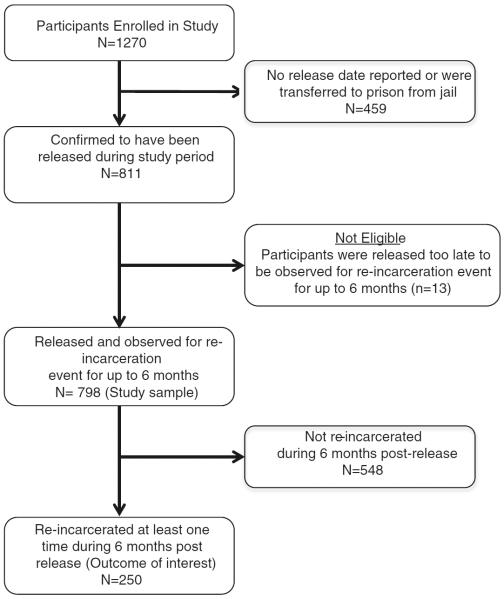
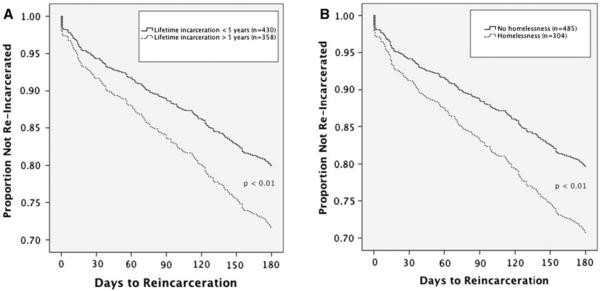
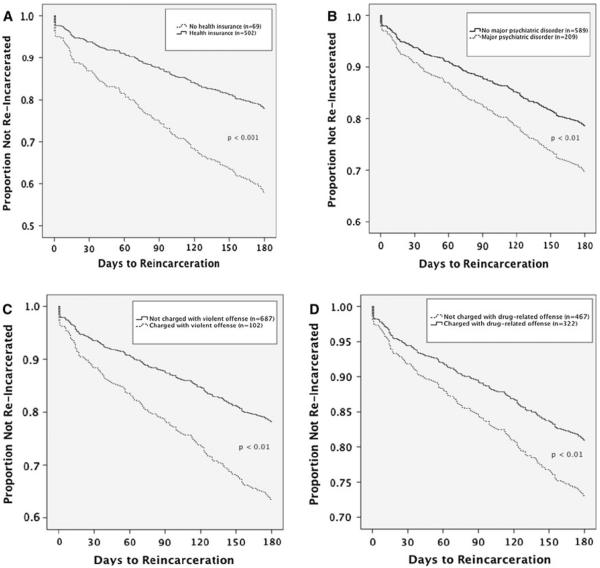
Incarceration, particularly when recurrent, can significantly compromise the health of individuals living with HIV. Despite this, the occurrence of recidivism among individuals with HIV has been little examined, particularly among those leaving jail, who may be at especially high risk for return to the criminal justice system. We evaluated individual- and structural-level predictors of recidivism and time to re-incarceration in a cohort of 798 individuals with HIV leaving jail. Nearly a third of the sample experienced at least one re-incarceration event in the 6 months following jail release. Having ever been diagnosed with a major psychiatric disorder, prior homelessness, having longer lifetime incarceration history, having been charged with a violent offense for the index incarceration and not having health insurance in the 30 days following jail release were predictive of recidivism and associated with shorter time to re-incarceration. Health interventions for individuals with HIV who are involved in the criminal justice system should also target recidivism as a predisposing factor for poor health outcomes. The factors found to be associated with recidivism in this study may be potential targets for intervention and need to be further explored. Reducing criminal justice involvement should be a key component of efforts to promote more sustainable improvements in health and well-being among individuals living with HIV.
Figures
References
-
- Kerr T, Marshall A, Walsh J, Palepu A, Tyndall M, Montaner J, et al. Determinants of HAART discontinuation among injection drug users. AIDS Care. 2005;17:539–49. - PubMed
Publication types
MeSH terms
Grants and funding
LinkOut - more resources
Full Text Sources
Other Literature Sources
Medical
