


5-ASA colonic mucosal concentrations resulting from different pharmaceutical formulations in ulcerative colitis
- PMID: 24039359
- PMCID: PMC3769903
- DOI: 10.3748/wjg.v19.i34.5665
5-ASA colonic mucosal concentrations resulting from different pharmaceutical formulations in ulcerative colitis
Abstract
Aim: To compare the mucosal concentrations of 5-aminosalicylic acid (5-ASA) resulting from different pharmaceutical formulations and analyse the influence of inflammation on the mucosal concentrations.
Methods: The study included 130 inflammatory bowel disease (IBD) patients receiving 5-ASA as pH-dependent-release formulations (73 patients), time-dependent-release formulations (11 patients), or pro-drugs (18 patients). In addition, 28 patients were receiving topical treatment (2-4 g/d) with pH-dependent-release formulations. Endoscopic biopsies were obtained from the sigmoid region during the colonoscopy. The 5-ASA concentrations (ng/mg) were measured in tissue homogenates using high-pressure liquid chromatography with electrochemical detection. The t test and Mann-Whitney test, when appropriate, were used for statistical analysis.
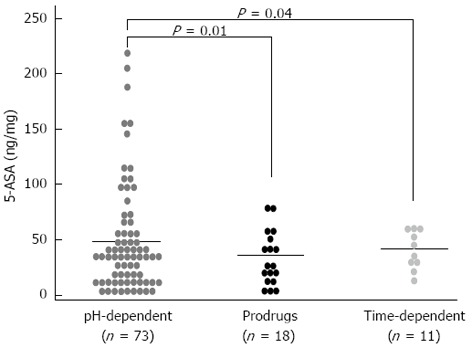
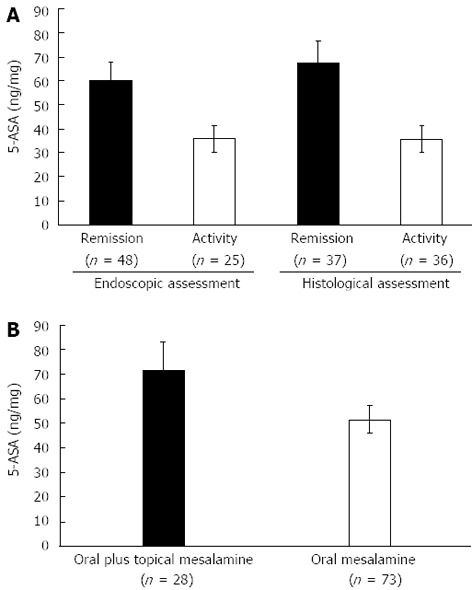
Results: Patients receiving pH-dependent-release formulations showed significantly higher mucosal concentrations of 5-ASA (51.75 ± 5.72 ng/mg) compared with patients receiving pro-drugs (33.35 ± 5.78 ng/mg, P = 0.01) or time-dependent-release formulations (38.24 ± 5.53 ng/mg, P = 0.04). Patients with endoscopic remission had significantly higher mucosal concentrations of 5-ASA than patients with active disease (60.14 ± 7.95 ng/mg vs 35.66 ± 5.68 ng/mg, P = 0.02). Similar results were obtained when we compared patients with the histological appearance of remission and patients with active histological inflammation (67.53 ± 9.22 ng/mg vs 35.53 ± 5.63 ng/mg, P < 0.001). Significantly higher mucosal concentrations of 5-ASA were detected in patients treated with both oral and topical treatments in combination compared with patients who received oral treatment with pH-dependent-release formulations alone (72.33 ± 11.23 ng/mg vs 51.75 ± 5.72 ng/mg, P = 0.03).
Conclusion: IBD patients showed significant variability in mucosal 5-ASA concentrations depending on the type of formulation, and the highest mean concentration was achieved using pH-dependent-release formulations.
Keywords: 5-aminosalicylic acid; Inflammatory bowel diseases; Mucosal concentration.
Figures
References
-
- Stange EF, Travis SP, Vermeire S, Reinisch W, Geboes K, Barakauskiene A, Feakins R, Fléjou JF, Herfarth H, Hommes DW, et al. European evidence-based Consensus on the diagnosis and management of ulcerative colitis: Definitions and diagnosis. J Crohns Colitis. 2008;2:1–23. - PubMed
-
- Vree TB, Dammers E, Exler PS, Sörgel F, Bondesen S, Maes RA. Liver and gut mucosa acetylation of mesalazine in healthy volunteers. Int J Clin Pharmacol Ther. 2000;38:514–522. - PubMed
-
- Kruis W, Brandes JW, Schreiber S, Theuer D, Krakamp B, Schütz E, Otto P, Lorenz-Mayer H, Ewe K, Judmaier G. Olsalazine versus mesalazine in the treatment of mild to moderate ulcerative colitis. Aliment Pharmacol Ther. 1998;12:707–715. - PubMed
Publication types
MeSH terms
Substances
LinkOut - more resources
Full Text Sources
Other Literature Sources
Medical
