


A randomized, double-masked study to evaluate the effect of omega-3 fatty acids supplementation in meibomian gland dysfunction
- PMID: 24039409
- PMCID: PMC3770496
- DOI: 10.2147/CIA.S48955
A randomized, double-masked study to evaluate the effect of omega-3 fatty acids supplementation in meibomian gland dysfunction
Abstract
Background: Dysfunction of the meibomian gland (MG) is among the most frequent causes of ophthalmological symptoms. The inflammation seen in meibomian gland dysfunction (MGD) is part of its pathogenesis, and evidence of the antioxidant-inflammatory properties of omega-3 fatty acids suggests this to be an appropriate treatment for MGD.
Objective: We aimed to assess the effectiveness of omega-3 fatty acids versus placebo, in improving the symptoms and signs of MGD.
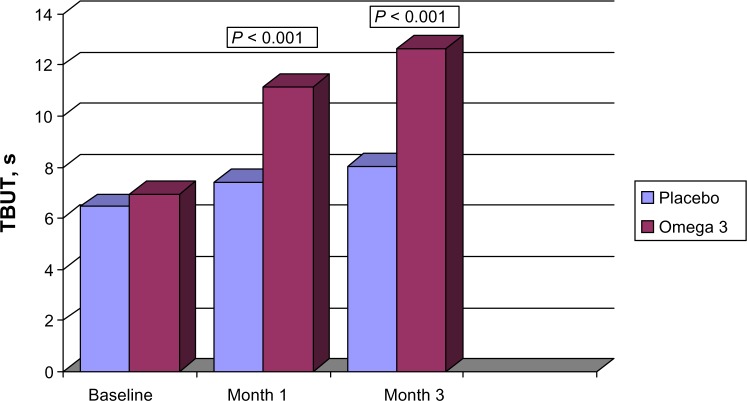
Methods: We conducted a randomized and double-mask trial of 3 months duration. We enrolled 61 patients who presented with symptomatic MGD and no tear instability (defined as tear breakup time [TBUT] <10 seconds). Participants were randomly assigned to two homogeneous subgroups. For patients in group A, the study treatment included cleaning the lid margins with neutral baby shampoo and use of artificial tears without preservatives, plus a placebo oral agent. For patients in group B, the study treatment included cleaning the lid margins with neutral baby shampoo and use of artificial tears without preservatives, plus oral supplementation with omega-3 fatty acids. We performed the following tests: (1) TBUT; (2) Schirmer I test; (3) Ocular Surface Disease Index© (OSDI©; Allergan, Inc., Irvine, CA, USA); (4) MG expression; (5) evaluation of lid margin inflammation; and (6) interpalpebral and corneal dye staining.
Results: After 3 months of evaluation, the mean OSDI, TBUT, lid margin inflammation, and MG expression presented improvement from the baseline values, in group B (P < 0.01, P < 0.001, P < 0.0001, P < 0.0001, respectively). The Schirmer test results were also improved and statistically significant (P < 0.01).
Conclusion: Oral omega-3 fatty acids, 1.5 grams per day, may be beneficial in the treatment of MGD, mainly by improving tear stability.
Keywords: blepharitis; dry eye; eye discomfort; ocular inflammation; surface disease.
Figures
References
-
- Foulks GN, Bron AJ. Meibomian gland dysfunction: a clinical scheme for description, diagnosis, classification, and grading. Ocul Surf. 2003;1(3):107–126. - PubMed
-
- Mathers WD. Meibomian gland disease. In: Pflugfelder SC, Beuerman RW, Stern ME, editors. Dry Eye and Ocular Surface Disorders. New York, NY: Marcel Dekker Inc; 2004. pp. 247–267.
-
- Driver PJ, Lemp MA. Meibomian gland dysfunction. Surv Ophthalmol. 1996;40(5):343–367. - PubMed
-
- Bron AJ, Benjamin L, Snibson GR. Meibomian gland disease. Classification and grading of lid changes. Eye (Lond) 1991;5(Pt 4):395–411. - PubMed
Publication types
MeSH terms
Substances
LinkOut - more resources
Full Text Sources
Other Literature Sources
Medical
