


Targeted preoperative autologous blood donation in total knee arthroplasty reduces the need for postoperative transfusion
- PMID: 24039613
- PMCID: PMC3772157
- DOI: 10.1007/s11420-013-9346-8
Targeted preoperative autologous blood donation in total knee arthroplasty reduces the need for postoperative transfusion
Abstract
Background: Preoperative donation of autologous blood has been widely used to minimize the potential risk of allogeneic transfusions in total knee arthroplasty. A previous study from our center revealed that preoperative autologous donation reduces the allogeneic blood exposure for anemic patients but has no effect for non-anemic patients.
Questions/purposes: The current study investigates the impact of a targeted blood donation protocol on overall transfusion rates and the incidence of allogeneic blood transfusions.
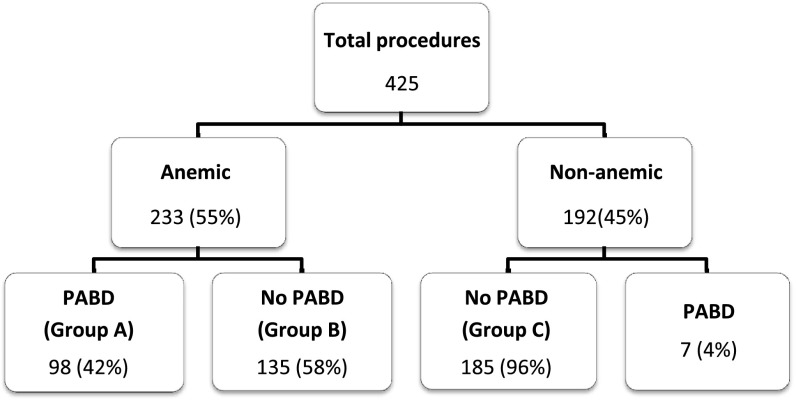
Methods: Prospectively, 372 patients undergoing 425 unilateral primary knee replacements were preoperatively screened by the Blood Preservation Center between 2009 and 2012. Anemic patients with a hemoglobin level less than 13.5 g/dL were advised to donate blood, while non-anemic patients did not donate.
Results: Non-anemic patients who did not donate blood required allogeneic blood transfusions in 5.9% of the patients. The overall rate of allogeneic transfusion was significantly lower for anemic patients who donated autologous blood (group A, 9%) than those who did not donate (group B, 33%; p < 0.001). Donating autologous blood did increase the overall transfusion rate of anemic patients to 0.84 per patient in group A compared to 0.41 per patient in group B (p < 0.001).
Conclusion: This investigation confirms that abandoning preoperative autologous blood donation for non-anemic patients does not increase allogeneic blood transfusion rates but significantly lowers overall transfusion rates.
Keywords: allogeneic transfusion; anemia; blood management; preoperative autologous blood donation; total knee arthroplasty.
Figures
References
-
- Bierbaum BE, Callaghan JJ, Galante JO, Rubash HE, Tooms RE, Welch RB. An analysis of blood management in patients having a total hip or knee arthroplasty. The Journal of bone and joint surgery. 1999;81:2–10. - PubMed
-
- Billote DB, Glisson SN, Green D, Wixson RL. A prospective, randomized study of preoperative autologous donation for hip replacement surgery. The Journal of bone and joint surgery. 2002;84-A:1299–1304. - PubMed
LinkOut - more resources
Full Text Sources
Other Literature Sources
