


Below replacement fertility preferences in Shanghai
- PMID: 24039621
- PMCID: PMC3769784
- DOI: 10.3917/pope.1103.0519
Below replacement fertility preferences in Shanghai
Abstract
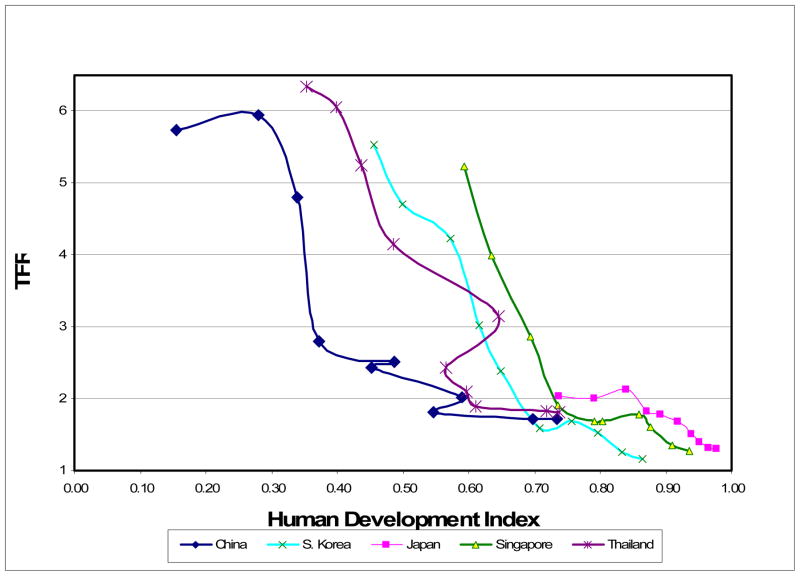
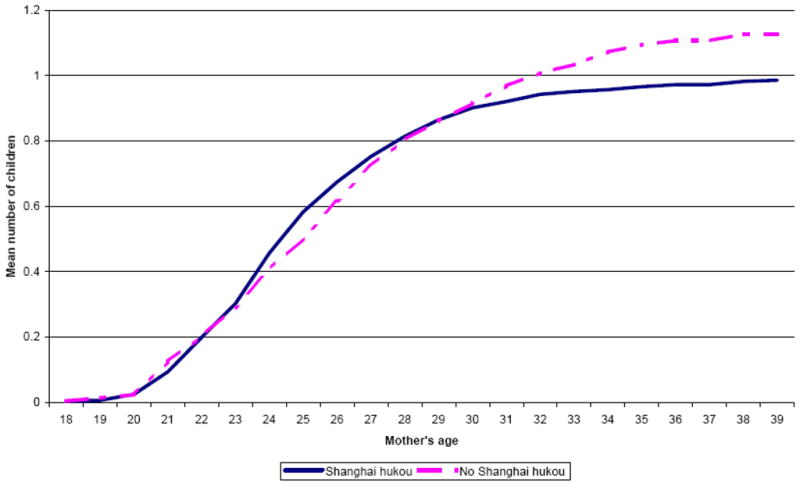
China has joined the group of low-fertility countries; it has a TFR somewhere in the range of 1.4 to 1.6. Much speculation about China's future fertility depends on whether individual's fertility intentions and preferences are much higher than the state's fertility goals. If so, then a relaxation of family planning restrictions could lead to a substantial fertility increase. We directly ask a probability sample of Shanghai registered residents and migrants whether a policy relaxation would lead them to have additional children. Our results show that small families (one or two children) are intended in this urban setting. If family planning policy were relaxed, a relatively small fraction (fewer than 14%) reports that they would revise their intentions upward. Even this modest increase (as much as 10%) is suspect because factors that can deflate fertility relative to intentions are likely more powerful than the inflationary ones (in Shanghai). These empirical findings help ground speculations on the future of fertility in the hypothetical absence of policy constraints.
Figures
References
-
- Attané I. Chinese fertility on the eve of the 21st century: Fact and uncertainty. Population-E. 2001;13(2):71–100.
-
- Attané I. China’s family planning policy: An overview of its past and future. Studies in Family Planning. 2002;33(1):103–113. - PubMed
-
- Bongaarts J. Fertility and reproductive preferences in post-transitional societies. Population and Development Review. 2001;27(Supp):260–281.
-
- Bongaarts J, Feeney G. On the quantum and tempo of fertility. Population and Development Review. 1998;24:271–291.
-
- Bongaarts J, Watkins SC. Social interactions and contemporary fertility transitions. Population and Development Review. 1996;22(4):639–682.
Grants and funding
LinkOut - more resources
Full Text Sources