


Co-enriching microflora associated with culture based methods to detect Salmonella from tomato phyllosphere
- PMID: 24039862
- PMCID: PMC3767688
- DOI: 10.1371/journal.pone.0073079
Co-enriching microflora associated with culture based methods to detect Salmonella from tomato phyllosphere
Abstract
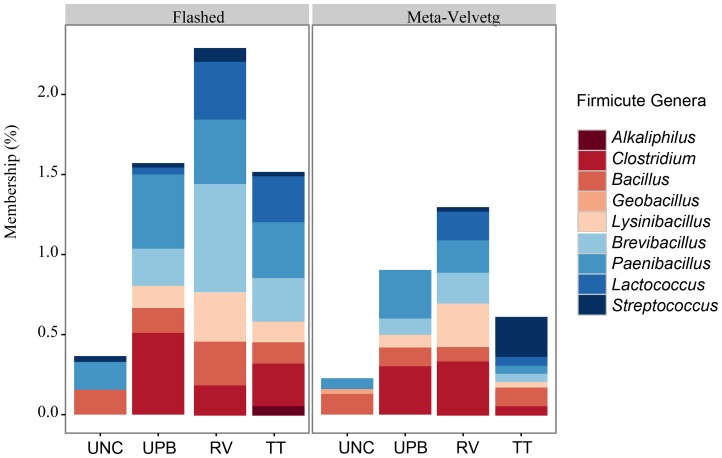
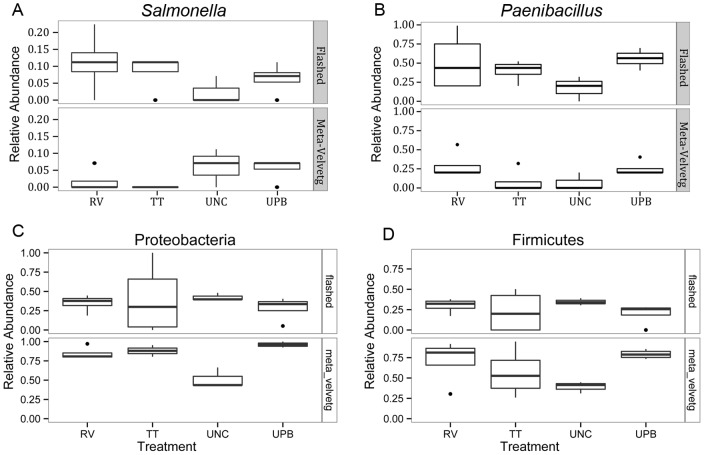
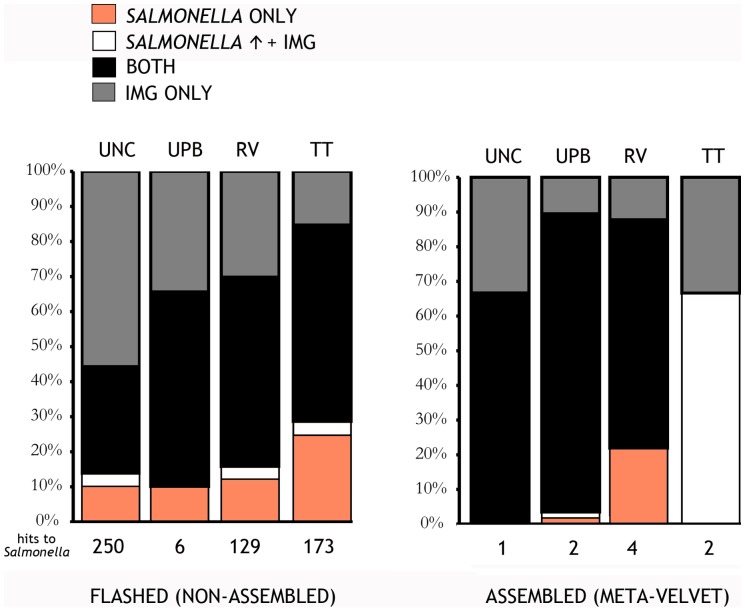
The ability to detect a specific organism from a complex environment is vitally important to many fields of public health, including food safety. For example, tomatoes have been implicated numerous times as vehicles of foodborne outbreaks due to strains of Salmonella but few studies have ever recovered Salmonella from a tomato phyllosphere environment. Precision of culturing techniques that target agents associated with outbreaks depend on numerous factors. One important factor to better understand is which species co-enrich during enrichment procedures and how microbial dynamics may impede or enhance detection of target pathogens. We used a shotgun sequence approach to describe taxa associated with samples pre-enrichment and throughout the enrichment steps of the Bacteriological Analytical Manual's (BAM) protocol for detection of Salmonella from environmental tomato samples. Recent work has shown that during efforts to enrich Salmonella (Proteobacteria) from tomato field samples, Firmicute genera are also co-enriched and at least one co-enriching Firmicute genus (Paenibacillus sp.) can inhibit and even kills strains of Salmonella. Here we provide a baseline description of microflora that co-culture during detection efforts and the utility of a bioinformatic approach to detect specific taxa from metagenomic sequence data. We observed that uncultured samples clustered together with distinct taxonomic profiles relative to the three cultured treatments (Universal Pre-enrichment broth (UPB), Tetrathionate (TT), and Rappaport-Vassiliadis (RV)). There was little consistency among samples exposed to the same culturing medias, suggesting significant microbial differences in starting matrices or stochasticity associated with enrichment processes. Interestingly, Paenibacillus sp. (Salmonella inhibitor) was significantly enriched from uncultured to cultured (UPB) samples. Also of interest was the sequence based identification of a number of sequences as Salmonella despite indication by all media, that samples were culture negative for Salmonella. Our results substantiate the nascent utility of metagenomic methods to improve both biological and bioinformatic pathogen detection methods.
Conflict of interest statement
Figures
References
-
- Hammack TS, Johnson ML, Jacobson AP, Andrews WH (2006) Effect of sample preparation and preenrichment media on the recovery of Salmonella from cantaloupes, mangoes, and tomatoes. J AOAC Int 89: 180–184. - PubMed
-
- Lienau EK, Strain E, Wang C, Zheng J, Ottesen AR, et al. (2011) Identification of a salmonellosis outbreak by means of molecular sequencing. N Engl J Med 364: 981–982. - PubMed
Publication types
MeSH terms
LinkOut - more resources
Full Text Sources
Other Literature Sources
Miscellaneous
