


The population structure and diversity of eggplant from Asia and the Mediterranean Basin
- PMID: 24040032
- PMCID: PMC3765357
- DOI: 10.1371/journal.pone.0073702
The population structure and diversity of eggplant from Asia and the Mediterranean Basin
Abstract
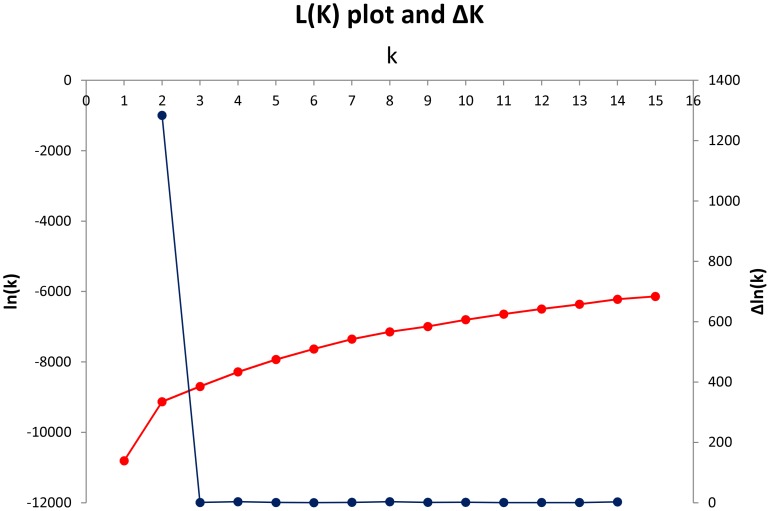
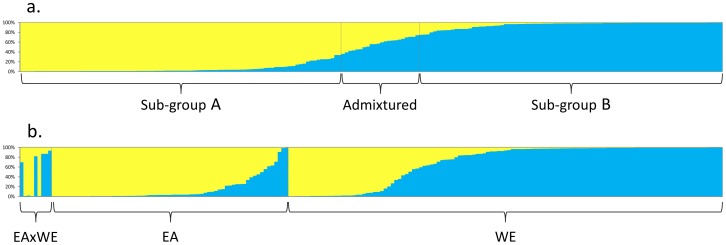
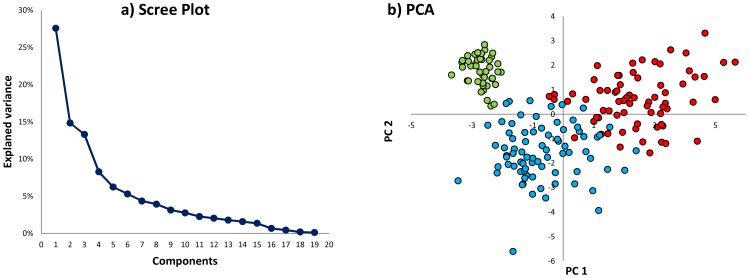
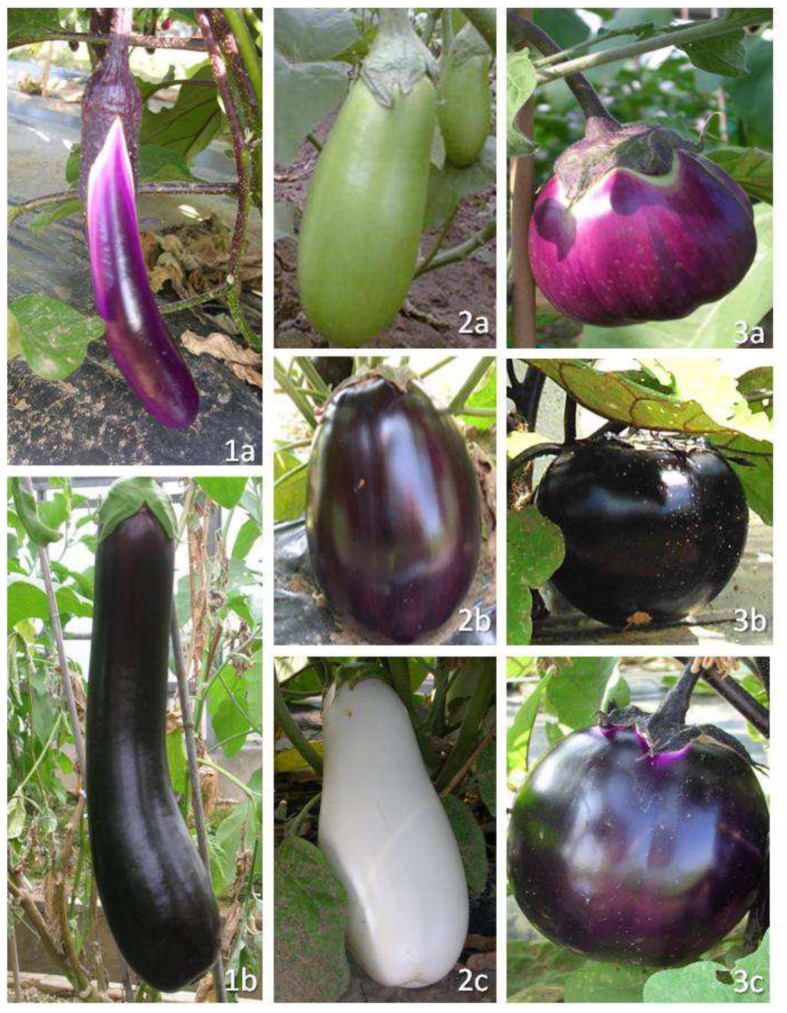
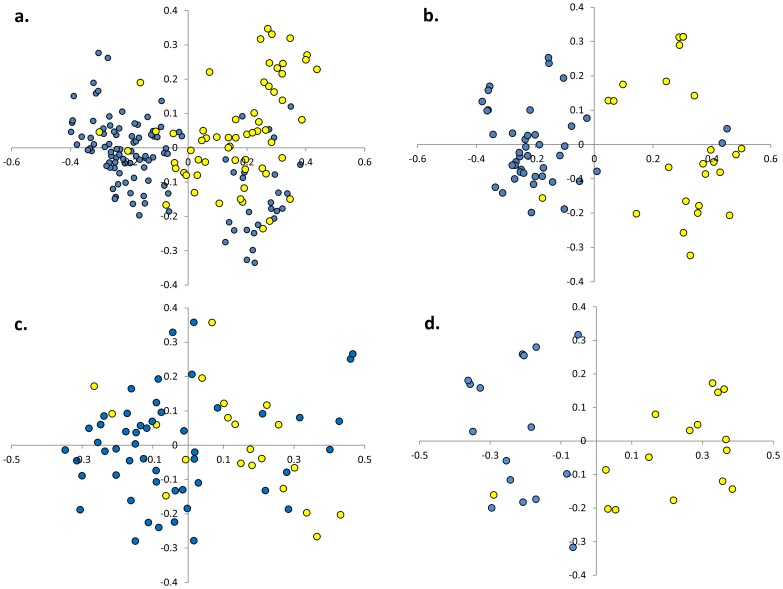
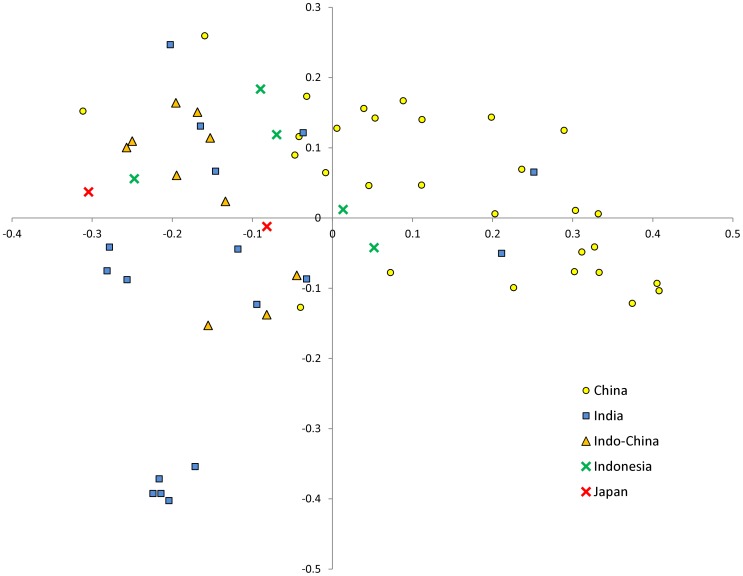
A collection of 238 eggplant breeding lines, heritage varieties and selections within local landraces provenanced from Asia and the Mediterranean Basin was phenotyped with respect to key plant and fruit traits, and genotyped using 24 microsatellite loci distributed uniformly throughout the genome. STRUCTURE analysis based on the genotypic data identified two major sub-groups, which to a large extent mirrored the provenance of the entries. With the goal to identify true-breeding types, 38 of the entries were discarded on the basis of microsatellite-based residual heterozygosity, along with a further nine which were not phenotypically uniform. The remaining 191 entries were scored for a set of 19 fruit and plant traits in a replicated experimental field trial. The phenotypic data were subjected to principal component and hierarchical principal component analyses, allowing three major morphological groups to be identified. All three morphological groups were represented in both the "Occidental" and the "Oriental" germplasm, so the correlation between the phenotypic and the genotypic data sets was quite weak. The relevance of these results for evolutionary studies and the further improvement of eggplant are discussed. The population structure of the core set of germplasm shows that it can be used as a basis for an association mapping approach.
Conflict of interest statement
Figures
References
-
- Lester (1991) Origin and domestication of the brinjal eggplant, Solanum melongena, from S. incanum, in Africa and Asia. Solanaceae III: taxonomy, chemistry, evolution. London: The Linnean Society of London. pp. 369–387.
-
- Weese TL, Bohs L (2010) Eggplant origins: Out of Africa, into the Orient. Taxon 59: 49–56.
-
- Meyer RS, Karol KG, Little DP, Nee MH, Litt A (2012) Phylogeographic relationships among Asian eggplants and new perspectives on eggplant domestication. Molecular Phylogenetics and Evolution 63: 685–701. - PubMed
-
- Kashyap AASW (2010) Starch Grains from Farmana Give New Insights into Harappan Plant Use. Antiquity Volume 084 Issue 326.
Publication types
MeSH terms
LinkOut - more resources
Full Text Sources
Other Literature Sources
