. 2013 Sep 11;8(9):e74991.
doi: 10.1371/journal.pone.0074991. eCollection 2013.

Topical drug delivery in chronic rhinosinusitis patients before and after sinus surgery using pulsating aerosols

Affiliations

Topical drug delivery in chronic rhinosinusitis patients before and after sinus surgery using pulsating aerosols

Winfried Möller et al. PLoS One. .

Abstract

Objectives: Chronic rhinosinusitis (CRS) is a common chronic disease of the upper airways and has considerable impact on quality of life. Topical delivery of drugs to the paranasal sinuses is challenging, therefore the rate of surgery is high. This study investigates the delivery efficiency of a pulsating aerosol in comparison to a nasal pump spray to the sinuses and the nose in healthy volunteers and in CRS patients before and after sinus surgery.

Methods: (99m)Tc-DTPA pulsating aerosols were applied in eleven CRSsNP patients without nasal polyps before and after sinus surgery. In addition, pulsating aerosols were studied in comparison to nasal pump sprays in eleven healthy volunteers. Total nasal and frontal, maxillary and sphenoidal sinus aerosol deposition and lung penetration were assessed by anterior and lateral planar gamma camera imaging.

Results: In healthy volunteers nasal pump sprays resulted in 100% nasal, non-significant sinus and lung deposition, while pulsating aerosols resulted 61.3+/-8.6% nasal deposition and 38.7% exit the other nostril. 9.7+/-2.0 % of the nasal dose penetrated into maxillary and sphenoidal sinuses. In CRS patients, total nasal deposition was 56.7+/-13.3% and 46.7+/-12.7% before and after sinus surgery, respectively (p<0.01). Accordingly, maxillary and sphenoidal sinus deposition was 4.8+/-2.2% and 8.2+/-3.8% of the nasal dose (p<0.01). Neither in healthy volunteers nor in CRS patients there was significant dose in the frontal sinuses.

Conclusion: In contrast to nasal pump sprays, pulsating aerosols can deliver significant doses into posterior nasal spaces and paranasal sinuses, providing alternative therapy options before and after sinus surgery. Patients with chronic lung diseases based on clearance dysfunction may also benefit from pulsating aerosols, since these diseases also manifest in the upper airways.


Conflict of interest statement

Competing Interests: The study was in part supported by research grants from Pari GmbH, Starnberg, Germany. US and MK are employees of Pari GmbH, Starnberg, Germany, and Pari provided the Vibrent pulsating aerosol devices during the study. The funding did not influence the data collection, data analysis and results, nor data interpretation. All authors except US and MK (Pari employees) are not involved in consultancy, patents, products in development or marketed products of the funder Pari GmbH. Funding by Pari GmbH does not alter the authors' adherence to all the PLOS ONE policies on sharing data and materials, as detailed online in PLOS ONE's guide for authors. All other authors have declared that no competing interests exist.

Figures

Figure 1
Figure 1. Definition of regions of interest (ROI’s) in anterior gamma camera images.
Superposition of the anterior gamma camera image with a representative coronal CT slice of a CRS patient before FESS and definition of the total nasal, central nasal and sinus ROI’s.
Figure 2
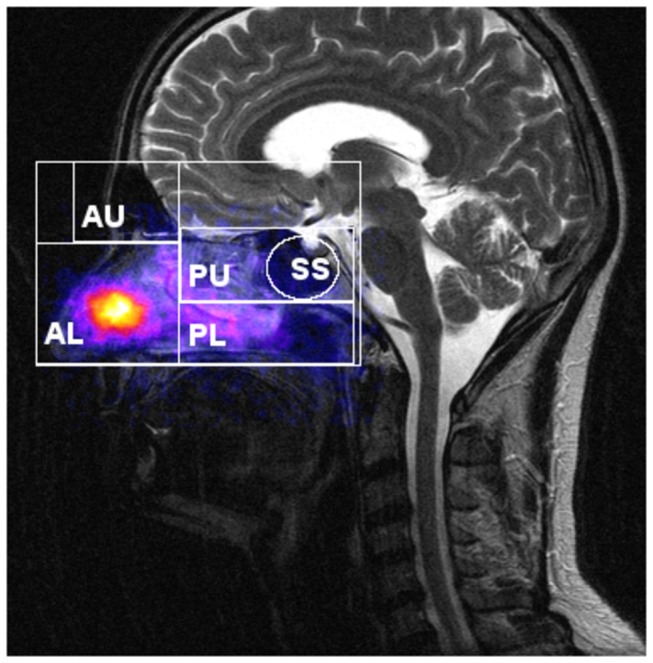
Figure 2. Definition of regions of interest (ROI’s) in lateral gamma camera images.
Superposition of the lateral gamma camera image with a representative sagittal CT slice in a healthy volunteer and definition of the different ROI’s: total nasal (TN), anterior upper (AU: frontal sinuses), anterior lower (AL: nostrils, nasal valve and first cm of inferior turbinate), posterior lower (PL: turbinates, nasal floor, hard and soft palate), and posterior upper (PU: upper posterior nasal cavity, middle turbinate, ethmoidal and sphenoidal sinuses), and sphenoidal sinuses (SS).
Figure 3
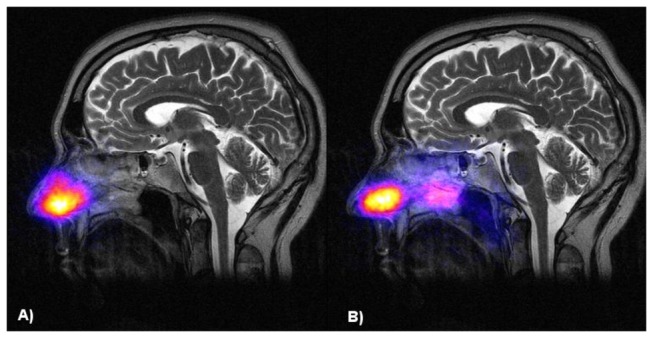
Figure 3. Comparison of deposition distribution of nasal pump spray and pulsating aerosol application.
Lateral deposition distribution of nasal pump spray (A) and pulsating aerosol application (B) in a healthy volunteer (superposition of the lateral gamma camera image with an individual representative sagittal MRI slice).
Figure 4
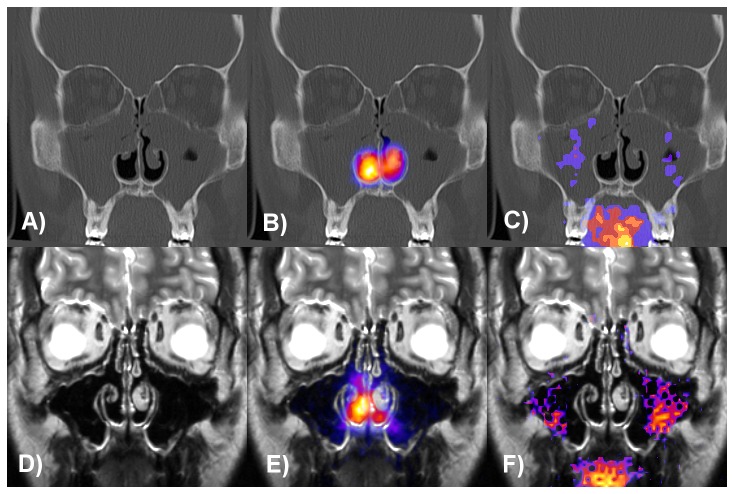
Figure 4. Coronal CT and MRI slices of a CRS patient before and 166 days after sinus surgery.
Superposition of the anterior gamma camera images with the CT slice before FESS (A–C) without (B) and with (C) central nasal lead shield mask and with the MRI slice after FESS (D–F) without (E) and with (F) lead shield. Lund-Mackay score was 15 and maxillary sinus deposition was 1.3% (C) before and 7.9% (F) after surgery. The patient had septoplasty and conchotomy on both sides eight years before participation in the study.
Figure 5
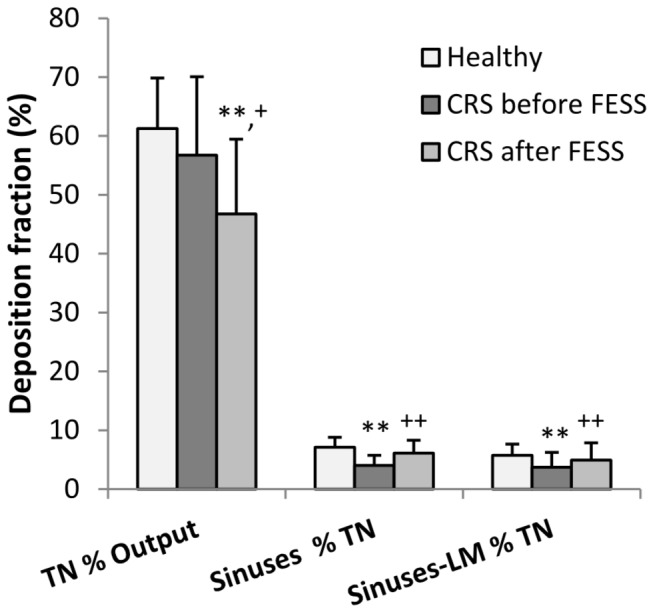
Figure 5. Analysis of deposition fractions from anterior gamma camera imaging.
Anterior deposition fractions in total nose (TN % nebulizer output) and in maxillary sinuses without and with lead mask (LM) shielding of the central nasal cavity (% total nasal deposition, TN) in healthy volunteers and in CRS patients before and after sinus surgery (FESS) after pulsating aerosol delivery. **: p < 0.01 compared to healthy; +: p < 0.05 and ++: p < 0.01 before versus after FESS in CRS patients.
Figure 6
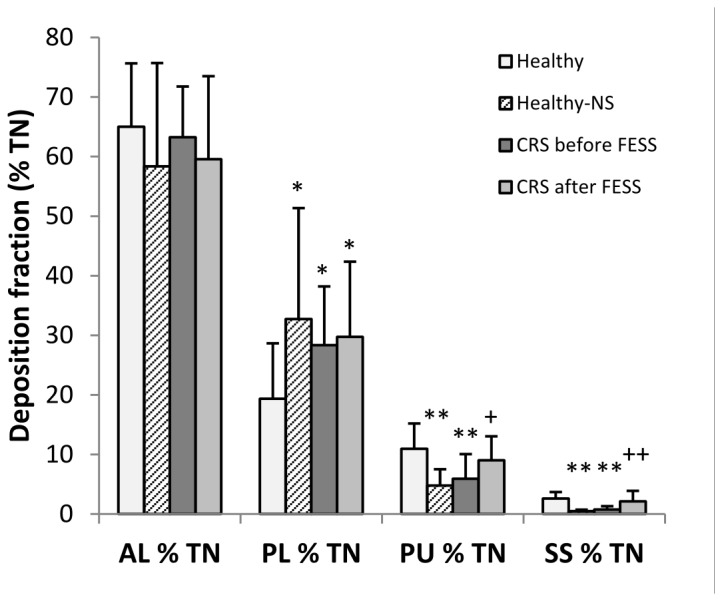
Figure 6. Analysis of deposition fractions from lateral gamma camera imaging.
Lateral nasal deposition fractions (mean +/- standard deviation) in different compartments according to ROI’s as defined in Figure 2 in percent of total lateral nasal deposition (% TN): anterior lower (AL) = nostrils and nasal valve; posterior lower (PL) = turbinates, nasal floor, hard and soft palate; posterior upper (PU) = upper posterior nasal cavity, middle turbinate, ethmoidal and sphenoid sinuses; sphenoidal sinuses (SS). Pulsating aerosols were applied in healthy volunteers and in CRS patients before and after sinus surgery (FESS). In addition nasal pump sprays (NS) were applied in healthy volunteers. The AU analysis (frontal sinuses) was not included because deposition was below 1% in all volunteers and application modes studied. *: p < 0.05 and **: p < 0.01 compared to healthy volunteers; +: p < 0.05 ++: p < 0.01 before versus after FESS in CRS patients.
Figure 7
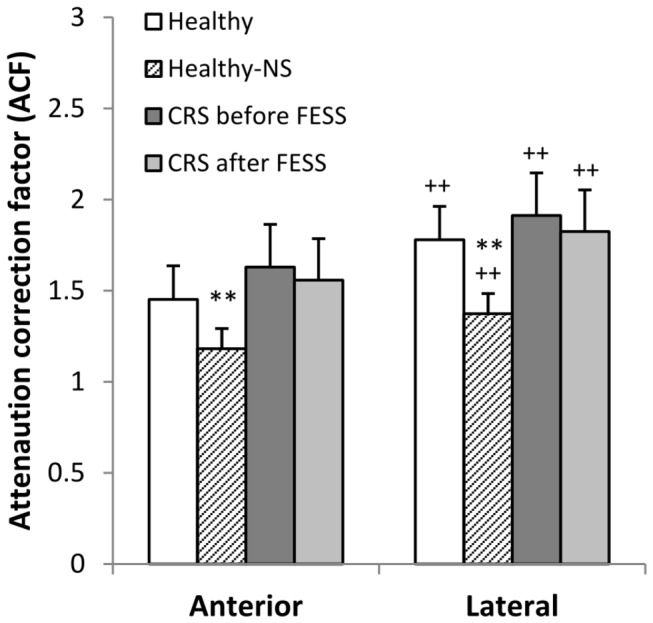
Figure 7. Analysis of attenuation correction factors after anterior and lateral gamma camera imaging.
Anterior and lateral attenuation correction factors (ACF) after pulsating aerosol (PA) delivery in healthy volunteers and in CRS patients before and after sinus surgery (FESS) as well as in healthy volunteers after nasal spray application (Healthy-NS). **: p < 0.01 compared to Healthy-PA, ++: p < 0.01 lateral versus anterior imaging.

References

    1. Pleis JR, Lucas JW (2009) Summary health statistics for U.S. adults: National Health Interview Survey. Vital Health Statist S 10 Data Natl Health Surv, 2007: 1-159. - PubMed
    1. Hamilos DL (2011) Chronic rhinosinusitis: Epidemiology and medical management. J Allergy Clin Immunol 128: 693-707. doi:10.1016/j.jaci.2011.08.004. PubMed: 21890184. - DOI - PubMed
    1. Fokkens W, Lund V, Mollol J (2007) The European Position Paper on Rhinosinusitis and Nasal Polyps (EP3OS) group. Rhinology 45: 1-137. PubMed: 17432061. - PubMed
    1. Schappert SM, Rechtsteiner EA (2008) Ambulatory medical care utilization estimates for 2006. Natl Health Statistics Rep: 1-29. PubMed: 18958997. - PubMed
    1. Fasano MB (2010) Combined airways: impact of upper airway on lower airway. Curr Opin Otolaryngol Head Neck Surg 18: 15–20. PubMed: 19915468. - PubMed

Publication types

MeSH terms