


High cost and low survival rate in high comorbidity incident elderly hemodialysis patients
- PMID: 24040407
- PMCID: PMC3767633
- DOI: 10.1371/journal.pone.0075318
High cost and low survival rate in high comorbidity incident elderly hemodialysis patients
Abstract
Background: The comorbidity index is a predictor of mortality in dialysis patients but there are few reports for predicting elderly dialysis mortality and national population-based cost studies on elderly dialysis. The aim of this study was to evaluate the long-term mortality of incident elderly dialysis patients using the Deyo-Charlson comorbidity index (CCI) and to assess the inpatient and outpatient visits along with non-dialysis costs.
Methods: Data were obtained from catastrophic illness registration of the Taiwan National Health Insurance Research Database. Incident elderly dialysis patients (age ≥75 years) receiving hemodialysis for more than 90 days between Jan 1, 1998, and Dec 31, 2007, were included. Baseline comorbidities were determined one year prior to the first dialysis day according to ICD-9 CM codes. Survival time, mortality rate, hospitalization time, outpatient visit frequency, and costs were calculated for different age and CCI groups.
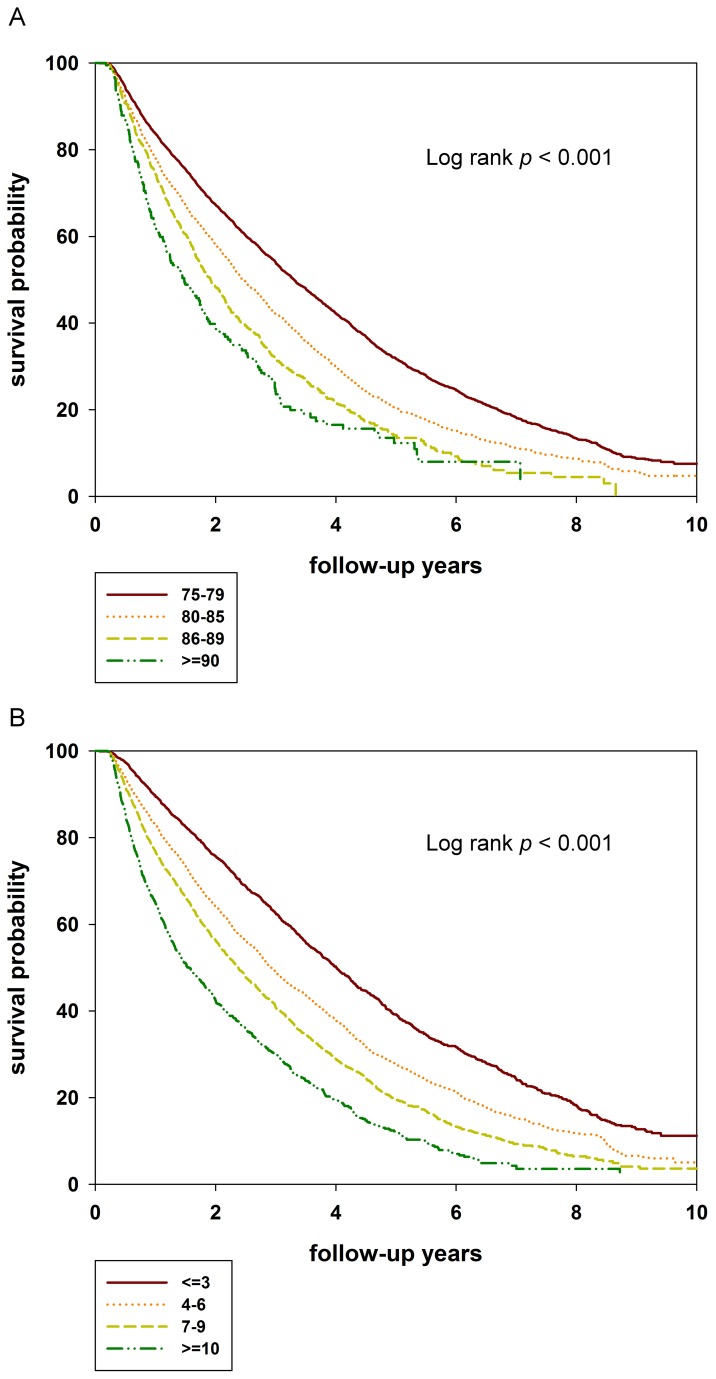
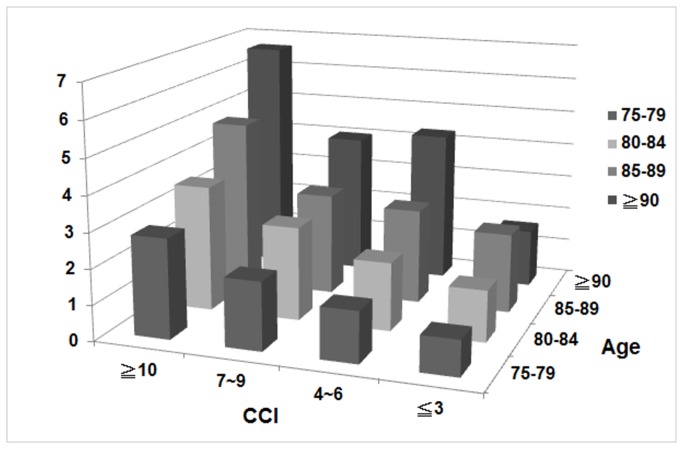
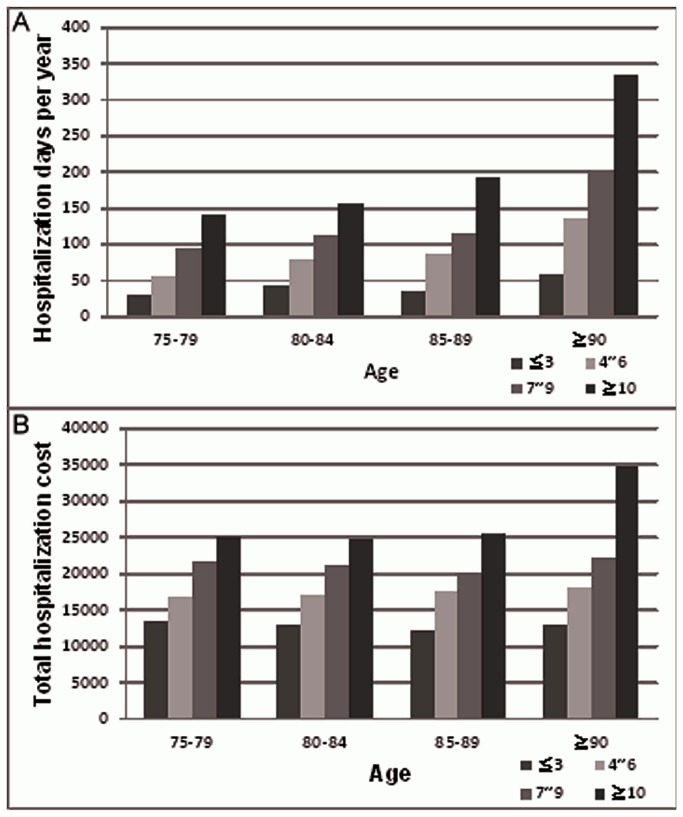
Results: In 10,759 incident elderly hemodialysis patients, hazard ratios for all-cause mortality were significantly increased in the different age groups (p < 0.001) and CCI patients (p < 0.001). Death rates increased with both increasing age and CCI score. High comorbidity incident hemodialysis and elderly patients were found to have increased length of hospital stay and total hospitalization costs.
Conclusions: This population-based cohort study indicated that both age and higher CCI values were predictors of survival in incident elderly hemodialysis. Increased costs and mortality rates were evident in the oldest patients and in those with high CCI scores. Conservative treatment might be considered in high comorbidity and low-survival rate end stage renal disease (ESRD) patients.
Conflict of interest statement
Figures
References
-
- Feest TG, Mistry CD, Grimes DS, Mallick NP (1990) Incidence of advanced chronic renal failure and the need for end stage renal replacement treatment. BMJ 301: 897-900. doi:10.1136/bmj.301.6757.897. PubMed: 2261533. - DOI - PMC - PubMed
-
- Kurella Tamura M (2009) Incidence, management, and outcomes of end-stage renal disease in the elderly. Curr Opin Nephrol Hypertens 18: 252-257. doi:10.1097/MNH.0b013e328326f3ac. PubMed: 19374012. - DOI - PMC - PubMed
MeSH terms
LinkOut - more resources
Full Text Sources
Other Literature Sources
Medical
Research Materials
