Capsule endoscopy: a dangerous but diagnostic tool
- PMID: 24042204
- PMCID: PMC3794098
- DOI: 10.1136/bcr-2013-009932
Capsule endoscopy: a dangerous but diagnostic tool
Abstract
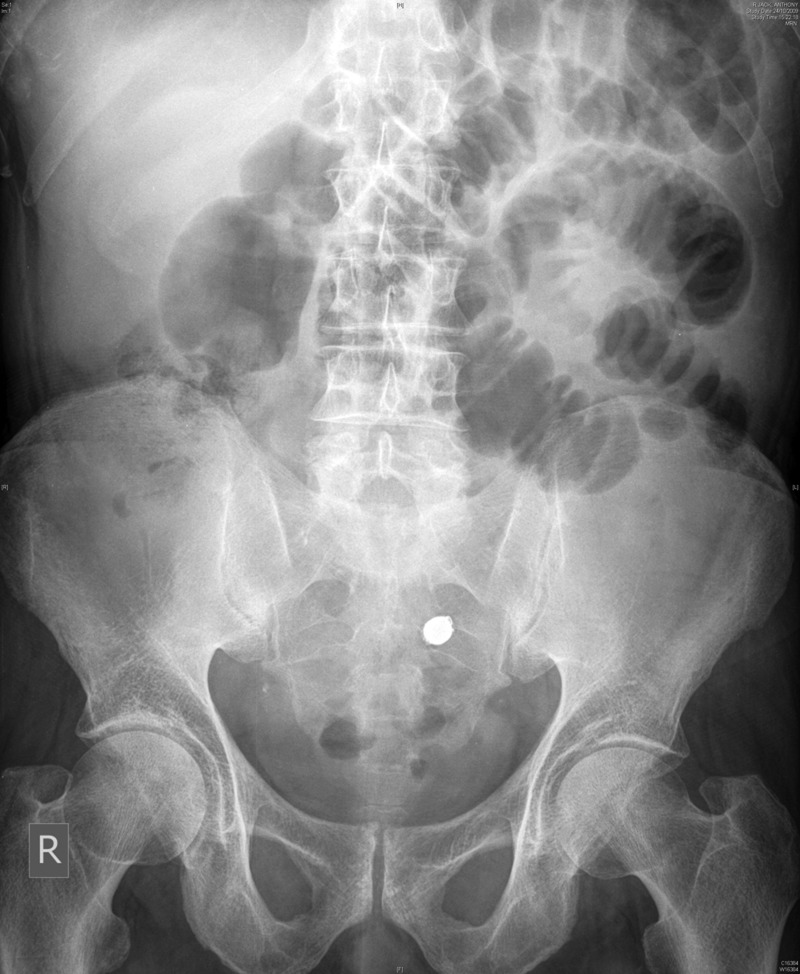
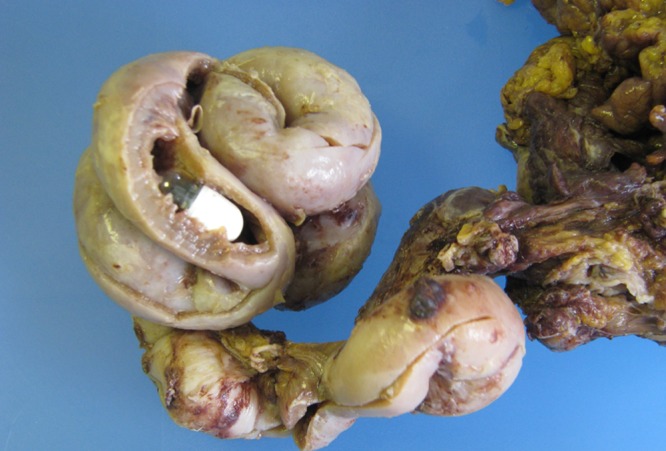
Current guidelines advocate the use of capsule endoscopy (CE) when gastroscopy and colonoscopy have failed to demonstrate the origin of occult gastrointestinal bleeding. CE has been used successfully in the diagnosis of a variety of conditions such as coeliac disease, polyposis syndromes and small bowel tumours, when routine investigations have failed to yield a diagnosis. In conditions where the diameter of the bowel lumen may be compromised, such as Crohn's disease, CE is contraindicated because of the risk of retention and/or small bowel obstruction. Here we present an unusual case where CE resulted in small bowel obstruction and perforation in a segment of small bowel which had become inflamed secondary to a carcinoid tumour.
Figures
References
-
- Iddan G, Meron G, Glukhovsky A, et al. Wireless capsule endoscopy. Nature 2000;2013:417. - PubMed
-
- Eliakim R. Video capsule endoscopy of the small bowel. Curr Opin Gastroenterol 2010;2013:129–33 - PubMed
-
- Sidhu R, Sanders DS, Morris AJ, et al. Guidelines on small bowel enteroscopy and capsule endoscopy in adults. Gut 2008;2013:125–36 - PubMed
-
- Liao Z, Gao R, Xu C, et al. Indications and detection, completion, and retention rates of small-bowel capsule endoscopy: a systematic review. Gastrointest Endosc 2010;2013:280–6 - PubMed
-
- Rondonotti E, Soncini M, Girelli C, et al. Small bowel capsule endoscopy in clinical practice: a multicenter 7-year survey. Eur J Gastroenterol Hepatol 2010;2013:1380–6 - PubMed
Publication types
MeSH terms
Supplementary concepts
LinkOut - more resources
Full Text Sources
Other Literature Sources
Medical