


Review
doi: 10.3390/molecules180911384.
Oxetane synthesis through the Paternò-Büchi reaction
Affiliations
- PMID: 24043139
- PMCID: PMC6269742
- DOI: 10.3390/molecules180911384
Item in Clipboard
Review
Oxetane synthesis through the Paternò-Büchi reaction
Molecules.
.
Abstract
The Paternò-Büchi reaction is a photochemical reaction between a carbonyl compound and an alkene to give the corresponding oxetane. In this review the mechanism of the reaction is discussed. On this basis the described use in the reaction with electron rich alkenes (enolethers, enol esters, enol silyl ethers, enanines, heterocyclic compounds has been reported. The stereochemical behavior of the reaction is particularly stressed. We pointed out the reported applications of this reaction to the synthesis of naturally occuring compounds.
Figures
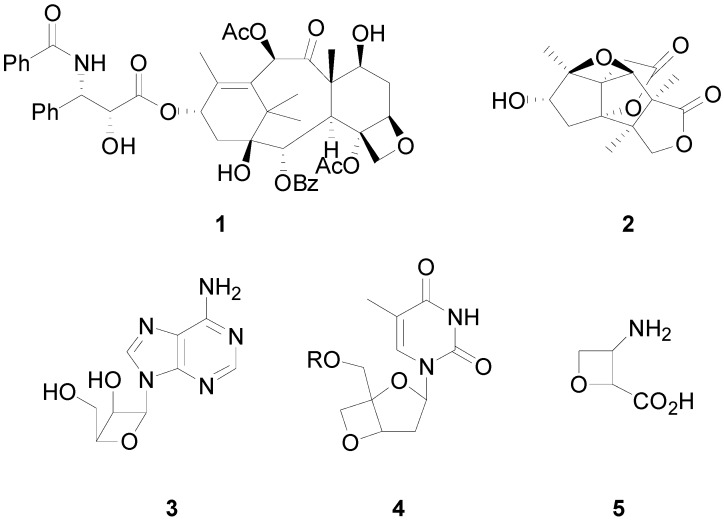
Natural and biologically active compounds containing the oxetane ring.
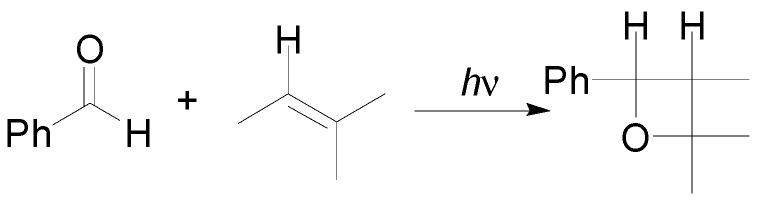
The reaction performed by Paternò.
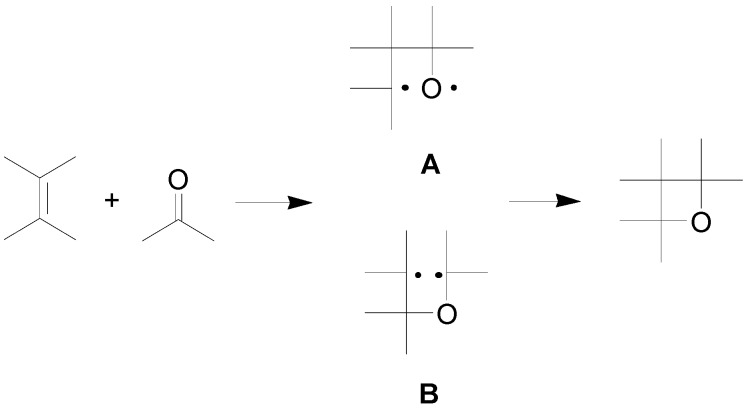
Possible mechanisms of the Paternò-Büchi reaction.

Reaction of benzophenone with alkenyl sulphide.
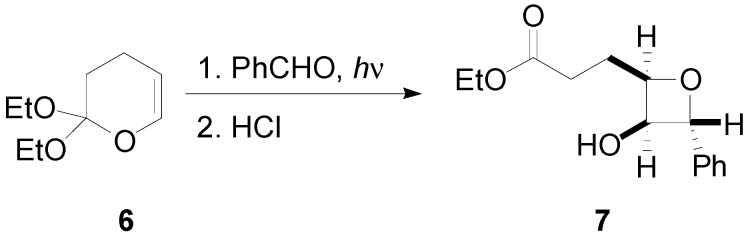
Reaction of an enol ether.
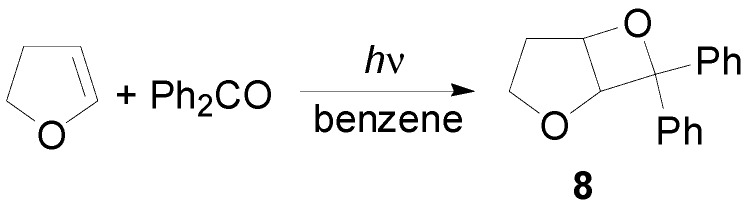
Reaction of 2,3-dihydrofuran.
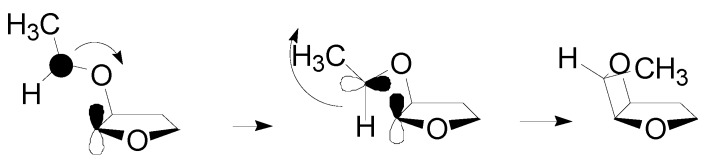
Ring closure of the oxetane ring in the reaction of 2,3-dihydrofuran with acetaldehyde.
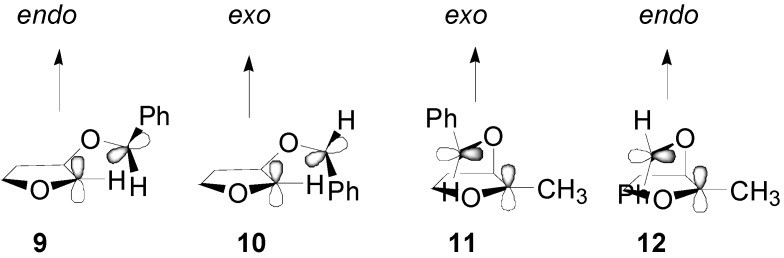
Possible biradicals in the reactions between 2,3-dihydrofuran and benzaldehyde.
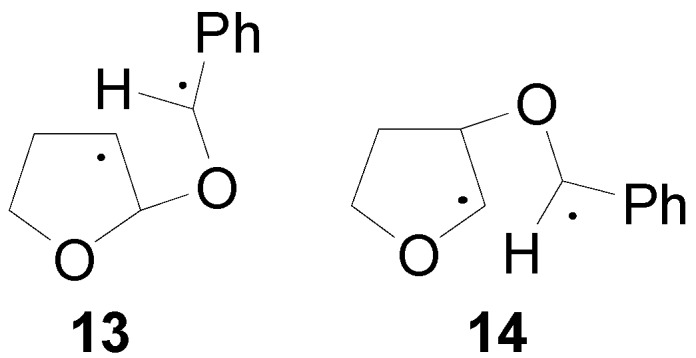
Possible biradical intermediates in the reaction of 2,3-dihydrofuran with benzaldehyde.
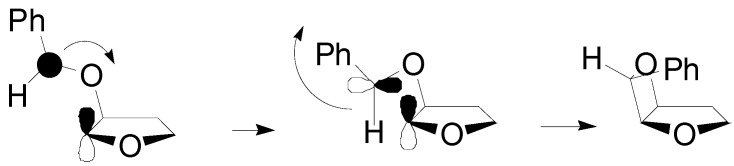
Ring closure reaction in the formation of the endo isomer of the adduct between 2,3-dihydrofuran and benzaldehyde.
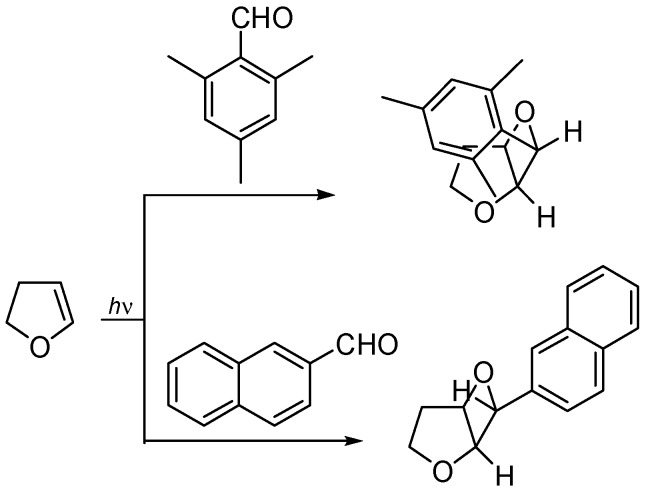
Different stereochemical behavior in the reactions of 2,3-dihydrofuran.
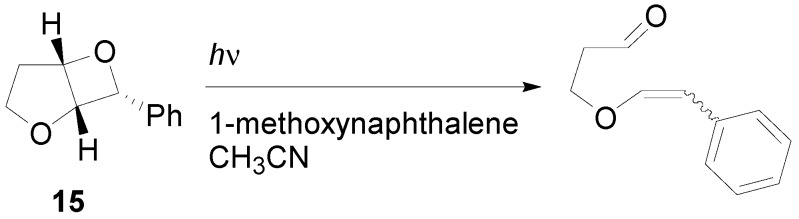
Metathesis reaction on an oxetane.

Reaction of a silyl derivative of cinnamyl alcohol.
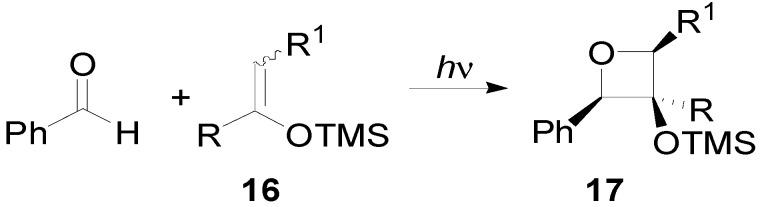
Reaction of silyl enol ether.
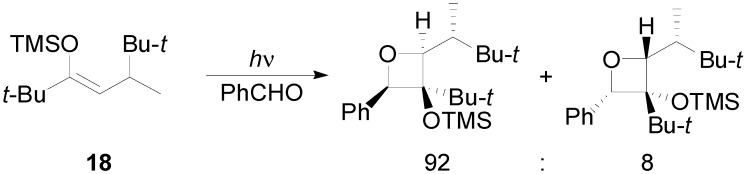
Diastereoselectivity in the reaction of a silyl enol ether.
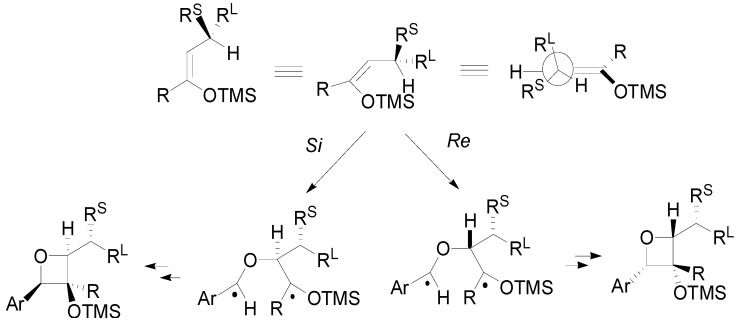
Diastereoselectivity in chiral enol silyl ethers reaction with benzaldehyde.
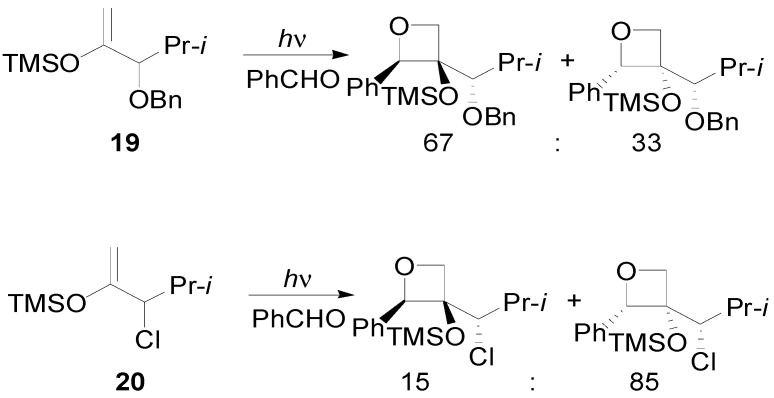
Diastereoslectivity on the reaction of some enol ethers.
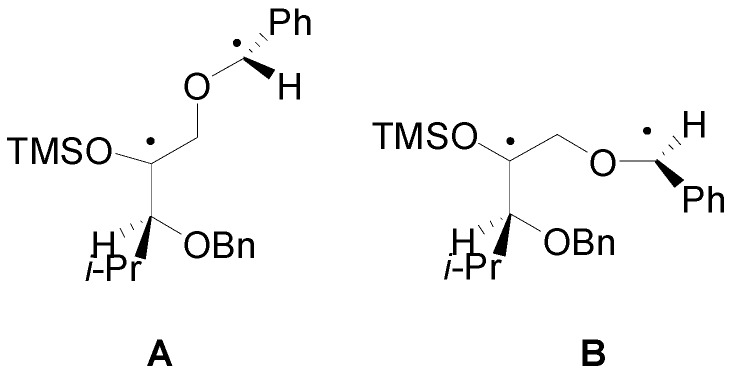
The conformers (A and B) of the biradical intermediate in the photoreaction between 19 and benzaldehyde.
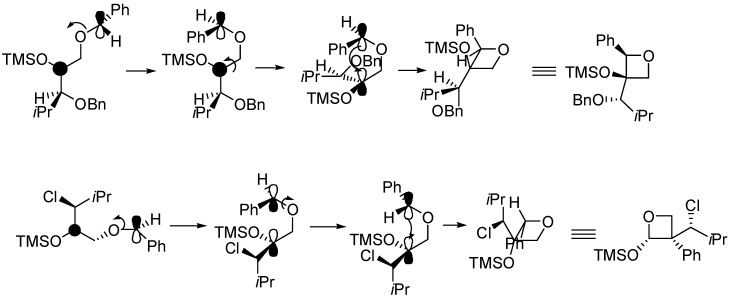
Possible explanation of the observed diastereoselectivity in the reaction of chiral enol ethers.
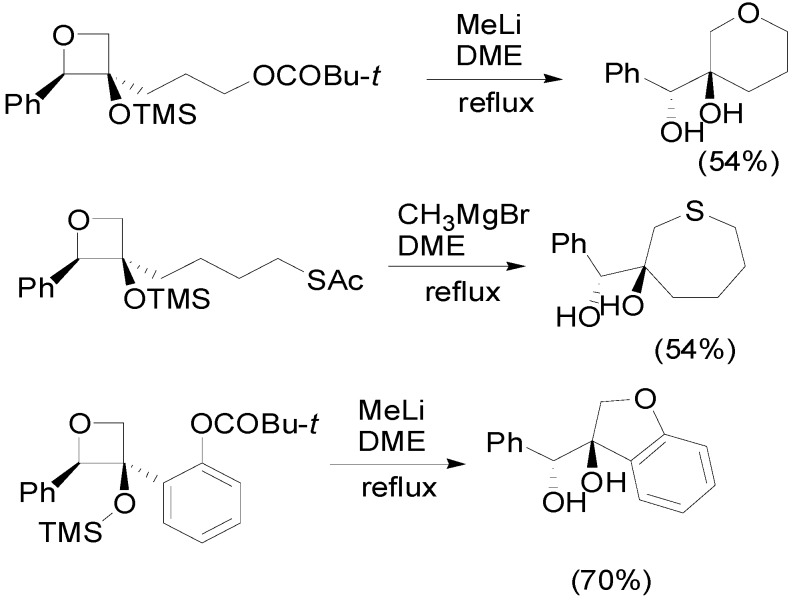
Elaboration on the oxetane ring.

The reaction O,S-ketene acetals with carbonyl compound. A possible explanation of the stereochemical behavior.
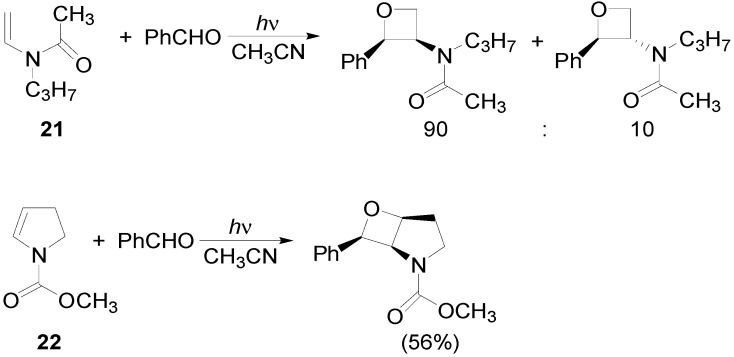
Reacions of N-acyl enamines.
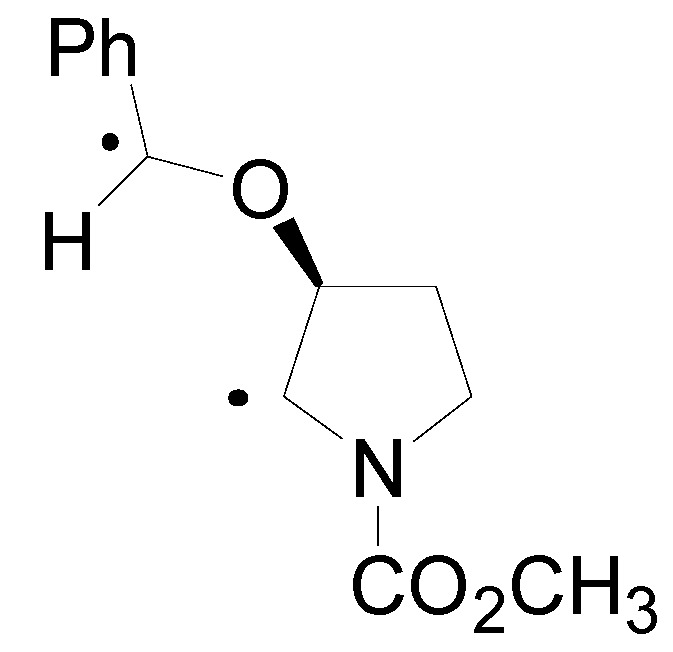
Optimized structure of the biradical intermediate in the reaction of compound 22.
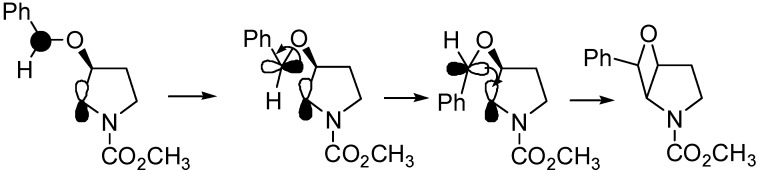
Possible explanation of the stereoselctivity observed with N-acyl enamines.
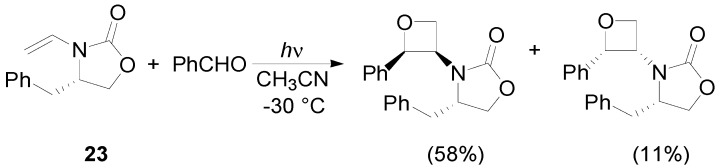
Reaction with a chiral enamine.
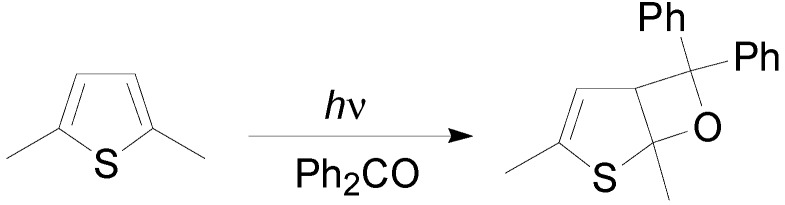
The reaction of 2,5-dimethylthiophene with benzophenone.
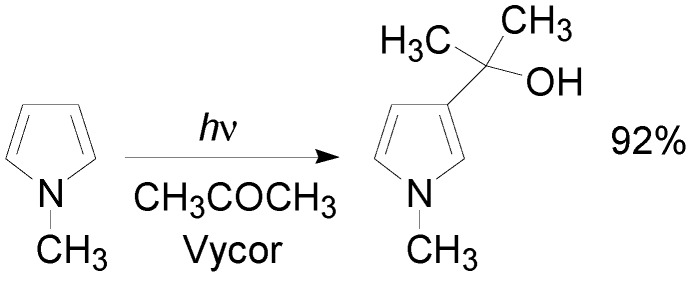
The reaction of N-methylpyrrole with acetone.
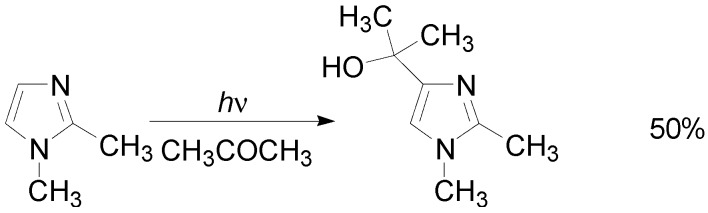
Reaction of N-methyl-2-methylimidazole with acetone.
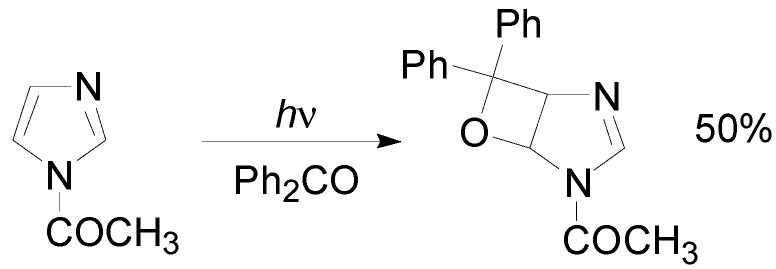
The reaction of N-acetylimidazole with benzophenone.
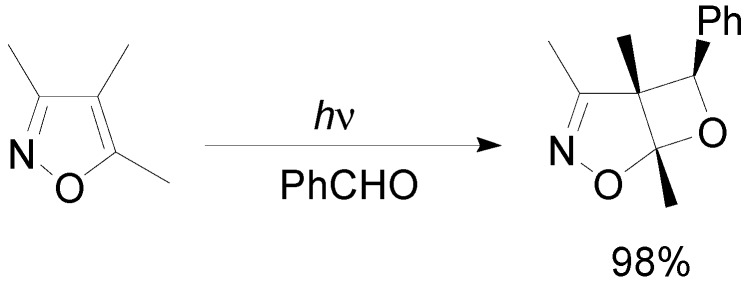
Reaction of an isoxazole derivative.
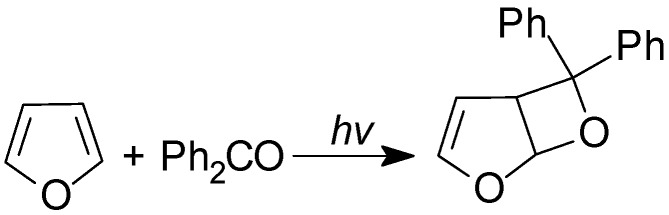
Reaction of furan.
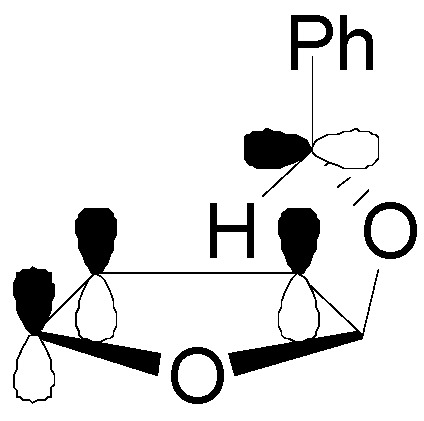
Structure of the biradical intermediate in the reaction of furan with benzaldehyde.
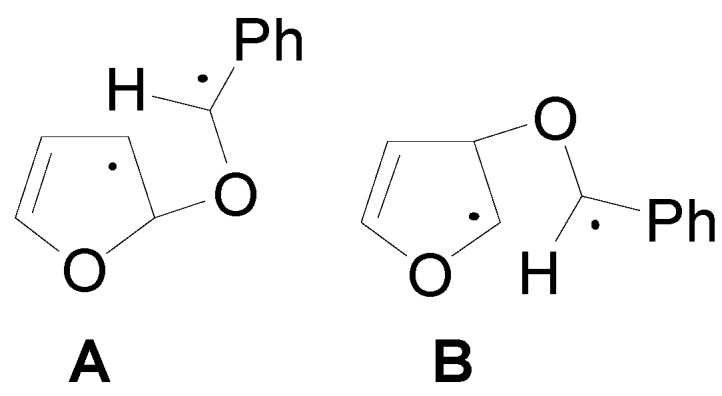
Possible biradical intermediates in the reaction of furan with benzaldehyde.
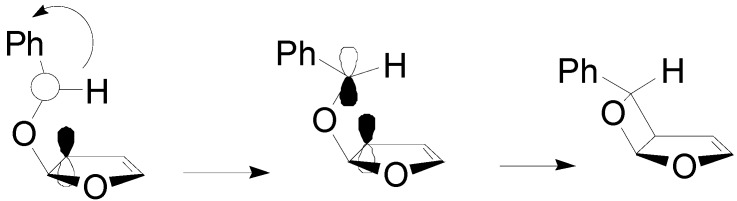
Ring closure reaction in the formation of the exo isomer of the adduct between furan and benzaldehyde.
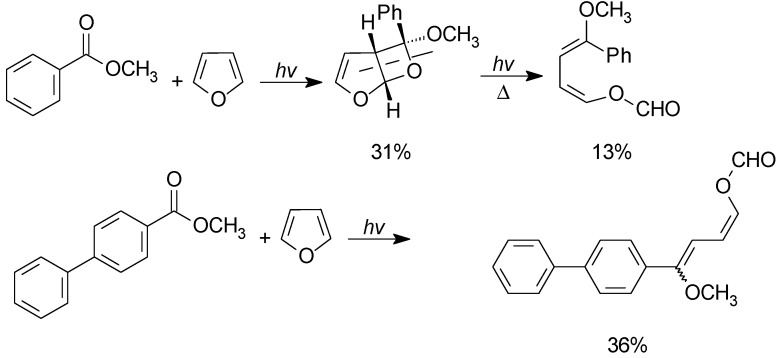
Metathesis reactions on oxetanes obtained from furan derivatives.
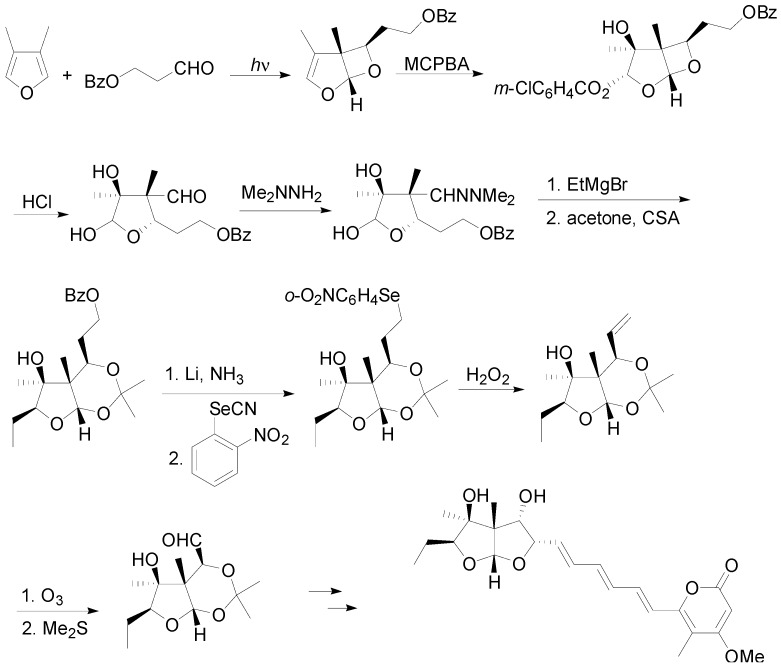
Synthesis of asteltoxin.
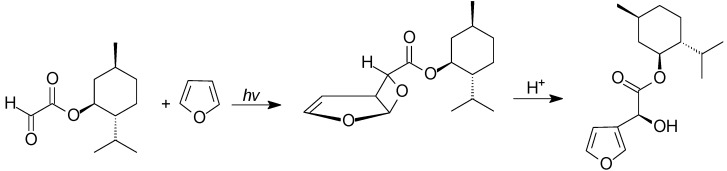
Reaction of furan with a chiral glyoxylate.
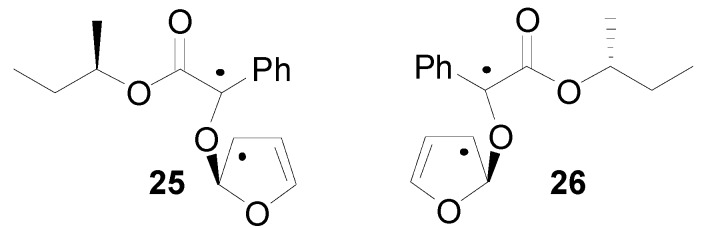
Radical intermediates in the reaction of chiral phenylglyoxylates with furan.
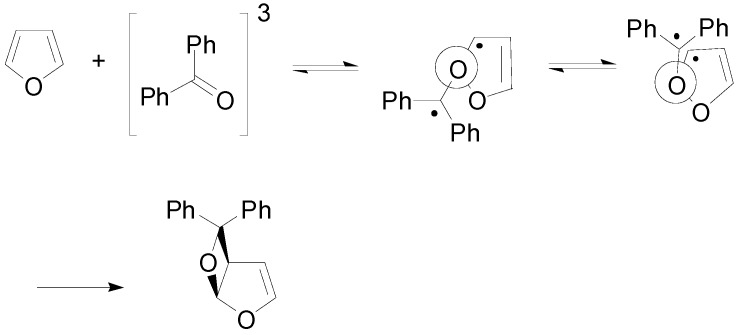
The reaction of furan with benzophenone. Conformers of the biradical intermediate.
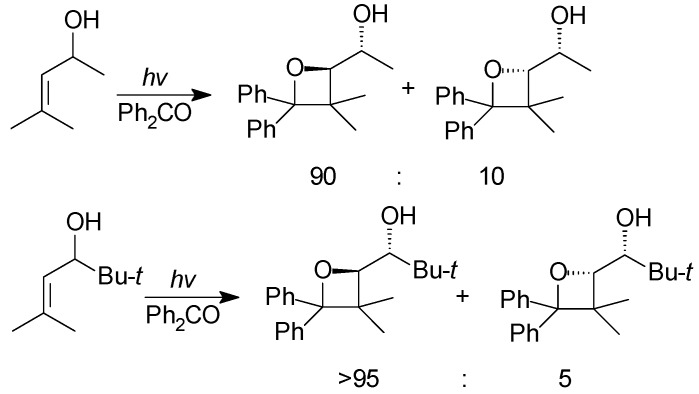
Reaction of allylic alcohol derivatives with benzophenone.
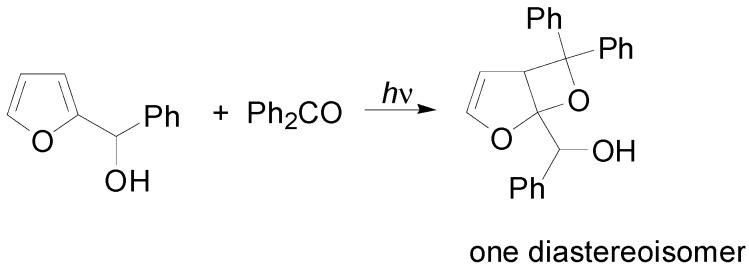
Reaction of 2-furylmethanol derivatives.
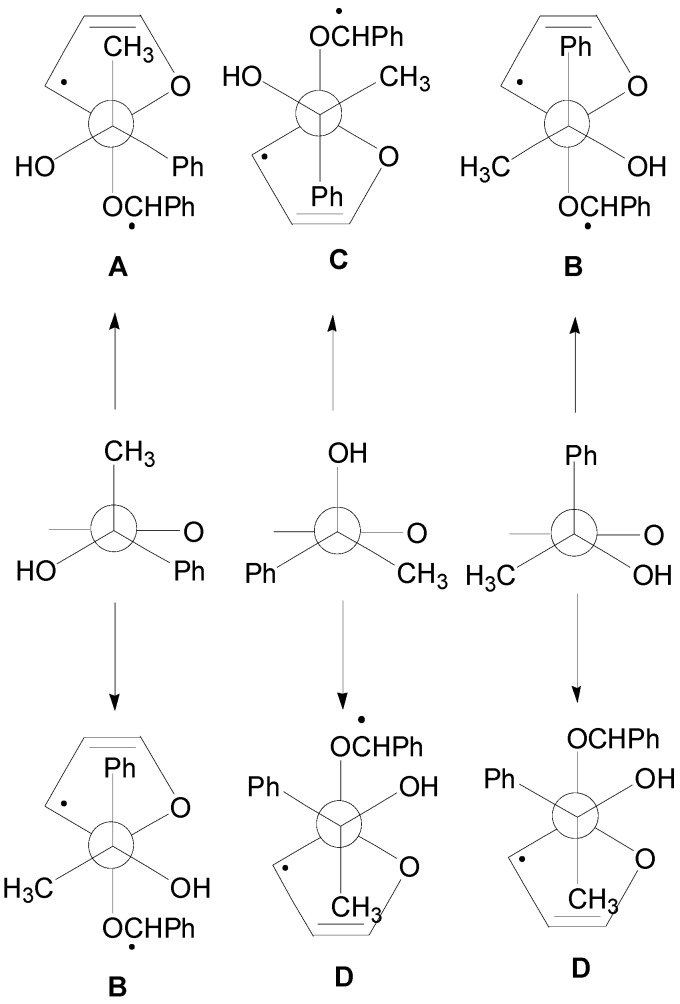
Possible conformations of the biradical intermediate from the reaction of 1-methyl-1-phenyl-1-(2-furyl)methanol with benzaldehyde.
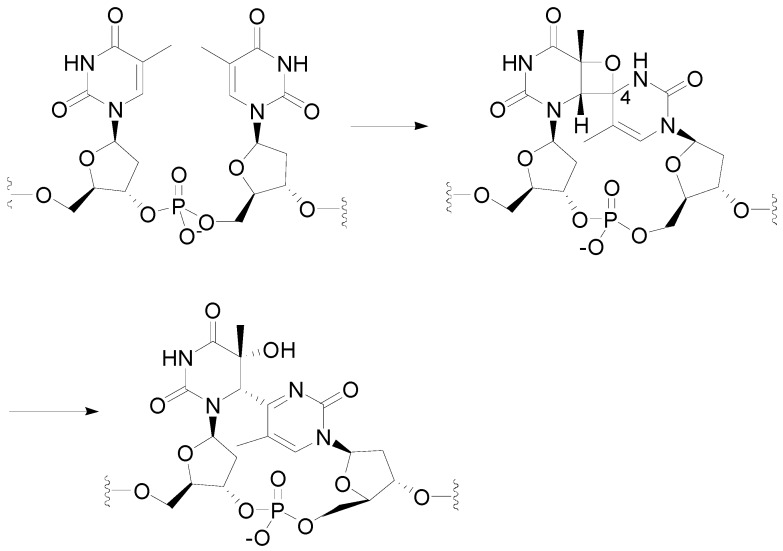
Photochemical reaction between DNA pyrimidine derivatives.
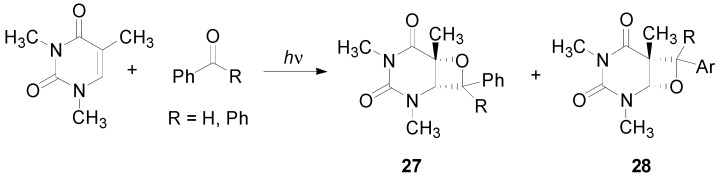
Reaction of uracil derivative with benzophenone and benzaldehyde.
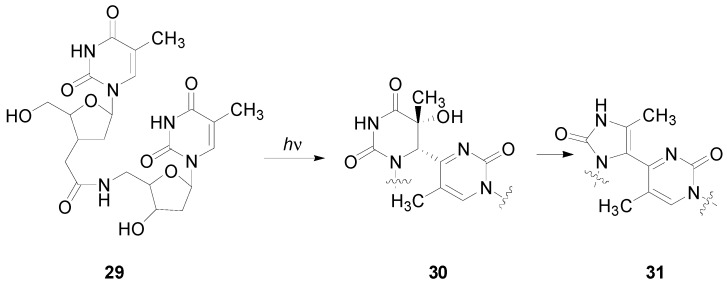
Irradiation of 29.
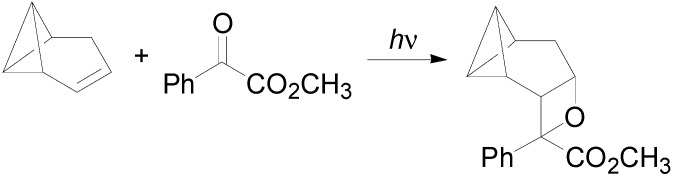
Reaction of homobenzvalene.
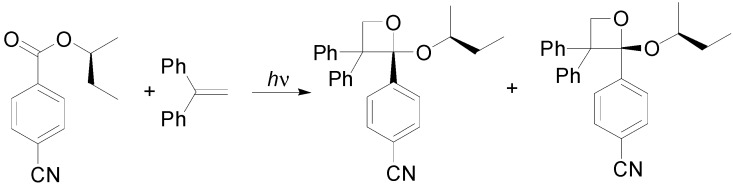
Esters as carbonyl compounds in the Paternò-Büchi reaction.
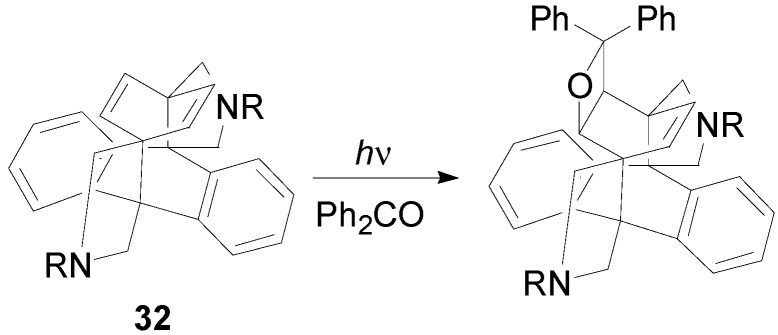
Reaction of a paracyclophane derivative.
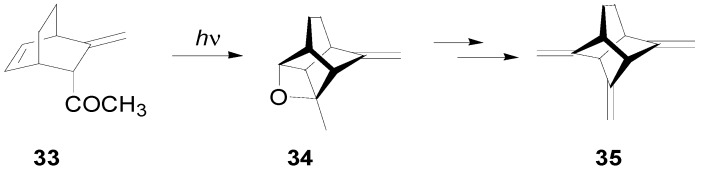
Intramolecular oxetane formation in the synthesis of 2,7,9-trimethylenetricyclo[4.3.0.03,8]nonane.
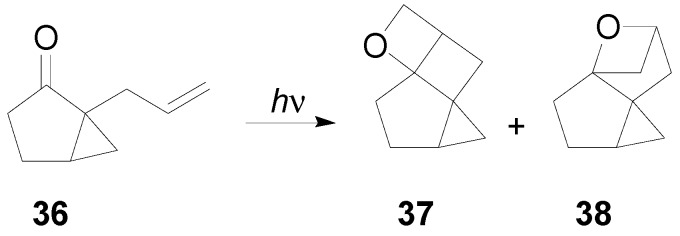
Intramolecular oxetane formation on allyl cyclopentanone derivatives.
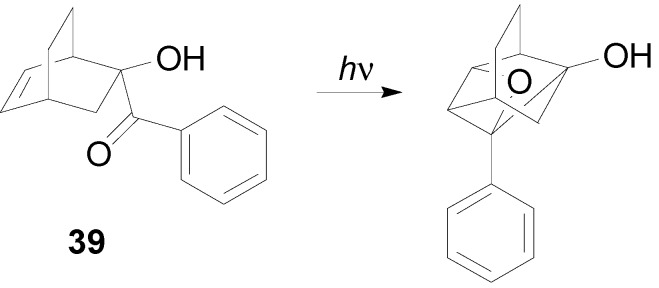
Intramolecular oxetane formation in the reaction of 39.

The use of silyl derivatives in the intramolecular synthesis of oxetanes.
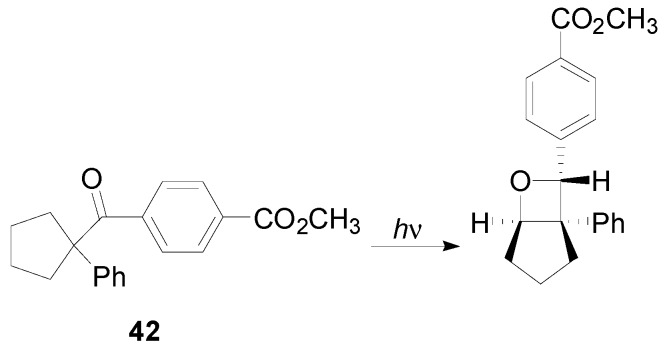
Chiral intramolecular oxetane synthesis.
Similar articles
-
The Paternò-Büchi reaction - a comprehensive review.Photochem Photobiol Sci. 2019 Oct 9;18(10):2297-2362. doi: 10.1039/c9pp00148d. Photochem Photobiol Sci. 2019. PMID: 31273370
-
Visible-Light-Driven [2 + 2] Photocycloadditions between Benzophenone and C═C Bonds in Unsaturated Lipids.J Am Chem Soc. 2020 Feb 19;142(7):3499-3505. doi: 10.1021/jacs.9b12120. Epub 2020 Feb 11. J Am Chem Soc. 2020. PMID: 31994883
-
Visible-Light-Enabled Paternò-Büchi Reaction via Triplet Energy Transfer for the Synthesis of Oxetanes.Org Lett. 2020 Aug 21;22(16):6516-6519. doi: 10.1021/acs.orglett.0c02316. Epub 2020 Aug 11. Org Lett. 2020. PMID: 32806149
-
Synthesis of Azulene Derivatives from 2H-Cyclohepta[b]furan-2-ones as Starting Materials: Their Reactivity and Properties.Int J Mol Sci. 2021 Oct 1;22(19):10686. doi: 10.3390/ijms221910686. Int J Mol Sci. 2021. PMID: 34639027 Free PMC article. Review.
-
Synthesis of azetidines by aza Paternò-Büchi reactions.Chem Sci. 2020 Jun 12;11(29):7553-7561. doi: 10.1039/d0sc01017k. eCollection 2020 Aug 7. Chem Sci. 2020. PMID: 32832061 Free PMC article. Review.
Cited by
-
Strain Release Chemistry of Photogenerated Small-Ring Intermediates.Chemistry. 2021 Mar 8;27(14):4500-4516. doi: 10.1002/chem.202004178. Epub 2021 Jan 15. Chemistry. 2021. PMID: 33080091 Free PMC article. Review.
-
Oxetane-, Azetidine-, and Bicyclopentane-Bearing N-Heterocycles from Ynones: Scaffold Diversification via Ruthenium-Catalyzed Oxidative Alkynylation.Org Lett. 2023 Aug 11;25(31):5907-5910. doi: 10.1021/acs.orglett.3c02213. Epub 2023 Aug 1. Org Lett. 2023. PMID: 37527501 Free PMC article.
-
Chiral α-Stereogenic Oxetanols and Azetidinols via Alcohol-Mediated Reductive Coupling of Allylic Acetates: Enantiotopic π-Facial Selection in Symmetric Ketone Addition.ACS Catal. 2022 May 20;12(10):6172-6179. doi: 10.1021/acscatal.2c01647. Epub 2022 May 9. ACS Catal. 2022. PMID: 37063244 Free PMC article.
-
Photochemical Approaches to Complex Chemotypes: Applications in Natural Product Synthesis.Chem Rev. 2016 Sep 14;116(17):9683-747. doi: 10.1021/acs.chemrev.5b00760. Epub 2016 Apr 27. Chem Rev. 2016. PMID: 27120289 Free PMC article. Review.
-
Light-Triggered Click Chemistry.Chem Rev. 2021 Jun 23;121(12):6991-7031. doi: 10.1021/acs.chemrev.0c00799. Epub 2020 Oct 26. Chem Rev. 2021. PMID: 33104332 Free PMC article. Review.
References
-
- Huang J., Yokoyama R., Yang C., Fukuyama Y. Merrilactone A, a novel neurotrophic sesquiterpene dilactone from Illicium merrillianum. Tetrahedron Lett. 2000;41:6111–6114. doi: 10.1016/S0040-4039(00)01023-6. - DOI
-
- Wang Y., Fleet G.W.J., Storer R., Myers P.L., Wallis C.J., Doherty O., Watkin D.J., Vogt K., Witty D.R., Wilson F.X., Peach J.M. Synthesis of the potent antiviral oxetane nucleoside epinoroxetanocin from D-lyxonolactone. Tetrahedron Asymmetry. 1990;1:527–530. doi: 10.1016/S0957-4166(00)80541-8. - DOI
-
- Yang C.O., Kurz W., Eugui E.M., Mc Roberts M.J., Verheyden J.P.H., Kurz L.J., Walker K.A.M. 4′-Substituted nucleosides as inhibitors of HIV: An unusual oxetane derivative. Tetrahedron Lett. 1992;33:41–44.
Publication types
MeSH terms
Substances
LinkOut - more resources
Full Text Sources
Other Literature Sources
