


Soluble epoxide hydrolase inhibitor trans-4-[4-(3-adamantan-1-yl-ureido)-cyclohexyloxy]-benzoic acid is neuroprotective in rat model of ischemic stroke
- PMID: 24043255
- PMCID: PMC3882464
- DOI: 10.1152/ajpheart.00471.2013
Soluble epoxide hydrolase inhibitor trans-4-[4-(3-adamantan-1-yl-ureido)-cyclohexyloxy]-benzoic acid is neuroprotective in rat model of ischemic stroke
Abstract
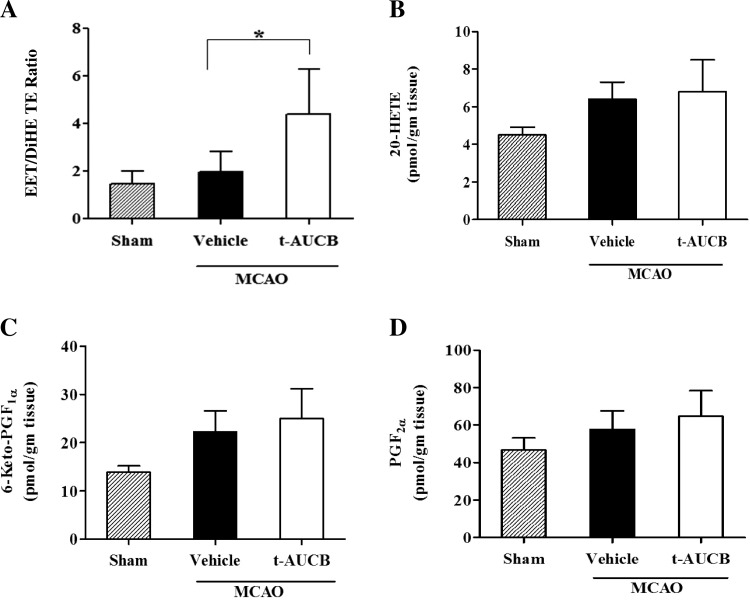
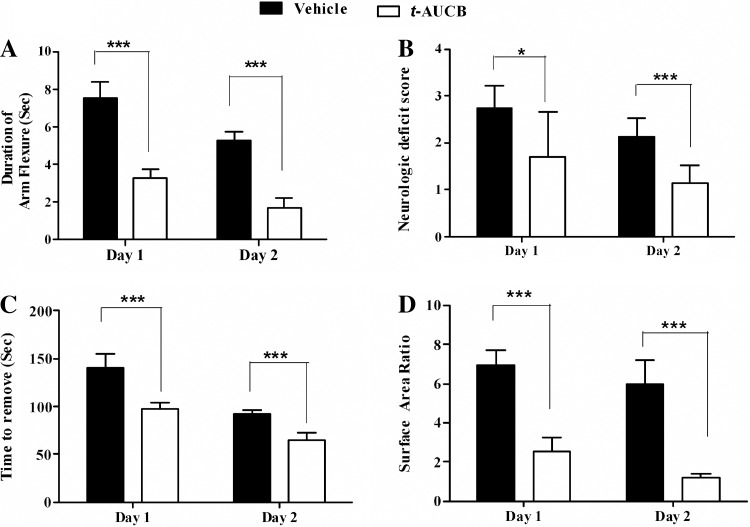
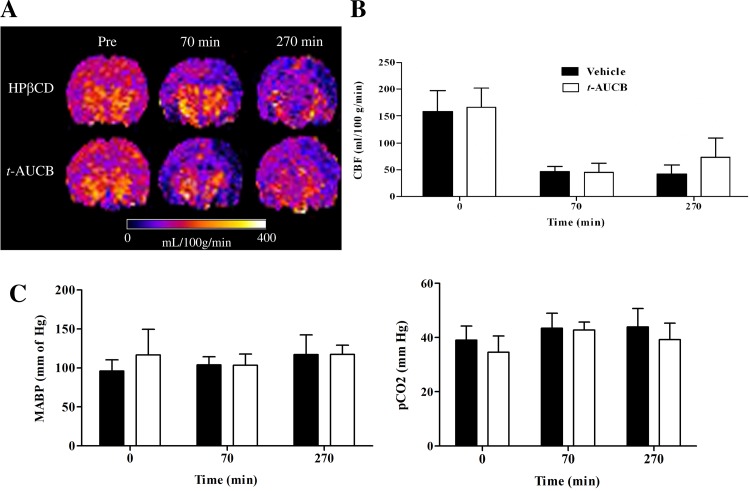
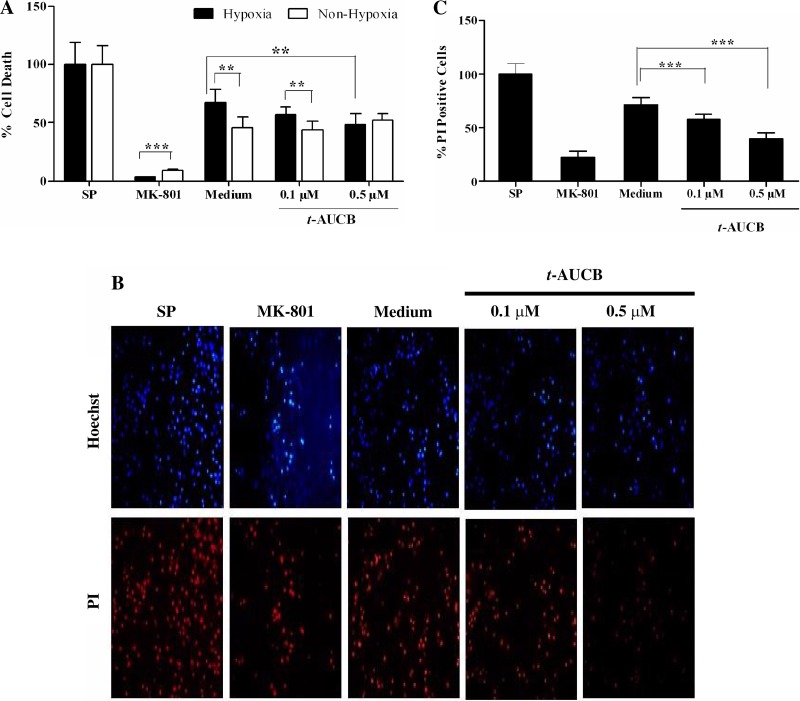
Soluble epoxide hydrolase (sEH) diminishes vasodilatory and neuroprotective effects of epoxyeicosatrienoic acids by hydrolyzing them to inactive dihydroxy metabolites. The primary goals of this study were to investigate the effects of acute sEH inhibition by trans-4-[4-(3-adamantan-1-yl-ureido)-cyclohexyloxy]-benzoic acid (t-AUCB) on infarct volume, functional outcome, and changes in cerebral blood flow (CBF) in a rat model of ischemic stroke. Focal cerebral ischemia was induced in rats for 90 min followed by reperfusion. At the end of 24 h after reperfusion rats were euthanized for infarct volume assessment by triphenyltetrazolium chloride staining. Brain cortical sEH activity was assessed by ultra performance liquid chromatography-tandem mass spectrometry. Functional outcome at 24 and 48 h after reperfusion was evaluated by arm flexion and sticky-tape tests. Changes in CBF were assessed by arterial spin-labeled-MRI at baseline, during ischemia, and at 180 min after reperfusion. Neuroprotective effects of t-AUCB were evaluated in primary rat neuronal cultures by Cytotox-Flour kit and propidium iodide staining. t-AUCB significantly reduced cortical infarct volume by 35% (14.5 ± 2.7% vs. 41.5 ± 4.5%), elevated cumulative epoxyeicosatrienoic acids-to-dihydroxyeicosatrienoic acids ratio in brain cortex by twofold (4.40 ± 1.89 vs. 1.97 ± 0.85), and improved functional outcome in arm-flexion test (day 1: 3.28 ± 0.5 s vs. 7.50 ± 0.9 s; day 2: 1.71 ± 0.4 s vs. 5.28 ± 0.5 s) when compared with that of the vehicle-treated group. t-AUCB significantly reduced neuronal cell death in a dose-dependent manner (vehicle: 70.9 ± 7.1% vs. t-AUCB0.1μM: 58 ± 5.11% vs. t-AUCB0.5μM: 39.9 ± 5.8%). These findings suggest that t-AUCB may exert its neuroprotective effects by affecting multiple components of neurovascular unit including neurons, astrocytes, and microvascular flow.
Keywords: arachidonic acid; cerebral blood flow; cytochrome P-450; ischemic stroke; middle cerebral artery occlusion.
Figures


References
-
- Abe K, Kogure K, Yamamoto H, Imazawa M, Miyamoto K. Mechanism of arachidonic acid liberation during ischemia in gerbil cerebral cortex. J Neurochem 48: 503–509, 1987 - PubMed
-
- Alkayed NJ, Birks EK, Hudetz AG, Roman RJ, Henderson L, Harder DR. Inhibition of brain P-450 arachidonic acid epoxygenase decreases baseline cerebral blood flow. Am J Physiol Heart Circ Physiol 271: H1541–H1546, 1996 - PubMed
-
- Aronowski J, Samways E, Strong R, Rhoades HM, Grotta JC. An alternative method for the quantitation of neuronal damage after experimental middle cerebral artery occlusion in rats: analysis of behavioral deficit. J Cereb Blood Flow Metab 16: 705–713, 1996 - PubMed
-
- Baskaya MK, Prasad MR, Donaldson D, Hu Y, Rao AM, Dempsey RJ. Enhanced accumulation of free fatty acids in experimental focal cerebral ischemia. Prostaglandins Leukot Essent Fatty Acids 54: 167–171, 1996 - PubMed
-
- Bazan NG. Free arachidonic acid and other lipids in the nervous system during early ischemia and after electroshock. Adv Exp Med Biol 72: 317–335, 1976 - PubMed
Publication types
MeSH terms
Substances
Grants and funding
LinkOut - more resources
Full Text Sources
Other Literature Sources
