


Lessons learned from radiation oncology clinical trials
- PMID: 24043463
- PMCID: PMC3965328
- DOI: 10.1158/1078-0432.CCR-13-1116
Lessons learned from radiation oncology clinical trials
Abstract
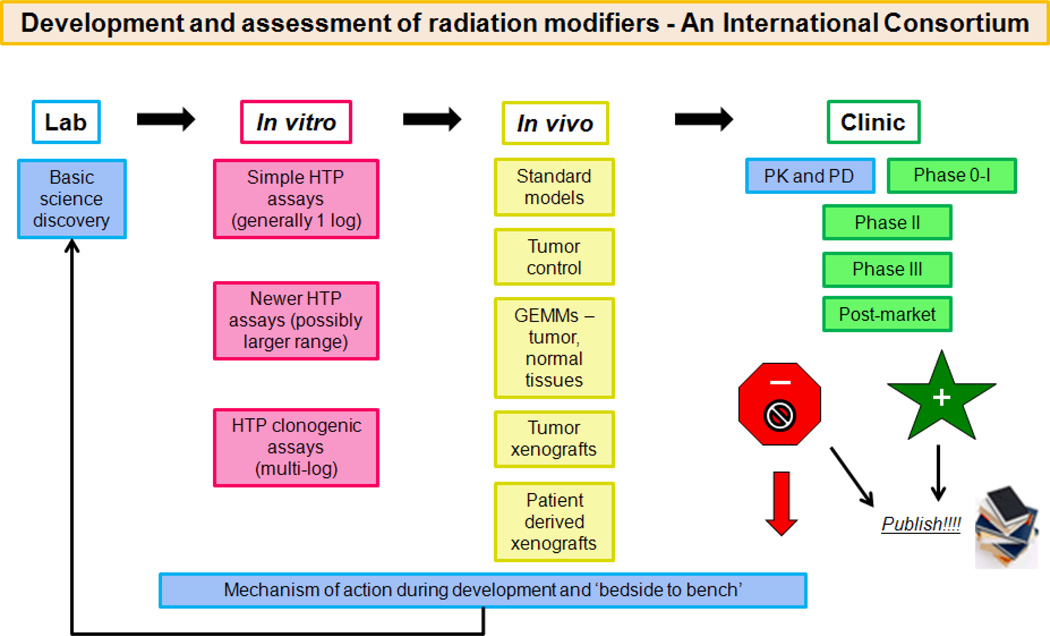
A workshop entitled "Lessons Learned from Radiation Oncology Trials" was held on December 7-8, 2011, in Bethesda, MD, to present and discuss some of the recently conducted radiation oncology clinical trials with a focus on those that failed to refute the null hypothesis. The objectives of this workshop were to summarize and examine the questions that these trials provoked, to assess the quality and limitations of the preclinical data that supported the hypotheses underlying these trials, and to consider possible solutions to these challenges for the design of future clinical trials. Several themes emerged from the discussions: (i) opportunities to learn from null-hypothesis trials through tissue and imaging studies; (ii) value of preclinical data supporting the design of combinatorial therapies; (iii) significance of validated biomarkers; (iv) necessity of quality assurance in radiotherapy delivery; (v) conduct of sufficiently powered studies to address the central hypotheses; and (vi) importance of publishing results of the trials regardless of the outcome. The fact that well-designed hypothesis-driven clinical trials produce null or negative results is expected given the limitations of trial design and complexities of cancer biology. It is important to understand the reasons underlying such null results, however, to effectively merge the technologic innovations with the rapidly evolving biology for maximal patient benefit through the design of future clinical trials.
©2013 AACR.
Conflict of interest statement
Figures
References
-
- Bonner JA, Harari PM, Giralt J, Azarnia N, Shin DM, Cohen RB, et al. Radiotherapy plus cetuximab for squamous-cell carcinoma of the head and neck. N Engl J Med. 2006;354:567–578. - PubMed
-
- Bonner JA, Harari PM, Giralt J, Cohen RB, Jones CU, Sur RK, et al. Radiotherapy plus cetuximab for locoregionally advanced head and neck cancer: 5-year survival data from a phase 3 randomised trial, and relation between cetuximab-induced rash and survival. Lancet Oncol. 2010;11:21–28. - PubMed
-
- Rischin D, Peters LJ, O'Sullivan B, Giralt J, Fisher R, Yuen K, et al. Tirapazamine, cisplatin, and radiation versus cisplatin and radiation for advanced squamous cell carcinoma of the head and neck (TROG 02.02, HeadSTART): a phase III trial of the Trans-Tasman Radiation Oncology Group. J Clin Oncol. 2010;28:2989–2995. - PubMed
Publication types
MeSH terms
Substances
Grants and funding
LinkOut - more resources
Full Text Sources
Other Literature Sources
Medical
