


A set of genes critical to development is epigenetically poised in mouse germ cells from fetal stages through completion of meiosis
- PMID: 24043772
- PMCID: PMC3791702
- DOI: 10.1073/pnas.1315204110
A set of genes critical to development is epigenetically poised in mouse germ cells from fetal stages through completion of meiosis
Abstract
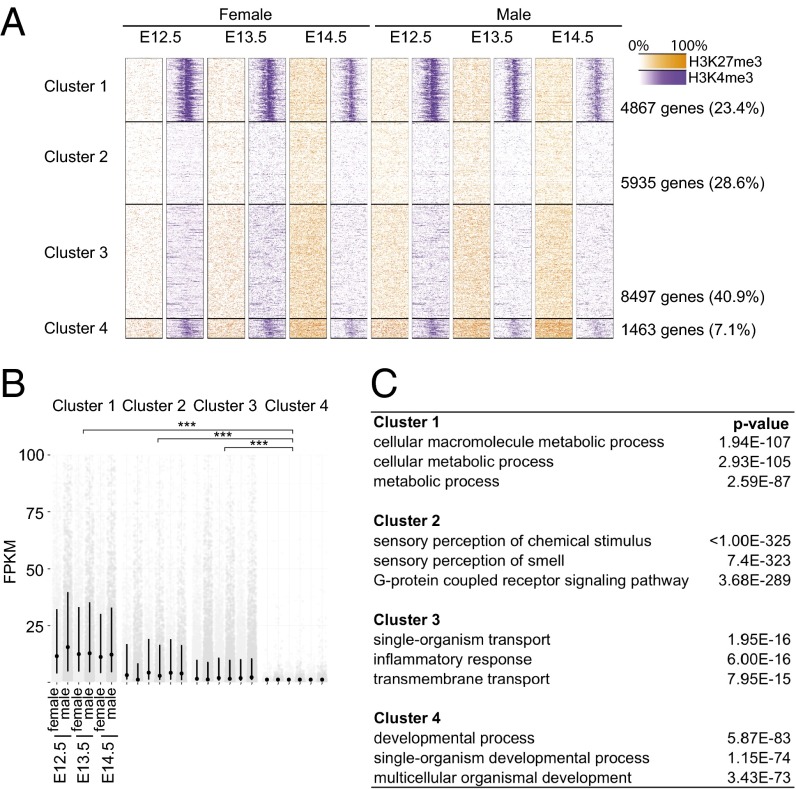
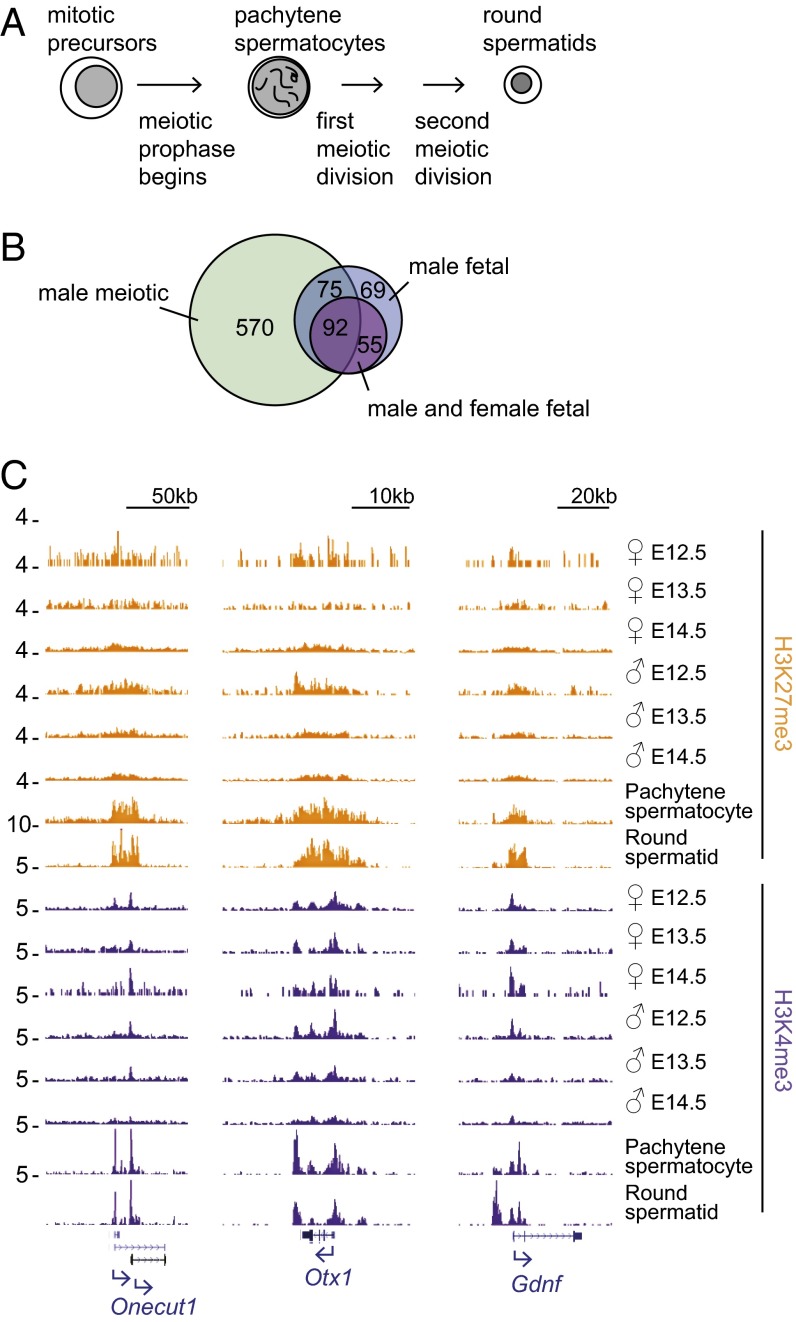
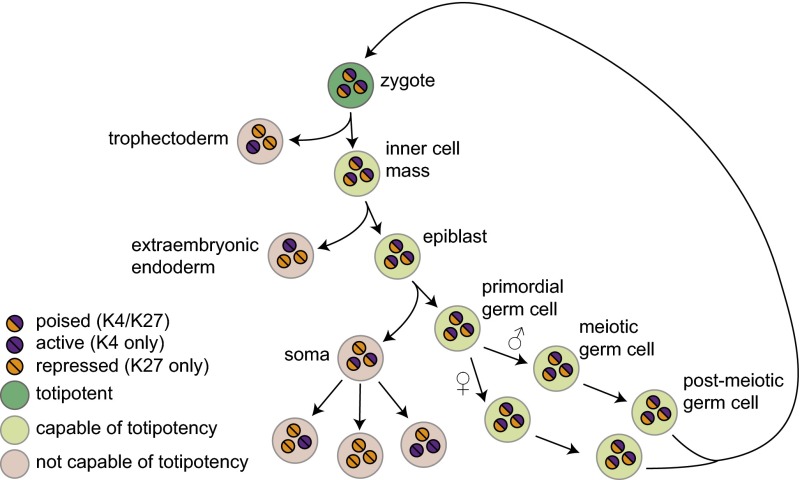
In multicellular organisms, germ cells carry the hereditary material from one generation to the next. Developing germ cells are unipotent gamete precursors, and mature gametes are highly differentiated, specialized cells. However, upon gamete union at fertilization, their genomes drive a totipotent program, giving rise to a complete embryo as well as extraembryonic tissues. The biochemical basis for the ability to transition from differentiated cell to totipotent zygote is unknown. Here we report that a set of developmentally critical genes is maintained in an epigenetically poised (bivalent) state from embryonic stages through the end of meiosis. We performed ChIP-seq and RNA-seq analysis on flow-sorted male and female germ cells during embryogenesis at three time points surrounding sexual differentiation and female meiotic initiation, and then extended our analysis to meiotic and postmeiotic male germ cells. We identified a set of genes that is highly enriched for regulators of differentiation and retains a poised state (high H3K4me3, high H3K27me3, and lack of expression) across sexes and across developmental stages, including in haploid postmeiotic cells. The existence of such a state in embryonic stem cells has been well described. We now demonstrate that a subset of genes is maintained in a poised state in the germ line from the initiation of sexual differentiation during fetal development and into postmeiotic stages. We propose that the epigenetically poised condition of these developmental genes is a fundamental property of the mammalian germ-line nucleus, allowing differentiated gametes to unleash a totipotent program following fertilization.
Keywords: chromatin; epigenetics; spermatogenesis; totipotency.
Conflict of interest statement
The authors declare no conflict of interest.
Figures


Comment in
-
Development: Germ cell poising for totipotency.Nat Rev Genet. 2013 Nov;14(11):745. doi: 10.1038/nrg3596. Epub 2013 Oct 1. Nat Rev Genet. 2013. PMID: 24080756 No abstract available.
References
-
- Li R, Albertini DF. The road to maturation: Somatic cell interaction and self-organization of the mammalian oocyte. Nat Rev Mol Cell Biol. 2013;14(3):141–152. - PubMed
-
- Jan SZ, et al. Molecular control of rodent spermatogenesis. Biochim Biophys Acta. 2012;1822(12):1838–1850. - PubMed
-
- Ohinata Y, et al. A signaling principle for the specification of the germ cell lineage in mice. Cell. 2009;137(3):571–584. - PubMed
Publication types
MeSH terms
Substances
Grants and funding
LinkOut - more resources
Full Text Sources
Other Literature Sources
