Review
. 2013 Sep;5(14):1685-700.
doi: 10.4155/fmc.13.130.

Therapeutic strategies impacting cancer cell glutamine metabolism

Affiliations
Review

Therapeutic strategies impacting cancer cell glutamine metabolism

Michael J Lukey et al. Future Med Chem. 2013 Sep.

Abstract

The metabolic adaptations that support oncogenic growth can also render cancer cells dependent on certain nutrients. Along with the Warburg effect, increased utilization of glutamine is one of the metabolic hallmarks of the transformed state. Glutamine catabolism is positively regulated by multiple oncogenic signals, including those transmitted by the Rho family of GTPases and by c-Myc. The recent identification of mechanistically distinct inhibitors of glutaminase, which can selectively block cellular transformation, has revived interest in the possibility of targeting glutamine metabolism in cancer therapy. Here, we outline the regulation and roles of glutamine metabolism within cancer cells and discuss possible strategies for, and the consequences of, impacting these processes therapeutically.


Figures
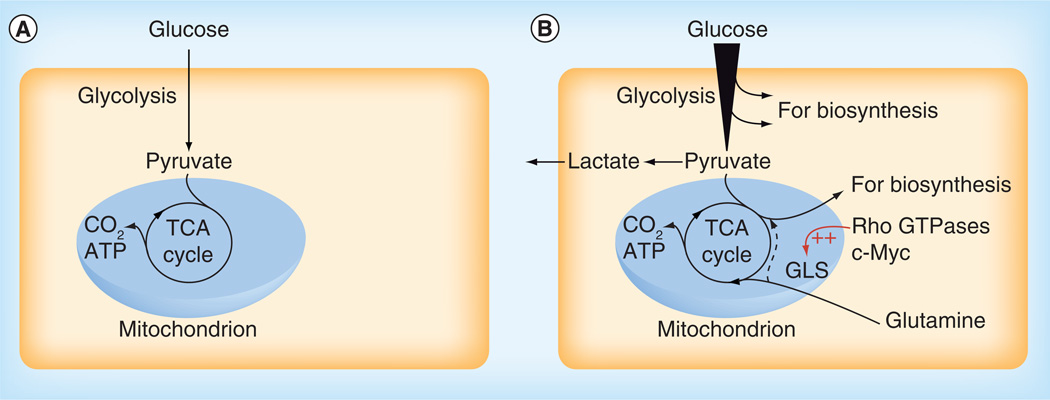
Figure 1
Figure 1. Cell proliferation requires metabolic reprogramming
(A) In non-proliferating cells under aerobic conditions, metabolic fuels such as glucose typically undergo complete oxidation to CO2 in mitochondria via the TCA cycle. Energy released during this series of reactions is used to generate a proton electrochemical gradient across the inner mitochondrial membrane, which in turn drives ATP synthesis. (B) In proliferating cells there is an increased demand for precursors for protein, nucleotide and lipid production, in addition to ATP. Nutrient uptake is consequently enhanced and metabolic intermediates are diverted from glycolysis and the TCA cycle into biosynthetic pathways. For example, citrate from the TCA cycle can be exported from the mitochondrion to support lipogenesis in the cytosol. Reduction of pyruvate to lactate, catalyzed by lactate dehydrogenase, regenerates NAD+ to sustain glycolytic flux. Glutamine often serves as an anaplerotic substrate to maintain TCA cycle function, through its conversion by GLS and glutamate dehydrogenase to the TCA cycle intermediate α-ketoglutarate. Anaplerotic α-ketoglutarate can undergo oxidative metabolism in the TCA cycle or, during hypoxia or in cells with mitochondrial defects, reductive metabolism to citrate to support biosynthesis (dashed line). TCA: Tricarboxylic acid.
Figure 2
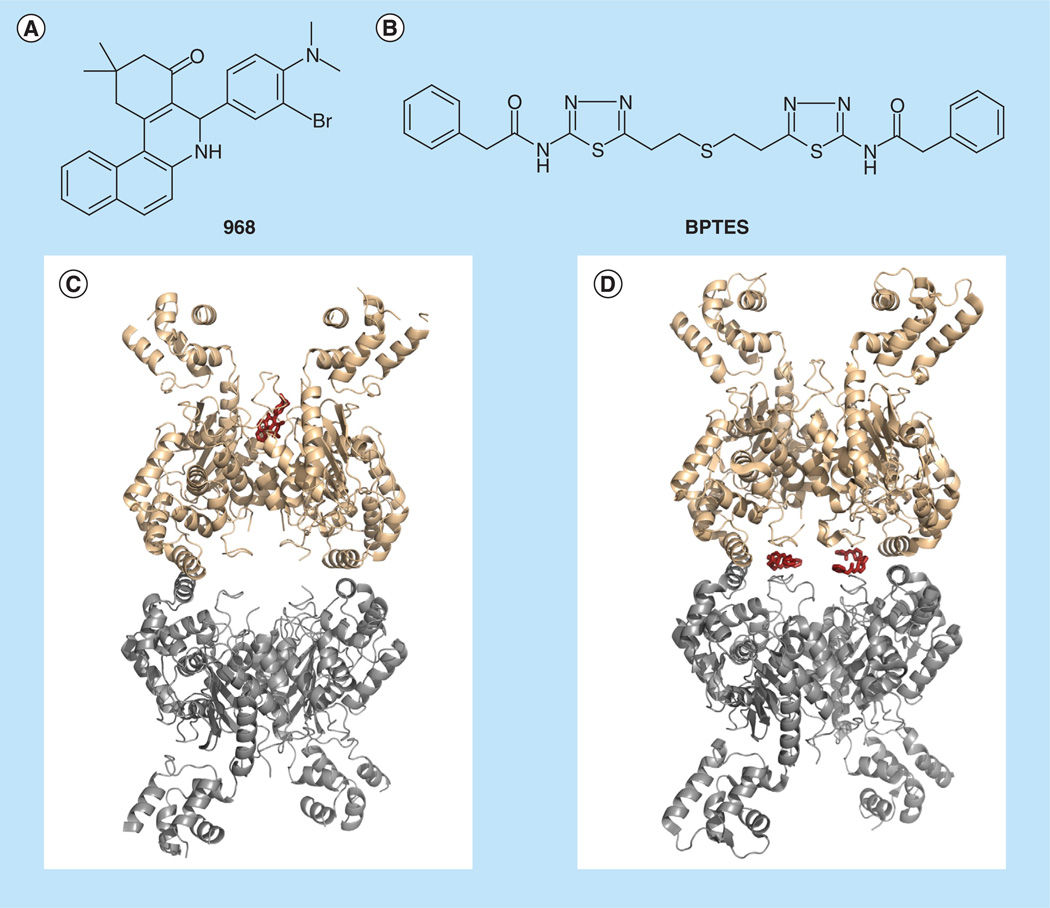
Figure 2. Allosteric inhibitors of GLS
(A) Chemical structure of 968. (B) Chemical structure of BPTES. (C) Molecular docking model of 968 complexed with GAC. 968 is modeled to bind a hydrophobic pocket at the monomer-monomer interface of the GAC dimer. (D) x-ray crystallographic structure of human GAC in complex with BPTES (PDB 3UO9). Two BPTES molecules bind at the dimer-dimer interface of the GAC tetramer [56]. (C) adapted from [58].
Figure 3
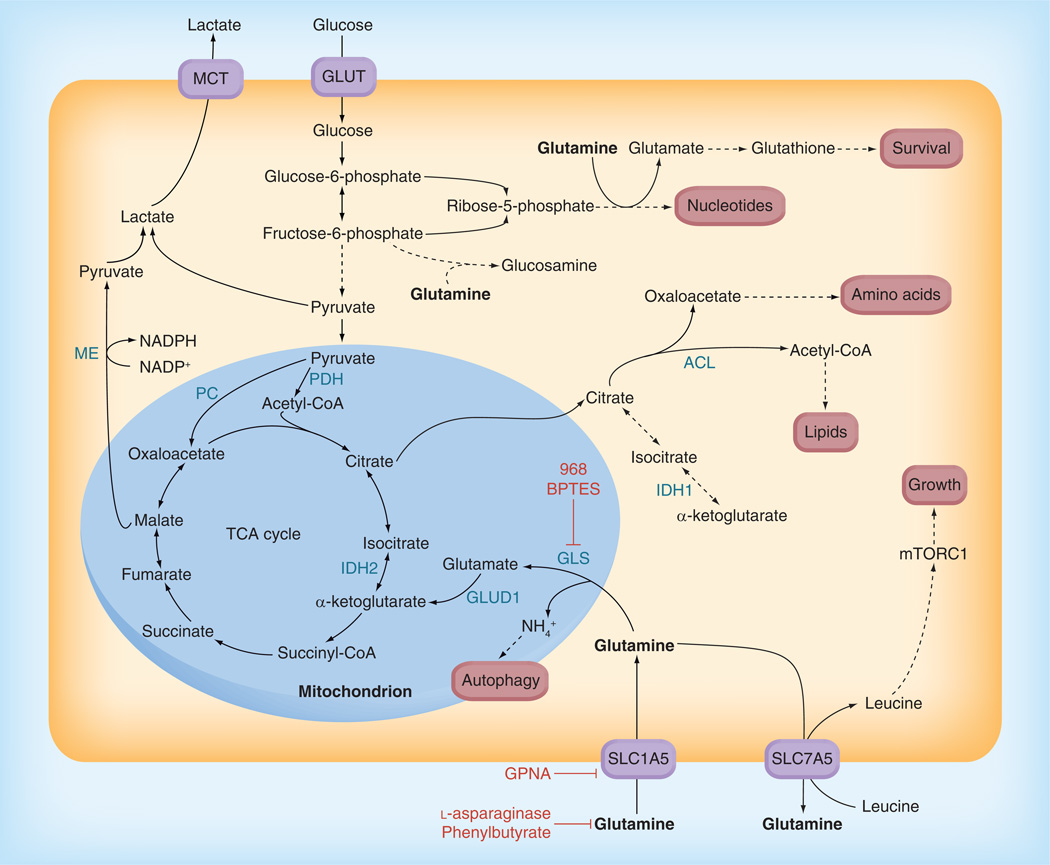
Figure 3. Core pathways of cellular glutamine metabolism
Core pathways of glutamine metabolism, and their intersections with glucose metabolism, are depicted. 968 BPTES, GPNA, l-asparaginase and phenylbutyrate are inhibitors that target aspects of glutamine metabolism, and are shown in red. Glutamine is an essential nutrient for several processes that are important for cancer cell proliferation and survival. It serves as a nitrogen donor in nucleotide and glucosamine synthesis, a precursor for glutathione synthesis and a key anaplerotic substrate for maintenance of TCA cycle flux. Extracellular glutamine supplies can be depleted by l-asparaginase and by phenylbutyrate. Cellular uptake of glutamine is mediated by the transporter SLC1A5, which can be inhibited by the glutamine analog l-γ-glutamyl-p-nitroanilide. 968 and BPTES disrupt glutamine catabolism by allosterically inhibiting GLS. ACL: ATP-citrate lyase; GLUD: Glutamate dehydrogenase; GLUT: Glucose transporter; IDH: Isocitrate dehydrogenase; MCT: Monocarboxylate transporter; ME: Malic enzyme; PC: Pyruvate carboxylase; PDH: Pyruvate dehydrogenase; TCA: Tricarboxylic acid.

References

    1. Warburg O. Origin of cancer cells. Science. 1956;123(3191):309–314. - PubMed
    1. Warburg O. Respiratory impairment in cancer cells. Science. 1956;124(3215):269–270. - PubMed
    1. Warburg O, Posener K, Negelein E. On the metabolism of carcinoma cells. Biochemische Zeitschrift. 1924;152:309–344.
    1. Vander Heiden MG, Cantley LC, Thompson CB. Understanding the Warburg effect: the metabolic requirements of cell proliferation. Science. 2009;324(5930):1029–1033. - PMC - PubMed
    1. Cairns RA, Harris IS, Mak TW. Regulation of cancer cell metabolism. Nat. Rev. Cancer. 2011;11(2):85–95. - PubMed

Publication types

MeSH terms