


Pom1 and cell size homeostasis in fission yeast
- PMID: 24047646
- PMCID: PMC3865018
- DOI: 10.4161/cc.26462
Pom1 and cell size homeostasis in fission yeast
Abstract
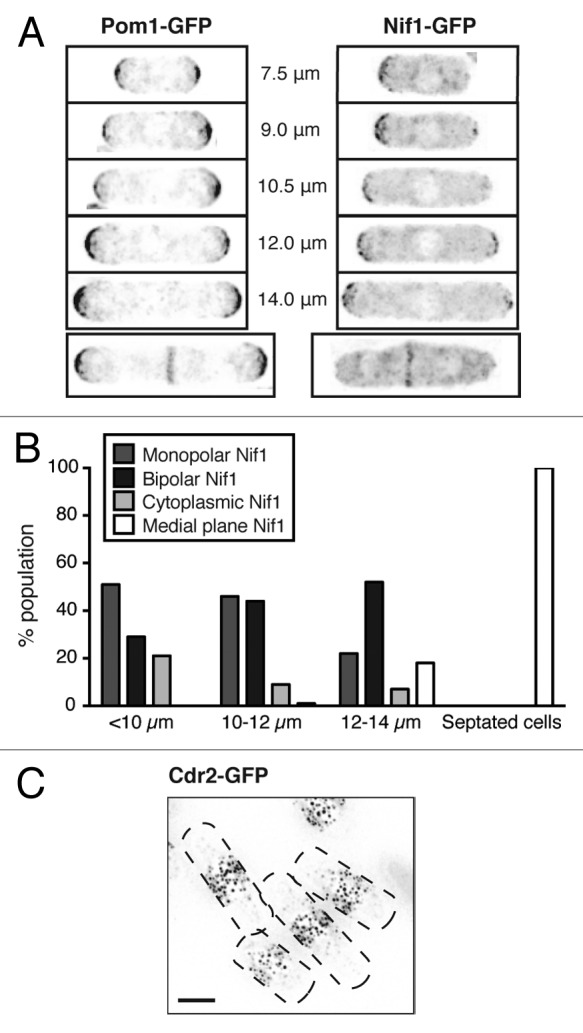
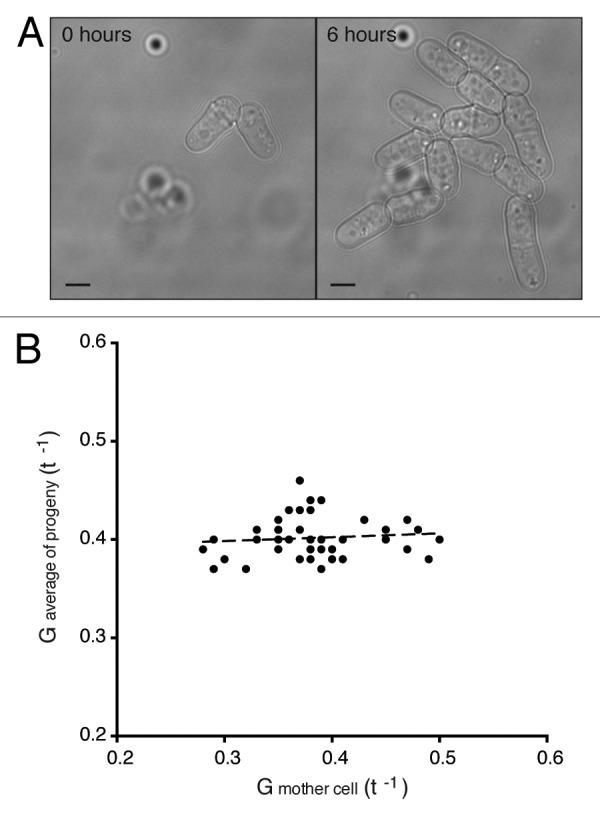
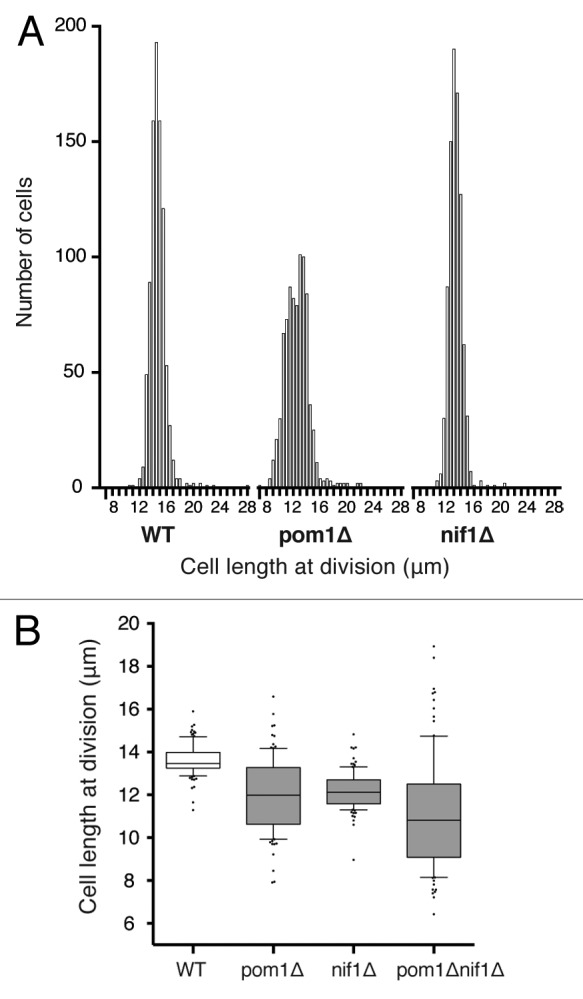
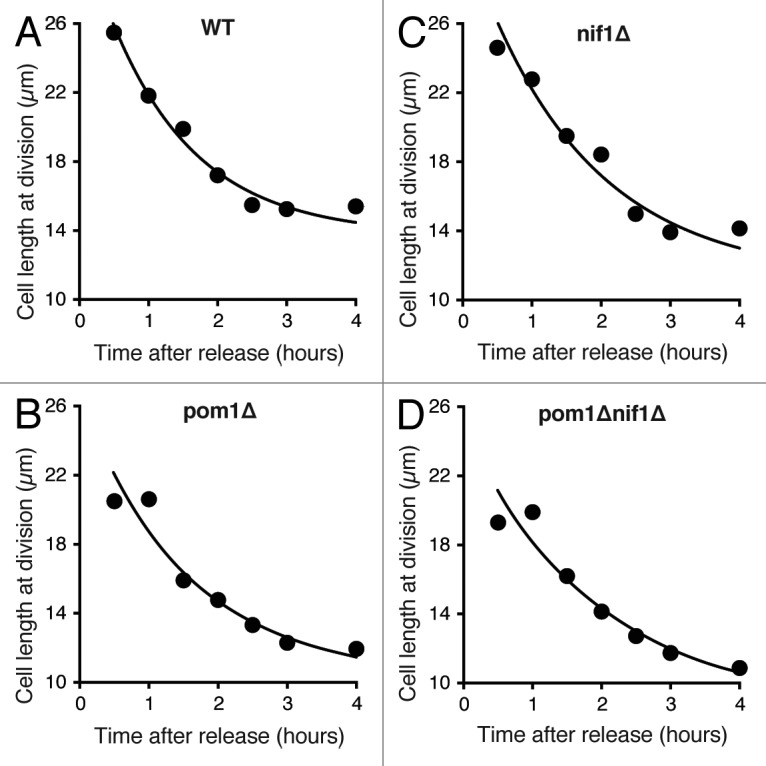
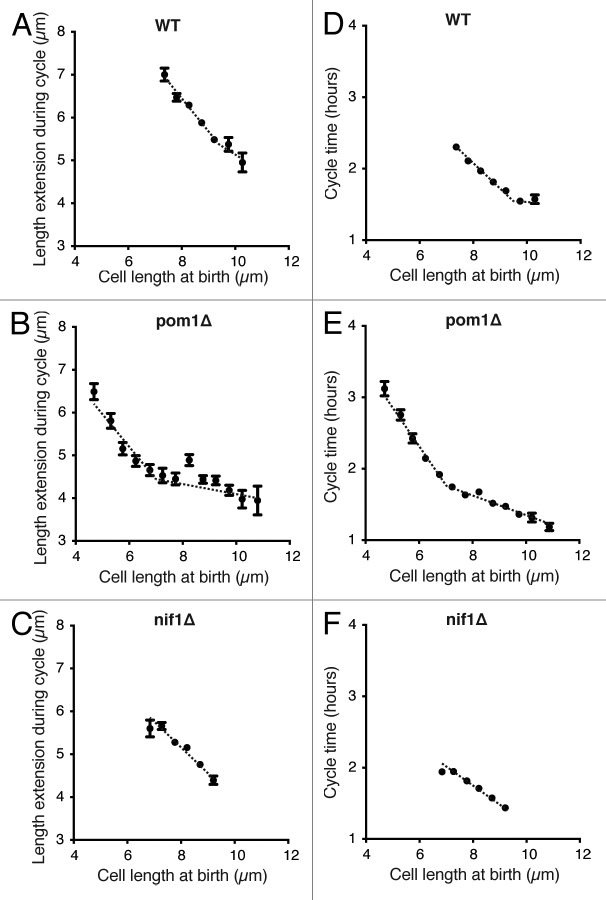
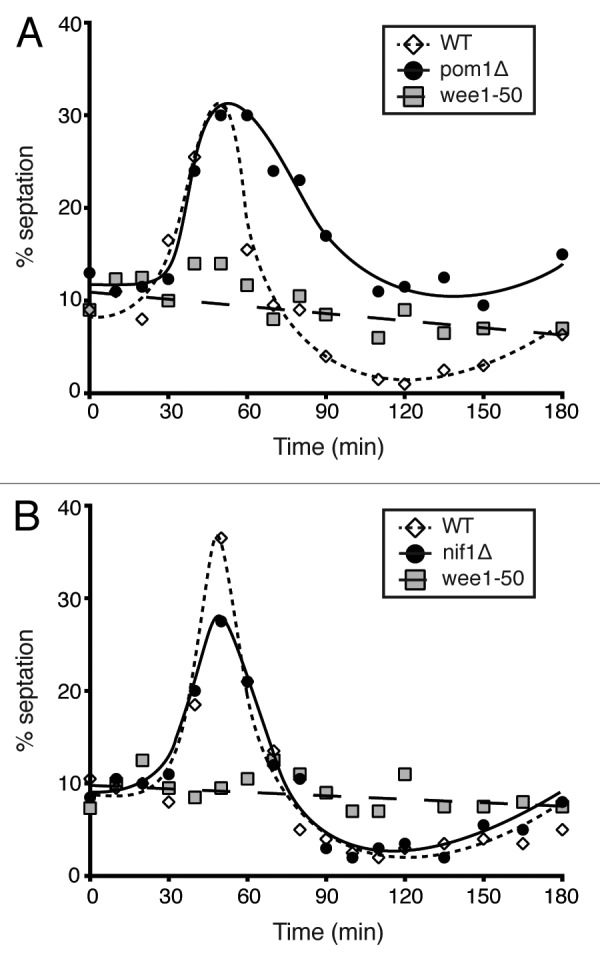
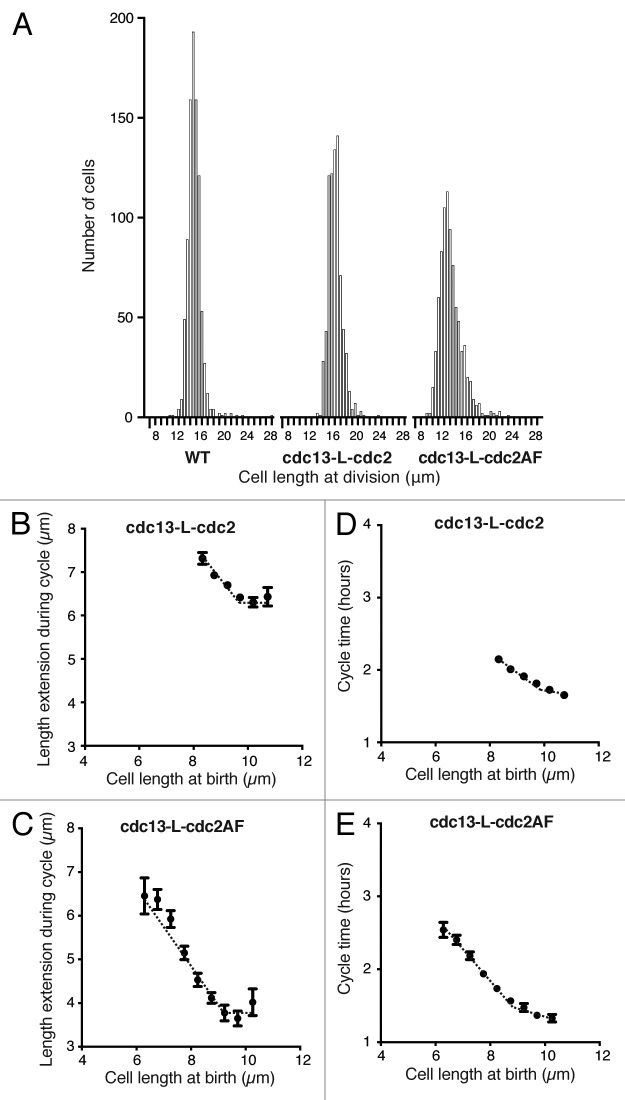
Cells sense their size and use this information to coordinate cell division with cell growth to maintain a constant cell size within a given population. A model has been proposed for cell size control in the rod-shaped cells of the fission yeast, Schizosaccharomyces pombe. This involves a protein localized to the cell ends, which inhibits mitotic activators in the middle of the cell in a cell size-dependent manner. This protein, Pom1, along with another tip-localized protein, Nif1, have been implicated as direct sensors of cell size controlling the onset of mitosis. Here we have investigated cell size variability and size homeostasis at the G 2/M transition, focusing on the role of pom1 and nif1. Cells deleted for either of these 2 genes show wild-type size homeostasis both in size variability analyses and size homeostasis experiments. This indicates that these genes do not have a critical role as direct cell size sensors in the control mechanism. Cell size homeostasis also seems to be independent of Cdc2-Tyr15 phosphorylation, suggesting that the size sensing mechanism in fission yeast may act through an unidentified pathway regulating CDK activity by an unknown mechanism.
Keywords: Pom1; cell cycle; cell size control; cell size variability; fission yeast; growth rate.
Figures
Comment in
-
Pom1 is not the size ruler.Cell Cycle. 2013 Nov 15;12(22):3463-4. doi: 10.4161/cc.26818. Epub 2013 Oct 15. Cell Cycle. 2013. PMID: 24131919 Free PMC article. No abstract available.
References
-
- Killander D, Zetterberg A. Quantitative Cytochemical Studies on Interphase Growth. I. Determination of DNA, Rna and Mass Content of Age Determined Mouse Fibroblasts in Vitro and of Intercellular Variation in Generation Time. Exp Cell Res. 1965;38:272–84. doi: 10.1016/0014-4827(65)90403-9. - DOI - PubMed
Publication types
MeSH terms
Substances
Grants and funding
LinkOut - more resources
Full Text Sources
Other Literature Sources
Molecular Biology Databases
Miscellaneous
