


Tissues in different anatomical sites can sculpt and vary the tumor microenvironment to affect responses to therapy
- PMID: 24048441
- PMCID: PMC3978809
- DOI: 10.1038/mt.2013.219
Tissues in different anatomical sites can sculpt and vary the tumor microenvironment to affect responses to therapy
Abstract
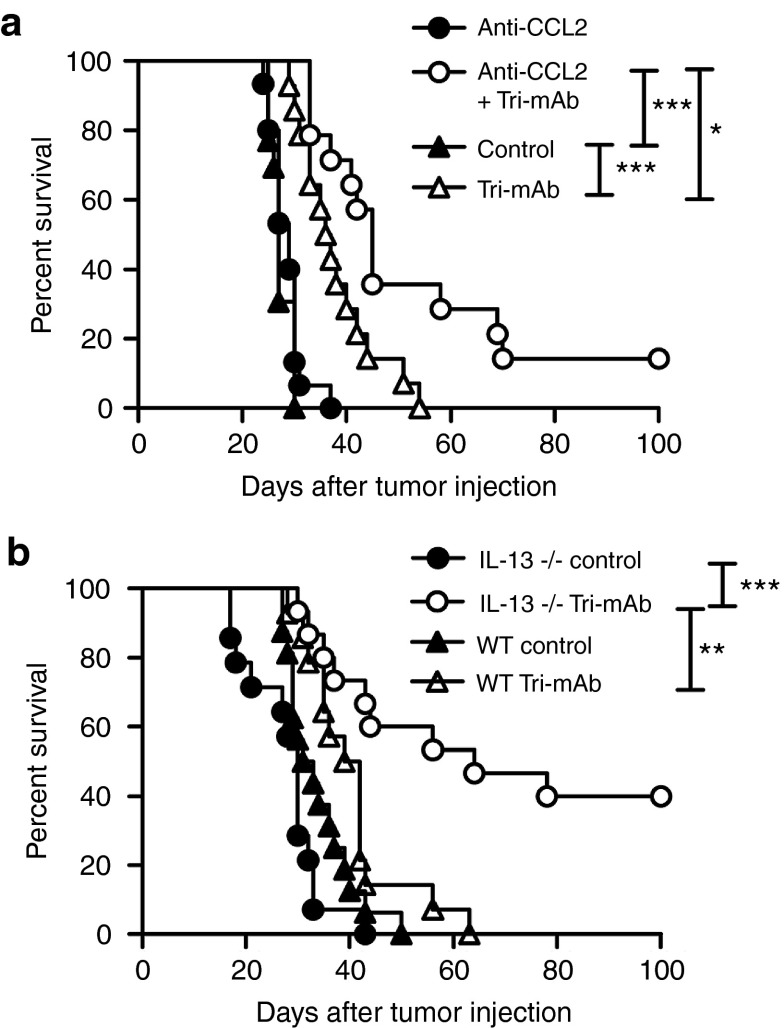
The tumor microenvironment can promote tumor growth and reduce treatment efficacy. Tumors can occur in many sites in the body, but how surrounding normal tissues at different anatomical sites affect tumor microenvironments and their subsequent response to therapy is not known.We demonstrated that tumors from renal, colon, or prostate cell lines in orthotopic locations responded to immunotherapy consisting of three agonist antibodies, termed Tri-mAb, to a much lesser extent than the same tumor type located subcutaneously. A tissue-specific response to Tri-mAb was confirmed by ex vivo separation of subcutaneous (SC) or orthotopic tumor cells from stromal cells, followed by reinjection of tumor cells into the opposite site. Compared with SC tumors, orthotopic tumors had a microenvironment associated with a type 2 immune response, related to immunosuppression, and an involvement of alternatively activated macrophages in the kidney model. Orthotopic kidney tumors were more highly vascularized than SC tumors. Neutralizing the macrophage- and Th2-associated molecules chemokine (C-C motif) ligand 2 or interleukin-13 led to a significantly improved therapeutic effect. This study highlights the importance of the tissue of implantation in sculpting the tumor microenvironment. These are important fundamental issues in tumor biology and crucial factors to consider in the design of experimental models and treatment strategies.
Figures



References
-
- Shevach EM. Biological functions of regulatory T cells. Adv Immunol. 2011;112:137–176. - PubMed
-
- Marigo I, Dolcetti L, Serafini P, Zanovello P, Bronte V. Tumor-induced tolerance and immune suppression by myeloid derived suppressor cells. Immunol Rev. 2008;222:162–179. - PubMed
-
- Teng MW, Ngiow SF, von Scheidt B, McLaughlin N, Sparwasser T, Smyth MJ. Conditional regulatory T-cell depletion releases adaptive immunity preventing carcinogenesis and suppressing established tumor growth. Cancer Res. 2010;70:7800–7809. - PubMed
-
- Gazzaniga S, Bravo AI, Guglielmotti A, van Rooijen N, Maschi F, Vecchi A, et al. Targeting tumor-associated macrophages and inhibition of MCP-1 reduce angiogenesis and tumor growth in a human melanoma xenograft. J Invest Dermatol. 2007;127:2031–2041. - PubMed
Publication types
MeSH terms
Substances
LinkOut - more resources
Full Text Sources
Other Literature Sources
Molecular Biology Databases
