Multiple hormonal dysregulation as determinant of low physical performance and mobility in older persons
- PMID: 24050169
- PMCID: PMC5155505
- DOI: 10.2174/13816128113196660062
Multiple hormonal dysregulation as determinant of low physical performance and mobility in older persons
Abstract
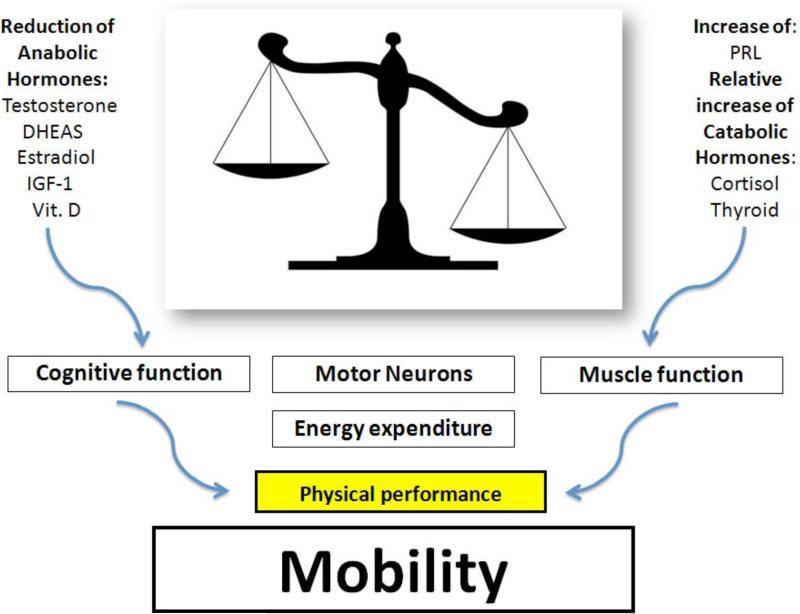
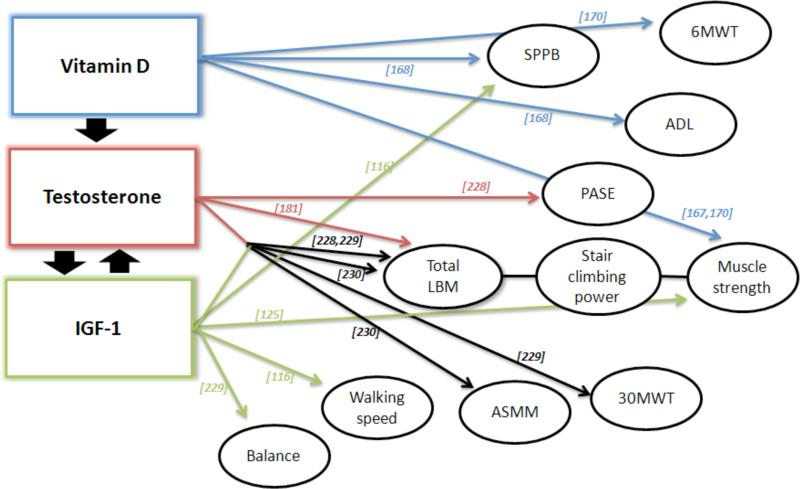
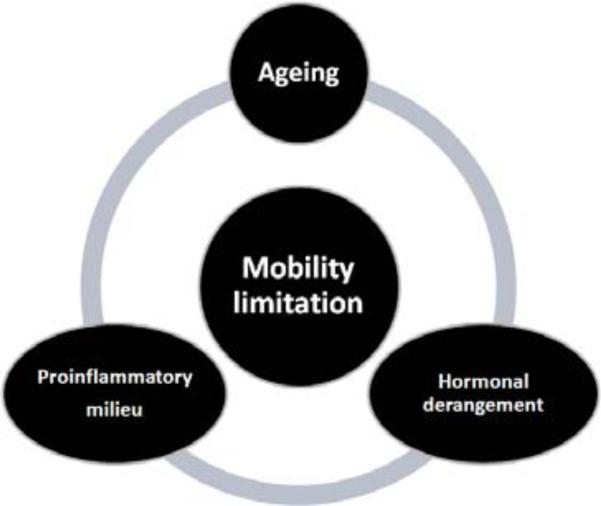
Mobility-disability is a common condition in older individuals. Many factors, including the age-related hormonal dysregulation, may concur to the development of disability in the elderly. In fact, during the aging process it is observed an imbalance between anabolic hormones that decrease (testosterone, dehydroepiandrosterone sulphate (DHEAS), estradiol, insulin like growth factor-1 (IGF-1) and Vitamin D) and catabolic hormones (cortisol, thyroid hormones) that increase. We start this review focusing on the mechanisms by which anabolic and catabolic hormones may affect physical performance and mobility. To address the role of the hormonal dysregulation to mobility-disability, we start to discuss the contribution of the single hormonal derangement. The studies used in this review were selected according to the period of time of publication, ranging from 2002 to 2013, and the age of the participants (≥65 years). We devoted particular attention to the effects of anabolic hormones (DHEAS, testosterone, estradiol, Vitamin D and IGF-1) on both skeletal muscle mass and strength, as well as other objective indicators of physical performance. We also analyzed the reasons beyond the inconclusive data coming from RCTs using sex hormones, thyroid hormones, and vitamin D (dosage, duration of treatment, baseline hormonal values and reached hormonal levels). We finally hypothesized that the parallel decline of anabolic hormones has a higher impact than a single hormonal derangement on adverse mobility outcomes in older population. Given the multifactorial origin of low mobility, we underlined the need of future synergistic optional treatments (micronutrients and exercise) to improve the effectiveness of hormonal treatment and to safely ameliorate the anabolic hormonal status and mobility in older individuals.
Figures
References
-
- Morley JE, Baumgartner RN, Roubenoff R, et al. Sarcopenia. J Lab Clin Med. 2001;137:231–43. - PubMed
-
- Rosenberg IH. Sarcopenia: origins and clinical relevance. J Nutr. 1997;127:990S–91S. - PubMed
-
- Delmonico MJ, Harris TB, Lee JS, et al. Alternative definitions of sarcopenia, lower extremity performance, and functional impairment with aging in older men and women. J Am Geriatr Soc. 2007;55:769–74. - PubMed
-
- Goodpaster BH, Park SW, Harris TB, et al. The loss of skeletal muscle strength, mass, and quality in older adults: The health, aging and body composition study. J Gerontol A Biol Sci Med Sci. 2006;61:1059–64. - PubMed
Publication types
MeSH terms
Substances
Grants and funding
LinkOut - more resources
Full Text Sources
Other Literature Sources
Medical
Miscellaneous