Review
. 2013:47:483-508.
doi: 10.1146/annurev-genet-110711-155440. Epub 2013 Sep 11.

Control of transcriptional elongation

Affiliations
Review

Control of transcriptional elongation

Hojoong Kwak et al. Annu Rev Genet. 2013.

Abstract

Elongation is becoming increasingly recognized as a critical step in eukaryotic transcriptional regulation. Although traditional genetic and biochemical studies have identified major players of transcriptional elongation, our understanding of the importance and roles of these factors is evolving rapidly through the recent advances in genome-wide and single-molecule technologies. Here, we focus on how elongation can modulate the transcriptional outcome through the rate-liming step of RNA polymerase II (Pol II) pausing near promoters and how the participating factors were identified. Among the factors we describe are the pausing factors--NELF (negative elongation factor) and DSIF (DRB sensitivity-inducing factor)--and P-TEFb (positive elongation factor b), which is the key player in pause release. We also describe the high-resolution view of Pol II pausing and propose nonexclusive models for how pausing is achieved. We then discuss Pol II elongation through the bodies of genes and the roles of FACT and SPT6, factors that allow Pol II to move through nucleosomes.


Figures

Figure 1
Figure 1. Structure of the promoter and Pol II before and during early elongation
(a) The promoter is occupied by a nucleosome in a closed configuration. This conformation represents a Drosophila promoter unbound by Pol II before priming (40). The nucleosome (nuc) positions are the distance between the dyad axes and the TSS in base-pairs (bp), based on the average micrococcal nuclease sequencing profile (40). (b) The promoter is in an open configuration, unbound by nucleosome and occupied by general transcription factors (35). (c) The pre-initiation complex (PIC) is assembled (zoomed in relative to other panels). Part of the TFIID structure is removed to visualize the assembly of other general transcription factors. TBP is a subunit of the TFIID structure but is not removed to illustrate its binding to the promoter DNA and Pol II. (d) Pol II is paused between the promoter and the first nucleosome (+1 nuc). The pausing position is at +40 from TSS, which is typical in Drosophila promoters. Pol II bound NELF, DSIF, and TFIIS are also shown. TFIID may or may not be present at the promoter depending on its residency in a re-initiation scaffold (149). The illustrated molecules are based on crystal (19, 23, 75, 80) and cryo-electron microscope (43, 61) structures except for NELF (structure not available), and are scaled proportional to their actual dimensions. The length of each DNA turn is about 10 bp or 3.4 nm.
Figure 2
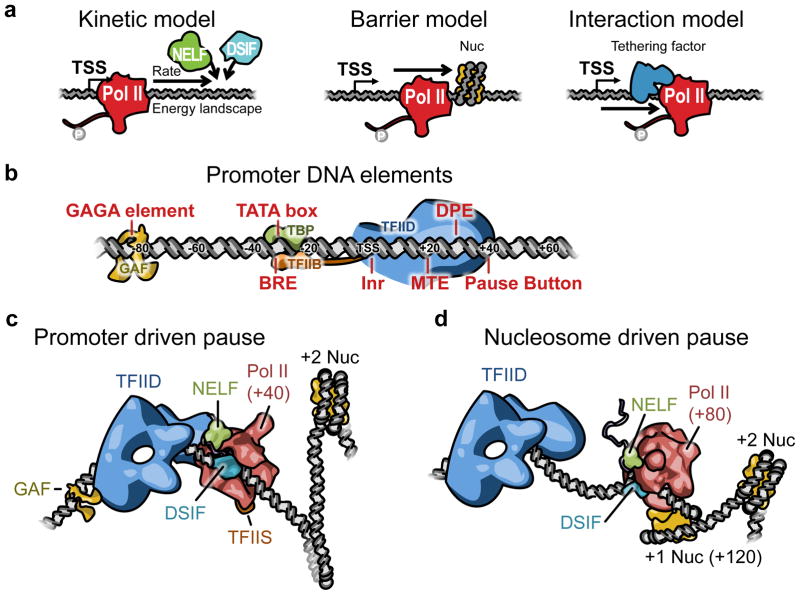
Figure 2. Models of promoter proximal Pol II pausing
(a) The driving force for establishing the position and the extent of Pol II pausing near promoter is summarized in 3 models. (left) In the Kinetic model, the recruitment of the pausing factors competes with the elongation of Pol II. (middle) In the Barrier model, physical barriers such as nucleosomes impede with elongating Pol II. (right) In the Interaction model, a tethering factor that binds to DNA and Pol II at the same time drives Pol II pausing. (b) Promoter DNA elements in Drosophila are shown (18, 92). Protein factors such as GAGA-factor(GAF), TBP, and TFIIB can bind to their DNA elements. TFIID complex can make specific contacts with the DNA elements at multiple positions that are relatively downstream. (c) In promoters with stronger DNA elements, Pol II is more proximal to the TSS within the contact range of the promoter complex (65), and the interaction between the promoter and Pol II can drive the pause. Pausing is stronger in these promoters and the first nucleosome may be absent (40). (d) In promoters with weaker DNA elements, Pol II is closer to the dyad axis of the first nucleosome (65), and is more compatible with pausing driven by nucleosome barriers. The interaction with the promoter complex and the downstream DNA is weaker and may generate less resistance to the Pol II. The illustrations in (c) and (d) are based on actual structures (43, 61, 75, 93)
Figure 3
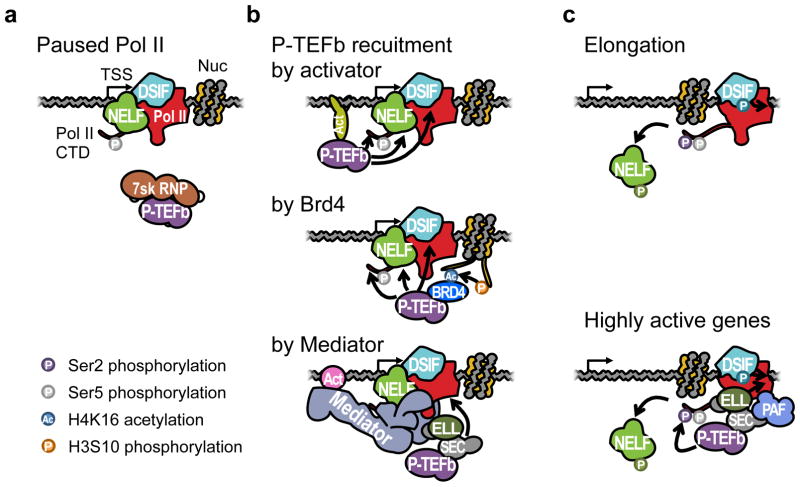
Figure 3. Productive transcription elongation complex
(a) Paused Pol II is bound by NELF and DSIF. The CTD is phosphorylated at Ser5. P-TEFb is held inactive by 7SK RNP. (b) P-TEFb is activated and recruited to the paused Pol II by various mechanisms. The first is directly by activator that binds to the DNA. Recruited P-TEFb can phosphorylate NELF, DSIF, and Ser2 of Pol II CTD. The second is through Brd4 that binds to acetylated histone tails. In human cells, Brd4 can bind to H4K16 acetylation which is dependent on H3S10 phosphorylation through the ‘histone crosstalk’ (153). The third is indirectly through the Mediator complex, which links the activator (Act) and Pol II. A Mediator subunit MED26 can recruit SEC, which also contains P-TEFb (129). (c) Pol II escapes pausing. Phosphorylated NELF is dissociated from Pol II, and DSIF turns into a positive elongation factor after being phosphorylated by P-TEFb. Alternatively, P-TEFb can remain bound to Pol II by SEC that also interacts with PAF in genes with highly active elongation (76). P-TEFb can continuously phosphorylate Ser2, and a SEC component ELL can facilitate elongation. PAF can also recruit additional elongation factors. RNA is not shown for the clarity of viewing the complexes.
Figure 4
Figure 4. Pol II transcribing through gene body nucleosomes
Pol II may use multiple mechanisms to get through a nucleosome, and not all the steps are used. Step 1, Pol II approaches and makes contact with a nucleosome. Step 2, the outer wrap of nucleosomal DNA can be easily unwrapped (17), and Pol II moves into the nucleosome near the dyad axis. Pol II active site is at around −40 from the dyad axis. The nucleosome binding is strong at this point and Pol II often pauses transiently (25, 52, 65). Step 3, H2A/H2B dimer is dissociated from the DNA and the nucleosome is now a hexamer. A dissociated dimer can still remain through its association with FACT and be re-deposited later (9). Step 4, H3/H4 core nucleosomal particle is evicted from DNA. H3 can remain associated and be re-deposited by Spt6 or Asf1 (13, 118) Step 5, nucleosome hexamer transfers upstream of Pol II while Pol II transcribes into downstream region. A looping intermediate may form during the transfer. Step 6, nucleosome octamer transfers upstream of Pol II, which can be facilitated by histone chaperones. Step 7, Pol II evicts the nucleosome by transcribing through it. Step 8, Pol II transcribes through the nucleosome leaving a hexamer. Step 9, Pol II transcribes through the nucleosome leaving an octamer.

References

Literature Cited

    1. Adelman K, Marr MT, Werner J, Saunders A, Ni Z, Andrulis ED, Lis JT. Efficient release from promoter-proximal stall sites requires transcript cleavage factor TFIIS. Mol Cell. 2005;17(1):103–112. - PubMed
    1. Alexander RD, Innocente SA, Barrass JD, Beggs JD. Splicing-Dependent RNA Polymerase Pausing in Yeast. Mol Cell. 2010;40(4):12–12. - PMC - PubMed
    1. Ardehali MB, Lis JT. Tracking rates of transcription and splicing in vivo. Nat Struct Mol Biol. 2009;16(11):1123–1124. - PubMed
    1. Ardehali MB, Yao J, Adelman K, Fuda NJ, Petesch SJ, Webb WW, Lis JT. Spt6 enhances the elongation rate of RNA polymerase II in vivo. EMBO J. 2009;28(8):1067–1077. - PMC - PubMed
    1. Aso T, Lane W, Conaway J, Conaway R. Elongin (SIII): a multisubunit regulator of elongation by RNA polymerase II. Science. 1995;269(5229):1439–1443. - PubMed

Related Resources

    1. Adelman K, Lis JT. Promoter-proximal pausing of RNA polymerase II: emerging roles in metazoans. Nat Rev Genet. 2012;13(10):720–731. - PMC - PubMed
    1. Bermejo R, Lai MS, Foiani M. Preventing replication stress to maintain genome stability: resolving conflicts between replication and transcription. Mol Cell. 2012;45(6):710–718. - PubMed
    1. Petesch SJ, Lis JT. Overcoming the nucleosome barrier during transcript elongation. Trends Genet. 2012;28(6):285–294. - PMC - PubMed
    1. Selth LA, Sigurdsson S, Svejstrup JQ. Transcript Elongation by RNA Polymerase II. Annu Rev Biochem. 2010;79:271–293. - PubMed
    1. Zhou Q, Li T, Price DH. RNA Polymerase II Elongation Control. Annu Rev Biochem. 2012;81(1):119–143. - PMC - PubMed

MeSH terms

LinkOut - more resources