Review
. 2014:9:157-79.
doi: 10.1146/annurev-pathol-012513-104706. Epub 2013 Sep 13.

Pathogenesis of idiopathic pulmonary fibrosis

Affiliations
Review

Pathogenesis of idiopathic pulmonary fibrosis

Paul J Wolters et al. Annu Rev Pathol. 2014.

Abstract

Idiopathic pulmonary fibrosis (IPF) is a fibrosing interstitial lung disease associated with aging that is characterized by the histopathological pattern of usual interstitial pneumonia. Although an understanding of the pathogenesis of IPF is incomplete, recent advances delineating specific clinical and pathologic features of IPF have led to better definition of the molecular pathways that are pathologically activated in the disease. In this review we highlight several of these advances, with a focus on genetic predisposition to IPF and how genetic changes, which occur primarily in epithelial cells, lead to activation of profibrotic pathways in epithelial cells. We then discuss the pathologic changes within IPF fibroblasts and the extracellular matrix, and we conclude with a summary of how these profibrotic pathways may be interrelated.


Figures
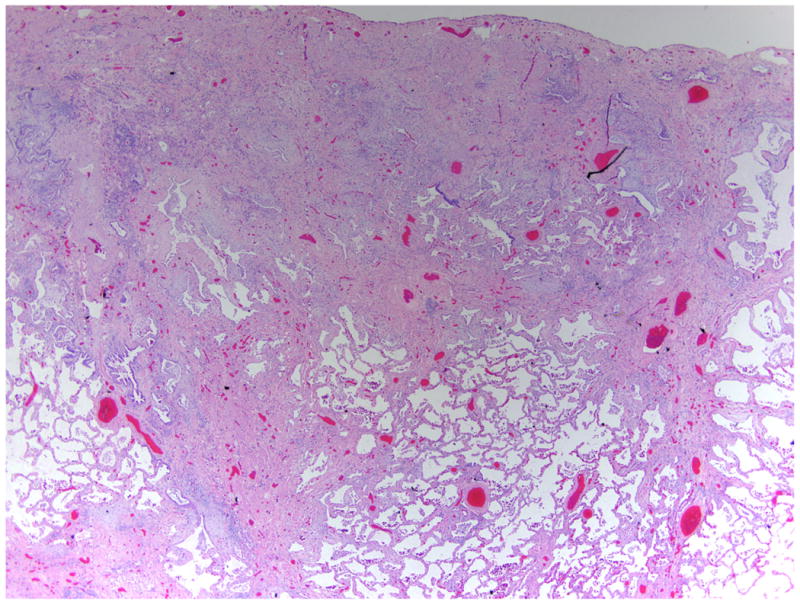
Figure 1
Figure 1
Pathologic changes in usual interstitial pneumonia. This low-power image of usual interstitial pneumonia shows the typical subpleural accentuation of dense fibrosis with irregular airspaces and central delicate alveolar septa. Stained with hematoxylin and eosin; magnification of 20×.
Figure 2
Figure 2
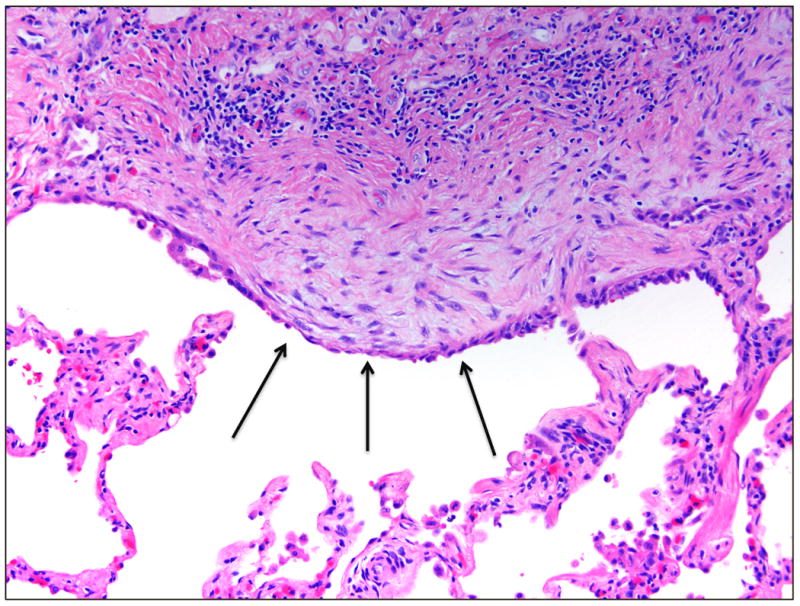
Fibroblast foci. The fibroblast focus shows a proliferation of spindled fibroblasts within a myxoid matrix, producing a bulge of tissue into the airspace. The overlying epithelium often shows plump reactive-appearing cells (arrows). Stained with hematoxylin and eosin; magnification of 200×.
Figure 3
Figure 3
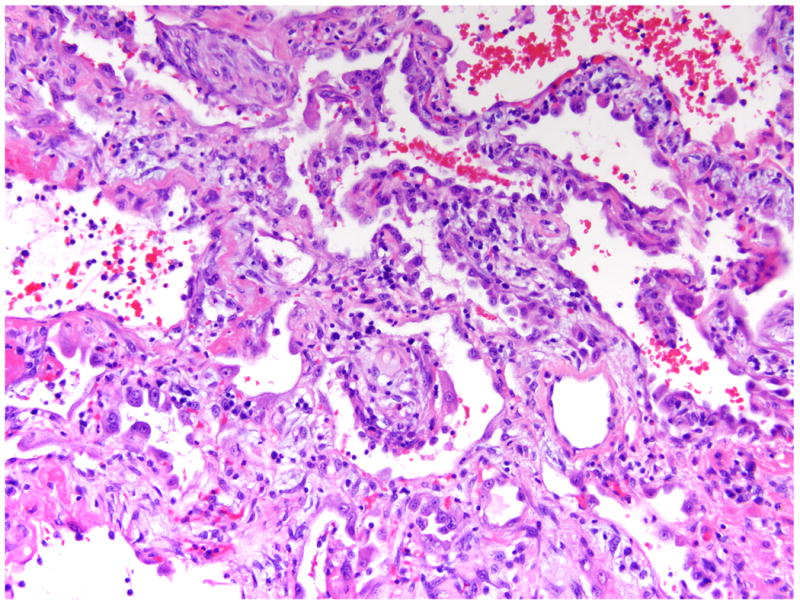
Pathologic changes in acute exacerbation of idiopathic pulmonary fibrosis. In acute exacerbation of usual interstitial pneumonia, the central lung tissue shows histologic changes of diffuse alveolar damage including edematous alveolar septa, type II pneumocyte hyperplasia, and hyaline membrane formation. Stained with hematoxylin and eosin; magnification of 200×.
Figure 4
Figure 4
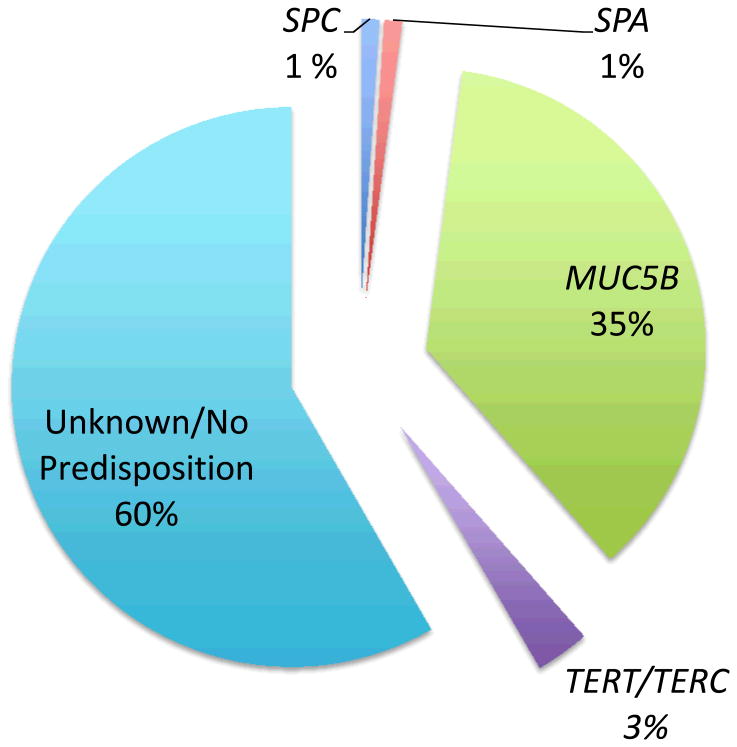
Estimated frequencies of genetic mutations predisposing to idiopathic pulmonary fibrosis (IPF). This pie chart illustrates the estimated prevalence of mutations in surfactant protein C (SPC), surfactant protein A (SPA), mucin 5B (MUC5B), and telomerase (TERT, TERC) that predispose patients to develop sporadic IPF. All percentages are estimates derived from reports in specific patient cohorts.
Figure 5
Figure 5
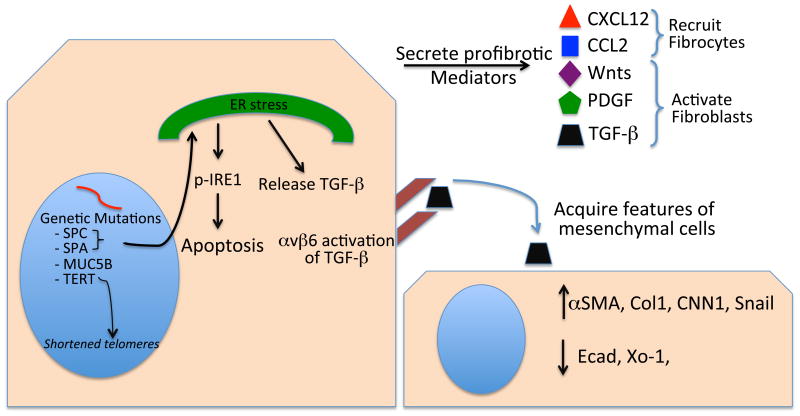
Profibrotic attributes of epithelial cells in idiopathic pulmonary fibrosis lungs. Genetic mutations in epithelial cell–associated proteins predispose to the development of lung fibrosis by leading to the development of short telomeres or endoplasmic reticulum (ER) stress. ER stress may be profibrotic by causing apoptosis or release of TGF-β. Epithelial cells release profibrotic mediators such as Wnts, PDGF, and TGF-β, which activate fibroblasts, or CXCL12 and CCL2, which recruit fibrocytes to the lung. Epithelial cells produce the integrin αvβ6, which activates TGF-P and may thereby cause epithelial cells to undergo epithelial-to-mesenchymal transition.
Figure 6
Figure 6
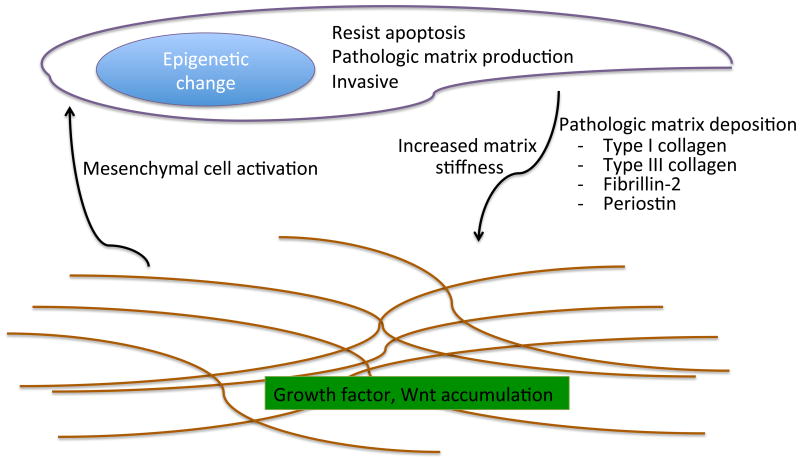
Mechanisms by which mesenchymal cells or matrix contribute to lung fibrosis. Idiopathic pulmonary fibrosis fibroblasts acquire pathologic, profibrotic traits such as resistance to apoptosis, production of excess matrix, and an invasive phenotype. The remodeled matrix is abnormally stiff, and the composition of the extracellular matrix is extensively altered compared with that in normal lungs. In turn, these pathologic changes within the matrix may further promote profibrotic traits within fibroblasts.
Figure 7
Figure 7
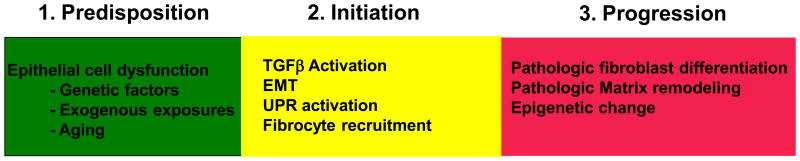
Pathophysiologic stages of idiopathic pulmonary fibrosis (IPF). The pathogenesis of IPF can be delineated into three stages. The initial predisposition stage includes processes such as genetic mutations, environmental exposure (routine or otherwise), and aging that predispose an individual to develop lung fibrosis. The second initiation stage includes defined profibrotic processes, such as TGF-β activation, fibrocyte recruitment, epithelial-to-mesenchymal transition (EMT), and activation of the unfolded protein response (UPR), that, when engaged, accelerate profibrotic processes. The final progression stage includes molecular processes that lead directly to fibrosis, such as pathologic fibroblast differentiation, matrix deposition and remodeling, increased matrix stiffness, and profibrotic epigenetic changes within fibroblasts and epithelial cells. Events in the latter stage may bypass the first two stages, leading to persistent mesenchymal cell activation and matrix remodeling.

References

    1. Raghu G, Collard HR, Egan JJ, Martinez FJ, Behr J, et al. An official ATS/ERS/JRS/ALAT statement: idiopathic pulmonary fibrosis: evidence-based guidelines for diagnosis and management. Am J Respir Crit Care Med. 183:788–824. - PMC - PubMed
    1. Raghu G, Weycker D, Edelsberg J, Bradford WZ, Oster G. Incidence and prevalence of idiopathic pulmonary fibrosis. Am J Respir Crit Care Med. 2006;174:810–16. - PubMed
    1. Kim DS, Collard HR, King TE., Jr Classification and natural history of the idiopathic interstitial pneumonias. Proc Am Thorac Soc. 2006;3:285–92. - PMC - PubMed
    1. Song JW, Hong SB, Lim CM, Koh Y, Kim DS. Acute exacerbation of idiopathic pulmonary fibrosis: incidence, risk factors and outcome. Eur Respir J. 2011;37:356–63. - PubMed
    1. Collard HR, Moore BB, Flaherty KR, Brown KK, Kaner RJ, et al. Acute exacerbations of idiopathic pulmonary fibrosis. Am J Respir Crit Care Med. 2007;176:636–43. - PMC - PubMed

Publication types

MeSH terms

Substances