


Adipose tissue depot and cell size dependency of adiponectin synthesis and secretion in human obesity
- PMID: 24052897
- PMCID: PMC3774697
- DOI: 10.4161/adip.24953
Adipose tissue depot and cell size dependency of adiponectin synthesis and secretion in human obesity
Abstract
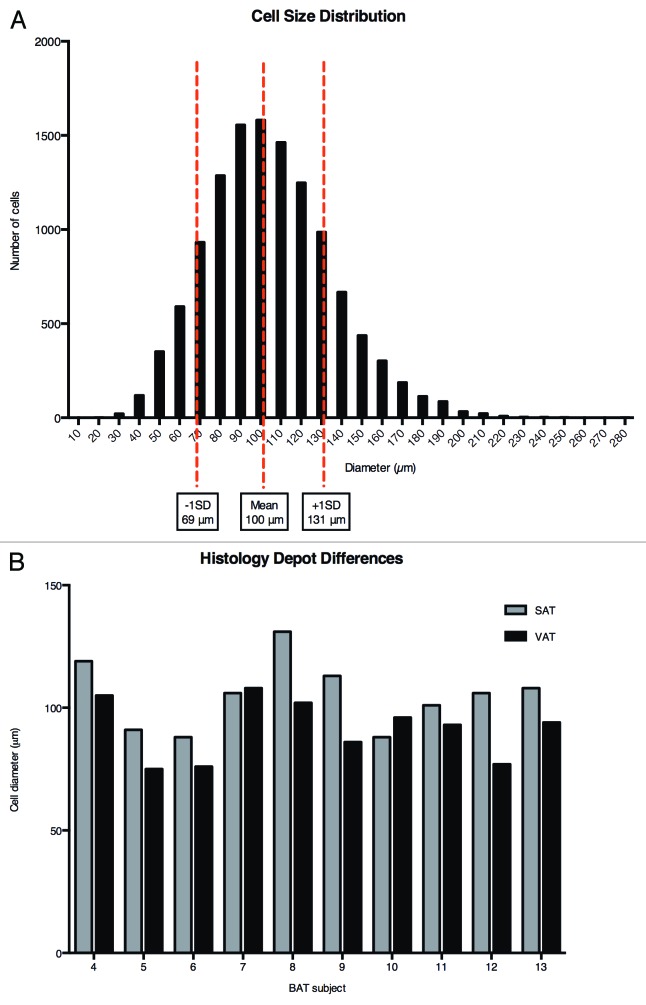
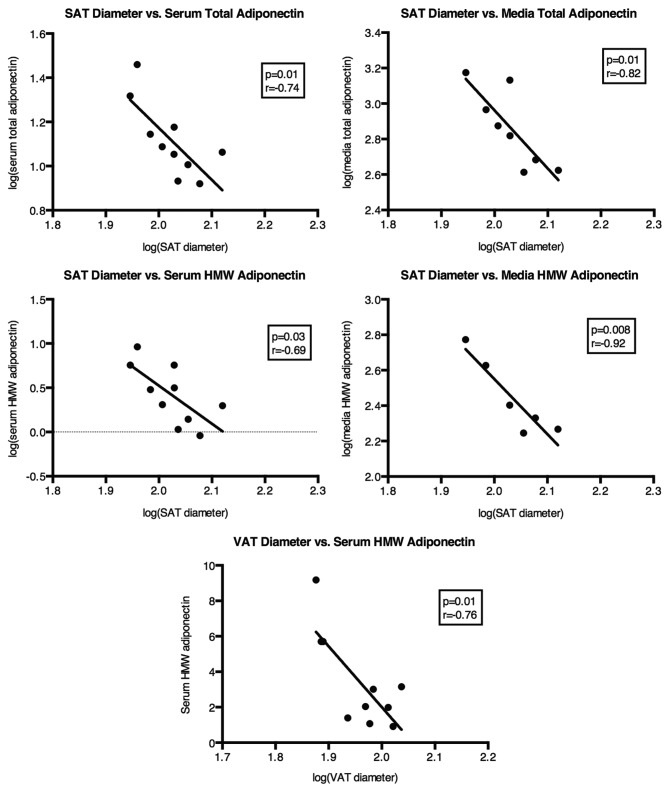
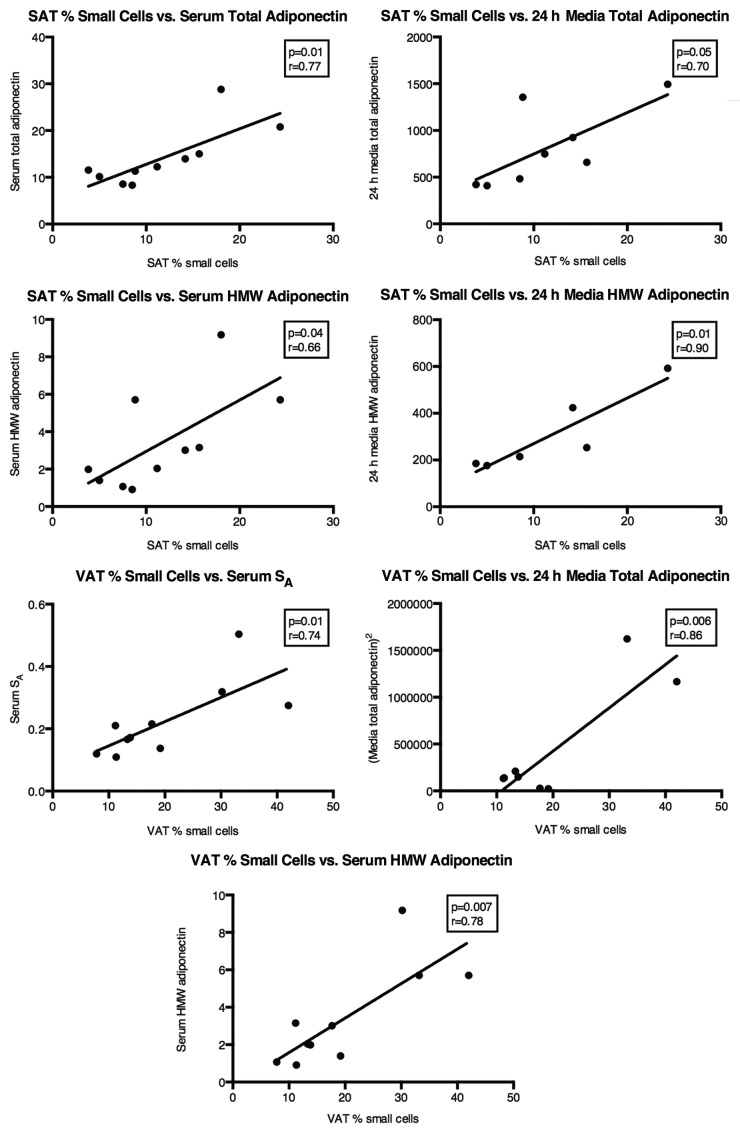
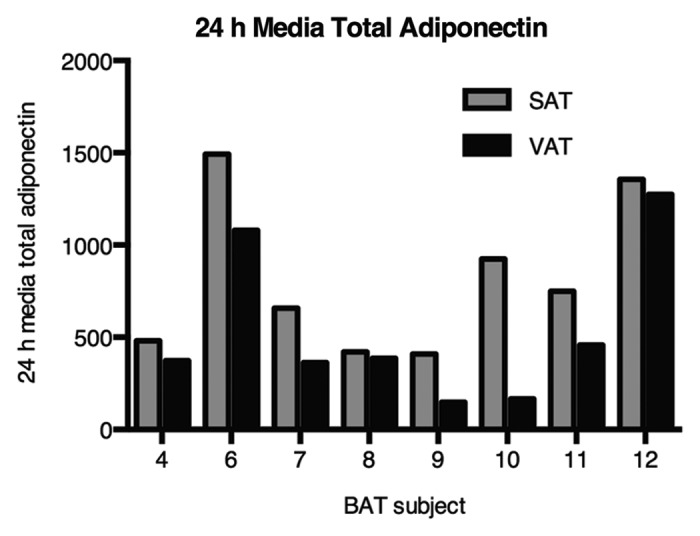
Adiponectin is an insulin sensitizing fat cell (FC) hormone whose levels are related to adipose tissue (AT) mass and depot distribution. We hypothesized that the nature of AT expansion (hypertrophy vs. hyperplasia) contributes to obesity-related reductions in serum adiponectin and that this effect is influenced by the regional distribution of AT to subcutaneous (S) and visceral (V) depots. Thirteen obese subjects provided paired AT biopsies. Serum total and high molecular weight (HMW) adiponectin levels were determined by ELISA. Secretion was quantified following 24-h explant culture. FC size, number, % large, and % small FC were determined by microscopic analysis. Secretion of total adiponectin was highest by SAT (P = 0.008) and correlated more strongly with serum adiponectin (total: P = 0.015, r = 0.77; HMW: P = 0.005, r = 0.83) than did secretion by VAT (P = 0.05, r = 0.66 for both). FC size was greatest in SAT and correlated negatively with both serum (total: P = 0.01, r = -0.74; HMW: P = 0.03, r = -0.69) and secreted (total: P = 0.05, r = -0.72; HMW: P = 0.02, r = -0.87) adiponectin. The % small FC in SAT correlated positively with both serum (total: P = 0.006, r = 0.87; HMW: P = 0.009, r = 0.79) and secreted (total: P = 0.03, r = 0.75; HMW: P = 0.01, r = 0.92) adiponectin. VAT FC size correlated negatively with serum HMW adiponectin (P = 0.01, r = -0.76) but not with any measure of secretion. VAT had the greatest % small FC, which related positively to serum HMW (P = 0.004, r = 0.81) and to secreted total adiponectin (P = 0.02, r = 0.78). These studies indicate that differences in fat cell size and depot distribution of AT expansion are important influences on adiponectin in obesity.
Keywords: adipocyte; adiponectin; adipose tissue depots; fat cell size; high molecular weight; insulin resistance; subcutaneous adipose tissue; visceral adipose tissue.
Figures
References
Grants and funding
LinkOut - more resources
Full Text Sources
Other Literature Sources
Research Materials
