


Abdominal cocoon-A rare cause of intestinal obstruction
- PMID: 24055916
- PMCID: PMC3825929
- DOI: 10.1016/j.ijscr.2013.08.004
Abdominal cocoon-A rare cause of intestinal obstruction
Abstract
Introduction: Abdominal cocoon syndrome is characterized by small bowel encapsulation by a fibro-collagenous membrane or "cocoon". It is a rare cause of intestinal obstruction.
Presentation of case: A 42-year old man presented with sub-acute intestinal obstruction. Intra-operatively, the entire small bowel was found to be encapsulated in a dense fibrous sac. The peritoneal sac was excised, followed by lysis of the inter-loop adhesions. Postoperative recovery was unremarkable.
Discussion: Most patients with abdominal cocoon syndrome present with features of recurrent acute or chronic small bowel obstruction secondary to kinking and/or compression of the intestines within the constricting cocoon. An abdominal mass may also be present due to an encapsulated cluster of dilated small bowel loops.
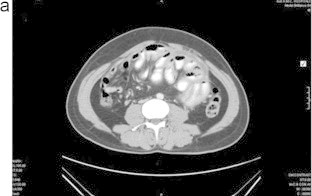
Conclusion: Abdominal cocoon is a rare condition causing intestinal obstruction and diagnosis requires a high index of suspicion because of the nonspecific clinical picture. CECT of the abdomen is a useful radiological tool to aid in preoperative diagnosis. Peritoneal sac excision and adhesiolysis is the treatment and the outcome is usually satisfactory.
Keywords: Sclerosing encapsulating peritonitis; Subacute intestinal obstruction.
Copyright © 2013 The Authors. Published by Elsevier Ltd.. All rights reserved.
Figures


References
-
- Cambria R.P., Shamberger R.C. Small bowel obstruction caused by the abdominal cocoon syndrome: possible association with LeVeen shunt. Surgery. 1984;95:501–503. - PubMed
-
- Deeb L.S., Mourad F., El-Zein Y., Uthman S. Abdominal cocoon in a man: preoperative diagnosis and literature review. Clin Gastroenterol. 1998;26:148–150. - PubMed
-
- Owtschinnikow P.J. Peritonitis chronic fibrosaincapsulata. ArchKlinChir. 1907;83:623–624. [Cited by: Constantinides F, Di Nunno N, Bernasconi P, Jonjic N, Melato M. A new type of peritoneal encapsulation of the small bowel. Am J Surg Pathol 1998; 22: 1297–98]
-
- Foo K.T., Ng K.C., Rauff A., Foong W.C., Sinmah R. Unusual small intestinal obstruction in adolescent girls: the abdominal cocoon. Br J Radiol. 1978;65:427–430. - PubMed
-
- Sieck J.O., Cowgill R., Larkuothy W. Peritoneal encapsulation and abdominal cocoon case reports and a review of the literature. Gastroenterology. 1983;84:1597–1601. - PubMed
LinkOut - more resources
Full Text Sources
Other Literature Sources
