


Genotyping Candida albicans from Candida leukoplakia and non-Candida leukoplakia shows no enrichment of multilocus sequence typing clades but enrichment of ABC genotype C in Candida leukoplakia
- PMID: 24058485
- PMCID: PMC3776806
- DOI: 10.1371/journal.pone.0073738
Genotyping Candida albicans from Candida leukoplakia and non-Candida leukoplakia shows no enrichment of multilocus sequence typing clades but enrichment of ABC genotype C in Candida leukoplakia
Abstract
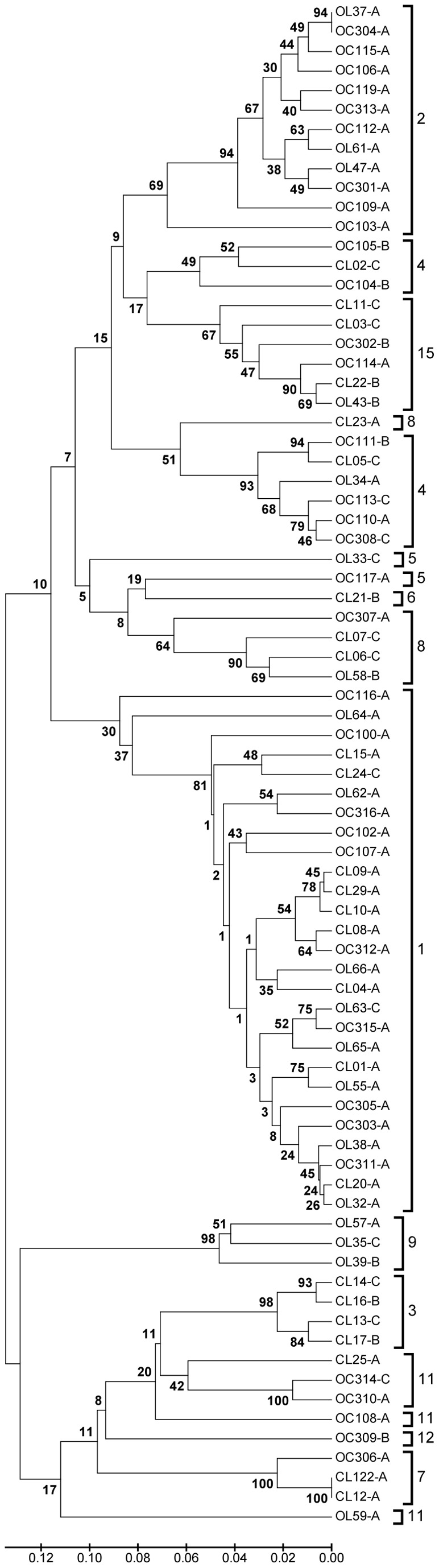
Oral leukoplakias are histopathologically-diagnosed as Candida leukoplakia or non-Candida leukoplakia by the presence or absence of hyphae in the superficial epithelium. Candida leukoplakia lesions have significantly increased malignant potential. Candida albicans is the most prevalent fungal species associated with oral leukoplakia and may contribute to malignant transformation of Candida leukoplakia. To date, no detailed population analysis of C. albicans isolates from oral leukoplakia patients has been undertaken. This study investigated whether specific C. albicans genotypes were associated with Candida leukoplakia and non-Candida leukoplakia in a cohort of Irish patients. Patients with histopathologically-defined Candida leukoplakia (n = 31) or non-Candida leukoplakia (n = 47) were screened for Candida species by culture of oral rinse and lesional swab samples. Selected C. albicans isolates from Candida leukoplakia patients (n = 25), non-Candida leukoplakia patients (n = 19) and oral carriage isolates from age and sex matched healthy subjects without leukoplakia (n = 34) were subjected to multilocus sequence typing (MLST) and ABC genotyping. MLST revealed that the clade distribution of C. albicans from both Candida leukoplakia and non-Candida leukoplakia lesions overlapped with the corresponding clade distributions of oral carriage isolates and global reference isolates from the MLST database indicating no enrichment of leukoplakia-associated clones. Oral leukoplakia isolates were significantly enriched with ABC genotype C (12/44, 27.3%), particularly Candida leukoplakia isolates (9/25, 36%), relative to oral carriage isolates (3/34, 8.8%). Genotype C oral leukoplakia isolates were distributed in MLST clades 1,3,4,5,8,9 and 15, whereas genotype C oral carriage isolates were distributed in MLST clades 4 and 11.
Conflict of interest statement
Figures
References
-
- Odds FC (1988) Ecology of Candida and epidemiology of candidosis. In: Odds FC editor. Candida and Candidosis. London: Bailière Tindall. 68–92.
-
- Warnakulasuriya S, Johnson NW, van der Waal I (2007) Nomenclature and classification of potentially malignant disorders of the oral mucosa. J Oral Pathol Med 36: 575–580. - PubMed
-
- Lehner T (1964) Chronic Candidiasis. Trans St Johns Hosp Dermatol Soc 50: 8–21. - PubMed
-
- Cawson RA, Lehner T (1968) Chronic hyperplastic candidiasis–Candidal leukoplakia. Br J Dermatol 80: 9–16. - PubMed
-
- Krogh P, Holmstrup P, Thorn JJ, Vedtofte P, Pindborg JJ (1987) Yeast species and biotypes associated with oral leukoplakia and lichen planus. Oral Surg Oral Med Oral Pathol 63: 48–54. - PubMed
Publication types
MeSH terms
Grants and funding
LinkOut - more resources
Full Text Sources
Other Literature Sources
