


Aminergic control of social status in crayfish agonistic encounters
- PMID: 24058575
- PMCID: PMC3776855
- DOI: 10.1371/journal.pone.0074489
Aminergic control of social status in crayfish agonistic encounters
Abstract
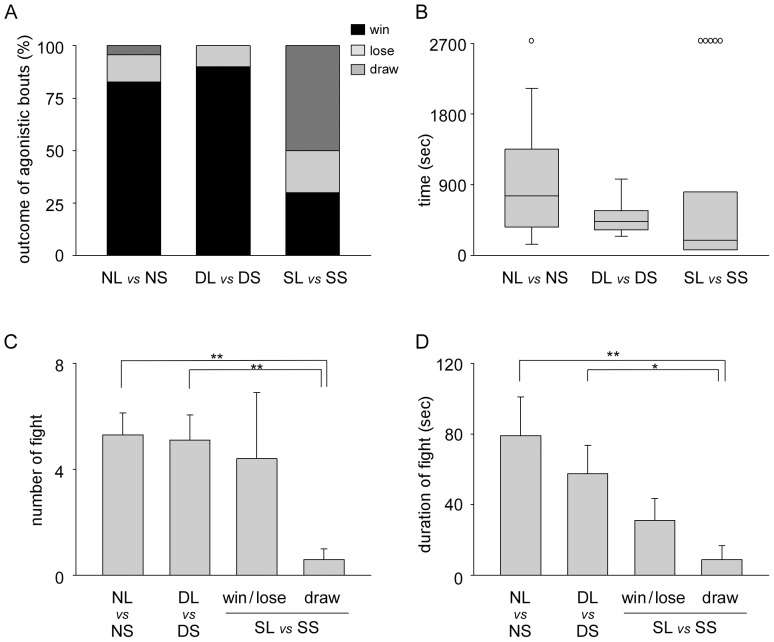
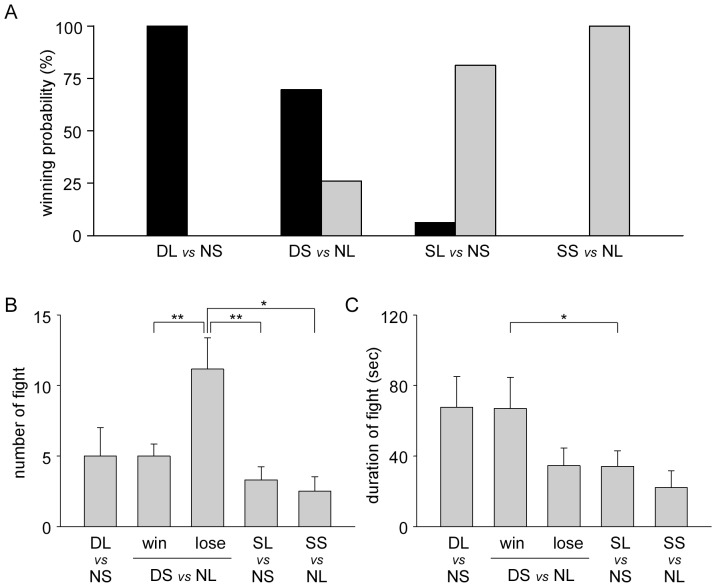
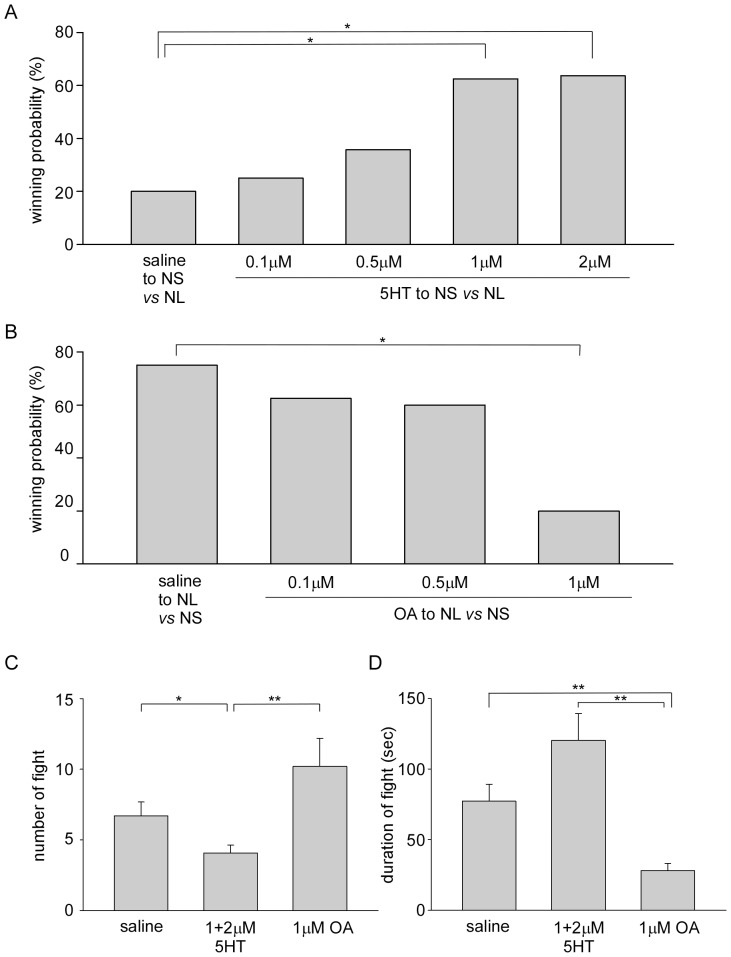
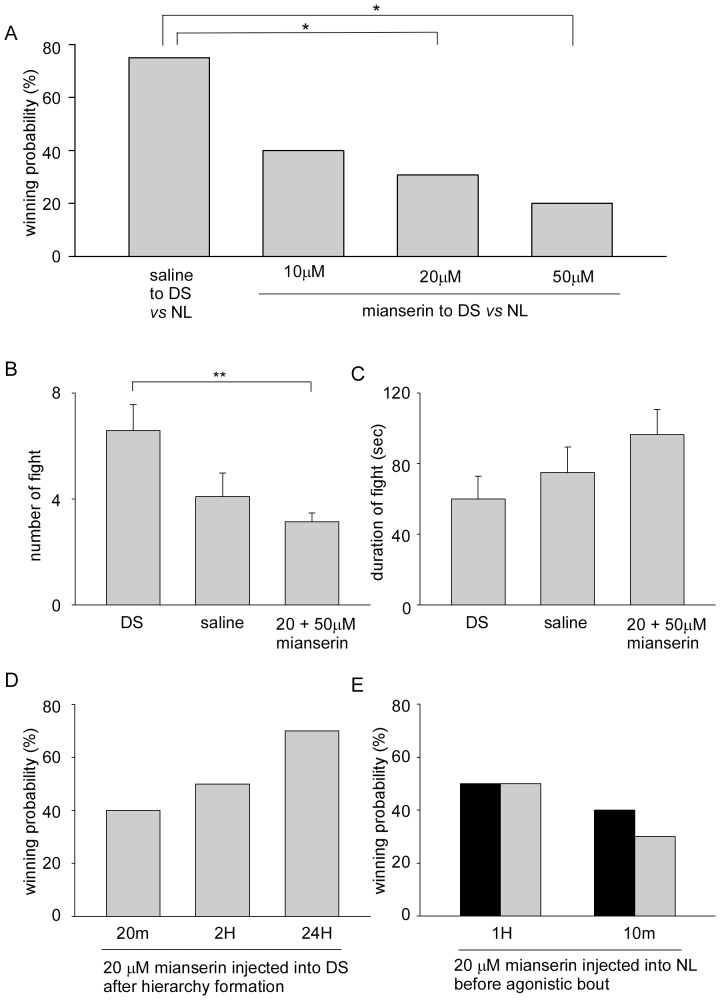
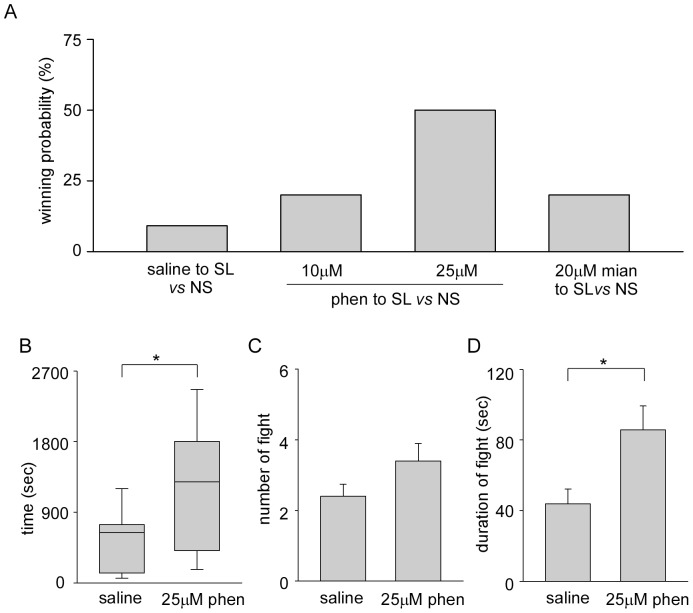
Using pairings of male crayfish Procambarus clarkii with a 3-7% difference in size, we confirmed that physically larger crayfish were more likely to win encounters (winning probability of over 80%). Despite a physical disadvantage, small winners of the first pairings were more likely to win their subsequent conflicts with larger naive animals (winning probability was about 70%). By contrast, the losers of the first pairings rarely won their subsequent conflicts with smaller naive animals (winning probability of 6%). These winner and loser effects were mimicked by injection of serotonin and octopamine. Serotonin-injected naive small crayfish were more likely to win in pairings with untreated larger naive crayfish (winning probability of over 60%), while octopamine-injected naive large animals were beaten by untreated smaller naive animals (winning probability of 20%). Furthermore, the winner effects of dominant crayfish were cancelled by the injection of mianserin, an antagonist of serotonin receptors and were reinforced by the injection of fluoxetin, serotonin reuptake inhibitor, just after the establishment of social order of the first pairings. Injection of octopamine channel blockers, phentolamine and epinastine, by contrast, cancelled the loser effects. These results strongly suggested that serotonin and octopamine were responsible for winner and loser effects, respectively.
Conflict of interest statement
Figures
References
-
- Chase I, Bartolomeo C, Dugatkin LA (1994) Aggressive interactions and inter-contest interval: how long do winners keep winning? Anim Behav 48: 393–400.
-
- Drummond H, Canales C (1998) Dominance between booby nestlings involves winner and loser effects. Anim Bahav 55: 1669–1676. - PubMed
-
- Hsu Y, Wolf LL (1999) The winner and loser effect: integrating multiple experiences. Anim Behav 57: 903–910. - PubMed
Publication types
MeSH terms
Substances
LinkOut - more resources
Full Text Sources
Other Literature Sources
Miscellaneous
