


Disrupting intergenerational continuity in harsh and abusive parenting: the importance of a nurturing relationship with a romantic partner
- PMID: 24059934
- PMCID: PMC5054751
- DOI: 10.1016/j.jadohealth.2013.03.014
Disrupting intergenerational continuity in harsh and abusive parenting: the importance of a nurturing relationship with a romantic partner
Abstract
Purpose: Harsh, abusive, and rejecting behavior by parents toward their children is associated with increased risk for many developmental problems for youth. Earlier research also shows that children raised by harsh parents are more likely to treat their own children harshly. The present study evaluated nurturing and supportive behaviors of spouses or cohabiting romantic partners hypothesized to strengthen co-parent relationships and help break this intergenerational cycle of harsh parenting.
Methods: Data come from the Family Transitions Project, a 22-year, 3-generation study of a cohort of over 500 early adolescents (G2) grown to adulthood. During adolescence, observers rated G1 (parent of G2) harsh parenting to G2. Several years later, observers rated G2 harsh parenting toward their oldest child (G3). In addition, G2's romantic partner (spouse or cohabiting partner) was rated by observers on a range of behaviors expected to affect G2 harsh parenting.
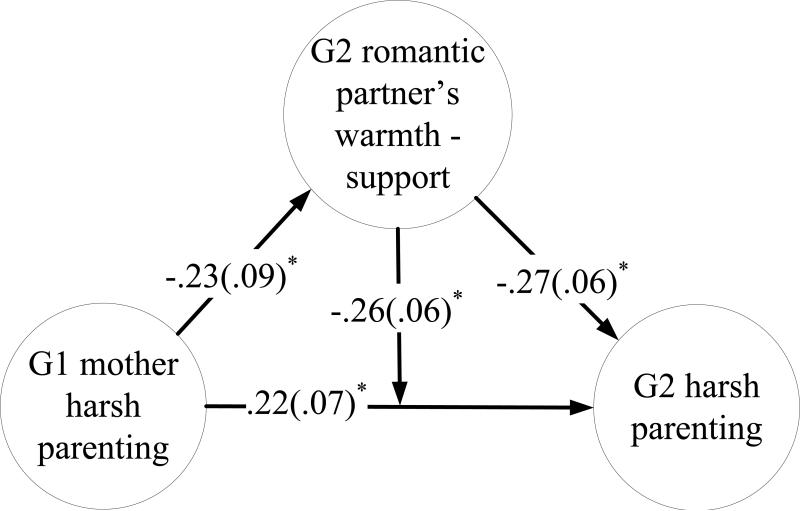
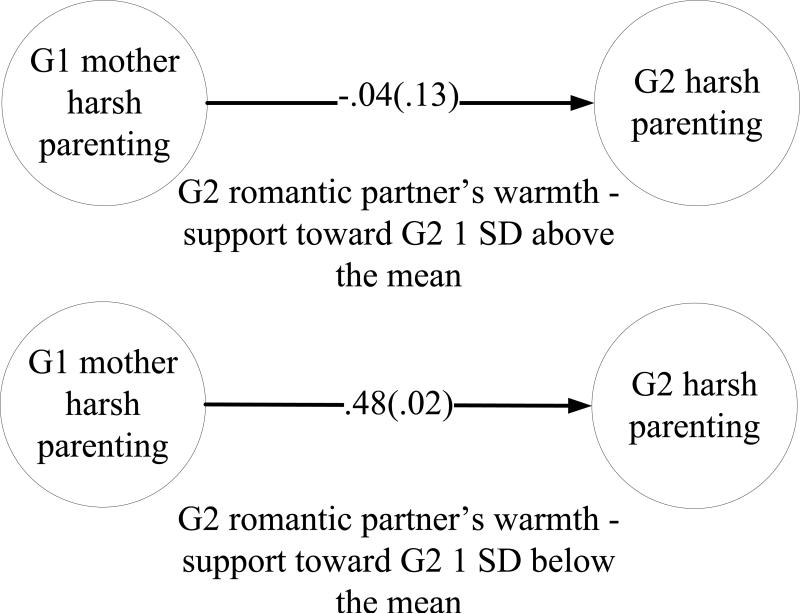
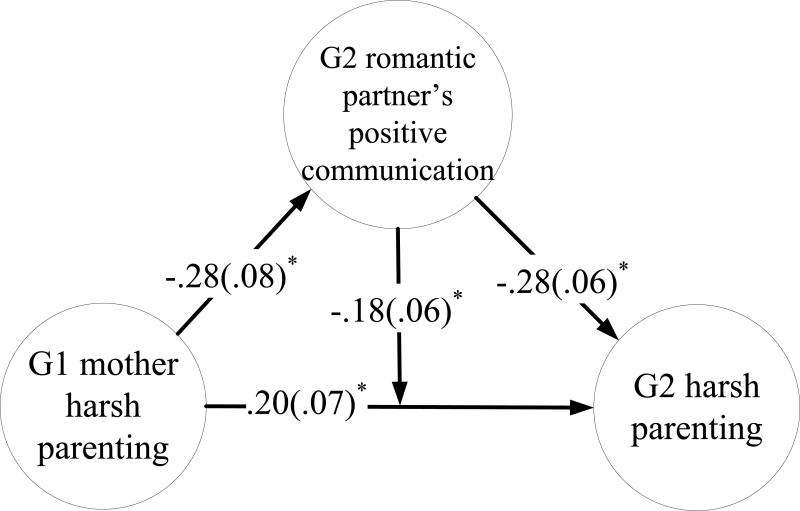
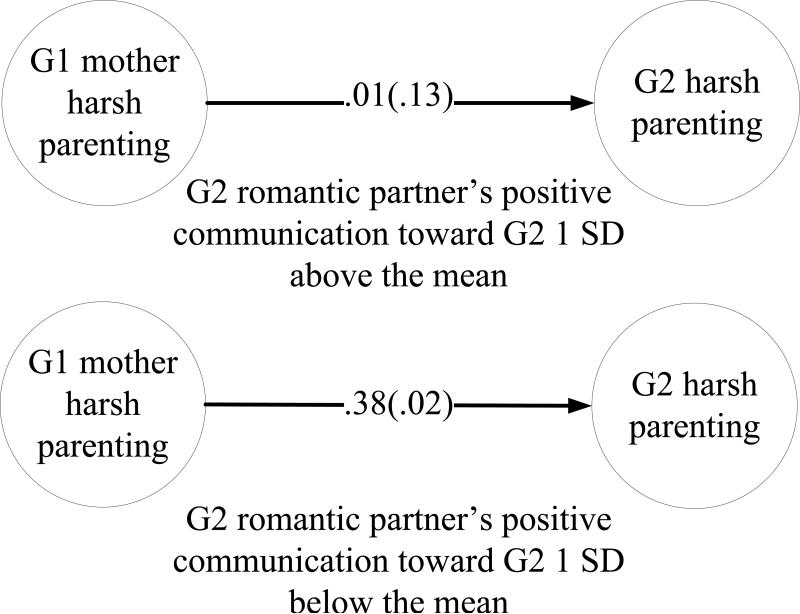
Results: Romantic partner warmth and positive communication with G2 were associated with less G2 harsh parenting toward G3 (a compensatory or main effect) and when these partner behaviors were high, there was no evidence of intergenerational continuity from G1 to G2 harsh parenting (a moderating or protective effect). G1 harsh parenting slightly decreased the likelihood that G2 would select a supportive spouse or romantic partner (evidence of cumulative continuity).
Conclusions: Romantic partner warmth and positive communication appear to disrupt continuity in harsh and abusive parenting. As appropriate, preventive interventions designed to reduce risk for child maltreatment should include a focus on spousal or partner behaviors in their educational or treatment programs.
Keywords: Abuse and violence; Domestic abuse; Parental discipline; Parenting style; Romantic relationships.
Copyright © 2013 Society for Adolescent Health and Medicine. Published by Elsevier Inc. All rights reserved.
Figures
References
-
- Conger RD, Belsky J, Capaldi DM. The intergenerational transmission of parenting: Closing comments for the special section. Developmental Psychology. 2009;45:1276–1283. - PubMed
-
- Conger RD, Neppl T, Kim KJ, Scaramella L. Angry and aggressive behavior across three generations: A prospective, longitudinal study of parents and children. Journal of Abnormal Child Psychology. 2003;31:143–160. - PubMed
-
- Hops H, Davis B, Leve C, Sheeber L. Cross-generational transmission of aggressive parent behavior: A prospective, mediational examination. Journal of Abnormal Child Psychology. 2003;31:161–169. - PubMed
-
- Dogan SJ, Conger RD, Kim KJ, Masyn KE. Cognitive and parenting pathways in the transmission of antisocial behavior from parents to adolescents. Child Development. 2007;78:335–349. - PubMed
-
- Caspi A, Elder GH. Emergent family patterns: The intergenerational construction of problem behavior and relations. In: Hinde R, Stevenson-Hinde J, editors. Relationships within families: Mutual influences. Clarendon Press; Oxford, UK: 1988. pp. 218–240.
Publication types
MeSH terms
Grants and funding
LinkOut - more resources
Full Text Sources
Other Literature Sources
Medical
Research Materials
