Thermodynamic contribution and nearest-neighbor parameters of pseudouridine-adenosine base pairs in oligoribonucleotides
- PMID: 24062573
- PMCID: PMC3851715
- DOI: 10.1261/rna.039610.113
Thermodynamic contribution and nearest-neighbor parameters of pseudouridine-adenosine base pairs in oligoribonucleotides
Abstract
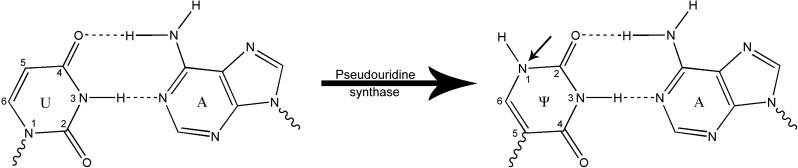
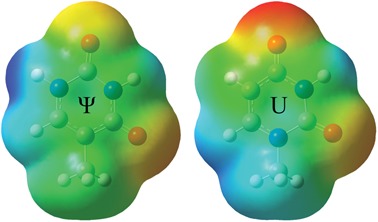
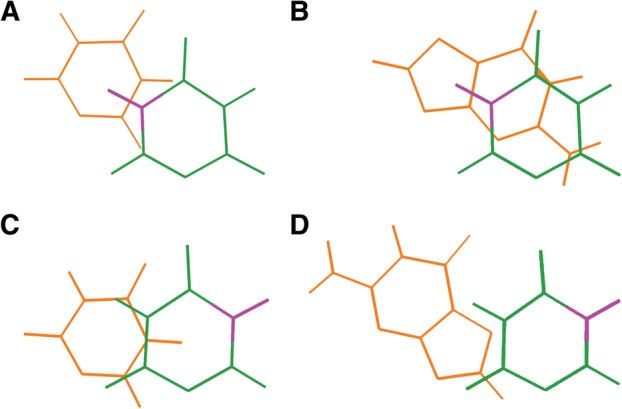
Pseudouridine (Ψ) is the most common noncanonical nucleotide present in naturally occurring RNA and serves a variety of roles in the cell, typically appearing where structural stability is crucial to function. Ψ residues are isomerized from native uridine residues by a class of highly conserved enzymes known as pseudouridine synthases. In order to quantify the thermodynamic impact of pseudouridylation on U-A base pairs, 24 oligoribonucleotides, 16 internal and eight terminal Ψ-A oligoribonucleotides, were thermodynamically characterized via optical melting experiments. The thermodynamic parameters derived from two-state fits were used to generate linearly independent parameters for use in secondary structure prediction algorithms using the nearest-neighbor model. On average, internally pseudouridylated duplexes were 1.7 kcal/mol more stable than their U-A counterparts, and terminally pseudouridylated duplexes were 1.0 kcal/mol more stable than their U-A equivalents. Due to the fact that Ψ-A pairs maintain the same Watson-Crick hydrogen bonding capabilities as the parent U-A pair in A-form RNA, the difference in stability due to pseudouridylation was attributed to two possible sources: the novel hydrogen bonding capabilities of the newly relocated imino group as well as the novel stacking interactions afforded by the electronic configuration of the Ψ residue. The newly derived nearest-neighbor parameters for Ψ-A base pairs may be used in conjunction with other nearest-neighbor parameters for accurately predicting the most likely secondary structure of A-form RNA containing Ψ-A base pairs.
Keywords: RNA thermodynamics; modified nucleotides; nonstandard nucleotides; secondary structure prediction.
Figures
References
-
- Bakin A, Ofengand J 1993. Four newly located pseudouridylate residues in Escherichia coli 23S ribosomal RNA are all at the peptidyltransferase center: Analysis by the application of a new sequencing technique. Biochemistry 32: 9754–9762 - PubMed
-
- Bakin A, Lane BG, Ofengand J 1994. Clustering of pseudouridine residues around the peptidyltransferase center of yeast cytoplasmic and mitochondrial ribosomes. Biochemistry 33: 13475–13483 - PubMed
-
- Borer PN, Dengler B, Tinoco I, Uhlenbeck O 1974. Stability of ribonucleic-acid double-stranded helices. J Mol Biol 86: 843–853 - PubMed
-
- Charette M, Gray MW 2000. Pseudouridine in RNA: What, where, how, and why. Life 49: 341–351 - PubMed
Publication types
MeSH terms
Substances
Grants and funding
LinkOut - more resources
Full Text Sources
Other Literature Sources