


Molecular epidemiology of respiratory viruses in virus-induced asthma
- PMID: 24062735
- PMCID: PMC3771312
- DOI: 10.3389/fmicb.2013.00278
Molecular epidemiology of respiratory viruses in virus-induced asthma
Abstract
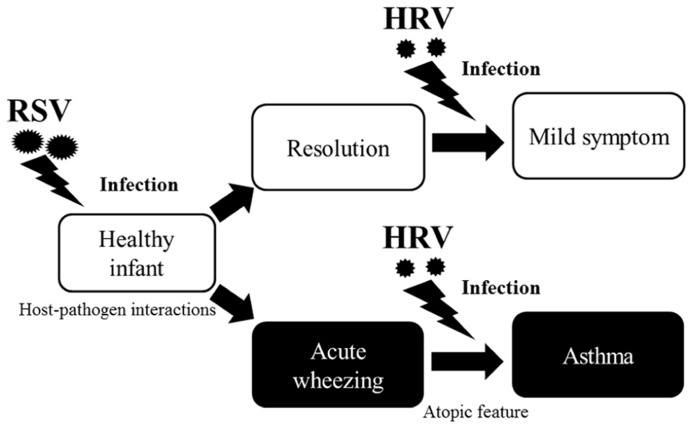
Acute respiratory illness (ARI) due to various viruses is not only the most common cause of upper respiratory infection in humans but is also a major cause of morbidity and mortality, leading to diseases such as bronchiolitis and pneumonia. Previous studies have shown that respiratory syncytial virus (RSV), human rhinovirus (HRV), human metapneumovirus (HMPV), human parainfluenza virus (HPIV), and human enterovirus infections may be associated with virus-induced asthma. For example, it has been suggested that HRV infection is detected in the acute exacerbation of asthma and infection is prolonged. Thus it is believed that the main etiological cause of asthma is ARI viruses. Furthermore, the number of asthma patients in most industrial countries has greatly increased, resulting in a morbidity rate of around 10-15% of the population. However, the relationships between viral infections, host immune response, and host factors in the pathophysiology of asthma remain unclear. To gain a better understanding of the epidemiology of virus-induced asthma, it is important to assess both the characteristics of the viruses and the host defense mechanisms. Molecular epidemiology enables us to understand the pathogenesis of microorganisms by identifying specific pathways, molecules, and genes that influence the risk of developing a disease. However, the epidemiology of various respiratory viruses associated with virus-induced asthma is not fully understood. Therefore, in this article, we review molecular epidemiological studies of RSV, HRV, HPIV, and HMPV infection associated with virus-induced asthma.
Keywords: human metapneumovirus; human rhinovirus; molecular epidemiology; respiratory syncytial virus; respiratory viruses; virus-induced asthma.
Figures
References
-
- Aberle J. H., Aberle S. W., Pracher E., Hutter H. P., Kundi M., Popow-Kraupp T. (2005). Single versus dual respiratory virus infections in hospitalized infants: impact on clinical course of disease and interferon-gamma response. Pediatr. Infect. Dis. J. 24 605–610 10.1097/01.inf.0000168741.59747.2d - DOI - PubMed
-
- Aberle J. H., Aberle S. W., Redlberger-Fritz M., Sandhofer M. J., Popow-Kraupp T. (2010). Human metapneumovirus subgroup changes and seasonality during epidemics. Pediatr. Infect. Dis. J. 29 1016–1018 - PubMed
Publication types
LinkOut - more resources
Full Text Sources
Other Literature Sources
