


Preserved imitation of known gestures in children with high-functioning autism
- PMID: 24062956
- PMCID: PMC3767050
- DOI: 10.1155/2013/751516
Preserved imitation of known gestures in children with high-functioning autism
Abstract
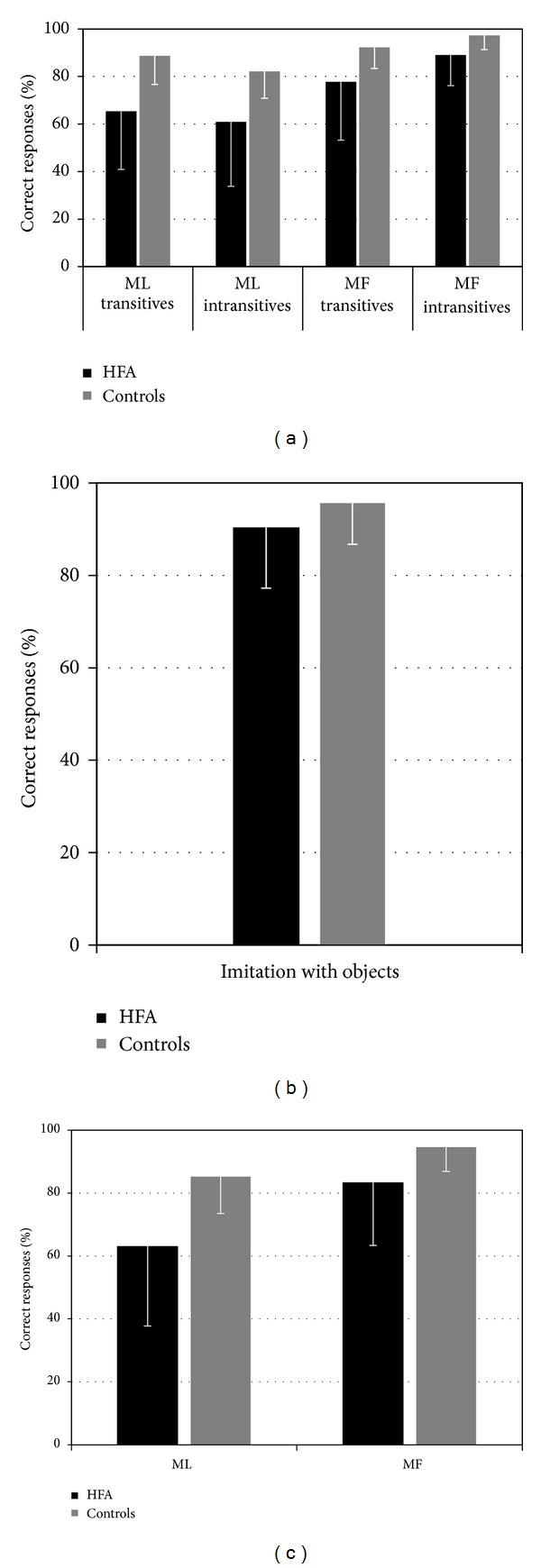
It has been suggested that children with autism are particularly deficient at imitating novel gestures or gestures without goals. In the present study, we asked high-functioning autistic children and age-matched typically developing children to imitate several types of gestures that could be either already known or novel to them. Known gestures either conveyed a communicative meaning (i.e., intransitive) or involved the use of objects (i.e., transitive). We observed a significant interaction between gesture type and group of participants, with children with autism performing known gestures better than novel gestures. However, imitation of intransitive and transitive gestures did not differ across groups. These findings are discussed in light of a dual-route model for action imitation.
Figures
References
-
- Ritvo S, Province S. Form perception and imitation in some autistic children: diagnostic findings and their contextual interpretation. The Psychoanalytical Study of the Child. 1953;8:155–161.
-
- Kanner L. Autistic disturbances of affective contact. Nervous Child. 1943;2:217–250. - PubMed
-
- Uzgiris IC. Two functions of imitation during infancy. International Journal of Behaviour Development. 1981;4:1–12.
-
- Williams JHG, Whiten A, Singh T. A systematic review of action imitation in autistic spectrum disorder. Journal of Autism and Developmental Disorders. 2004;34(3):285–299. - PubMed
LinkOut - more resources
Full Text Sources
Other Literature Sources
