


The K2/Spice phenomenon: emergence, identification, legislation and metabolic characterization of synthetic cannabinoids in herbal incense products
- PMID: 24063277
- PMCID: PMC4100246
- DOI: 10.3109/03602532.2013.839700
The K2/Spice phenomenon: emergence, identification, legislation and metabolic characterization of synthetic cannabinoids in herbal incense products
Abstract
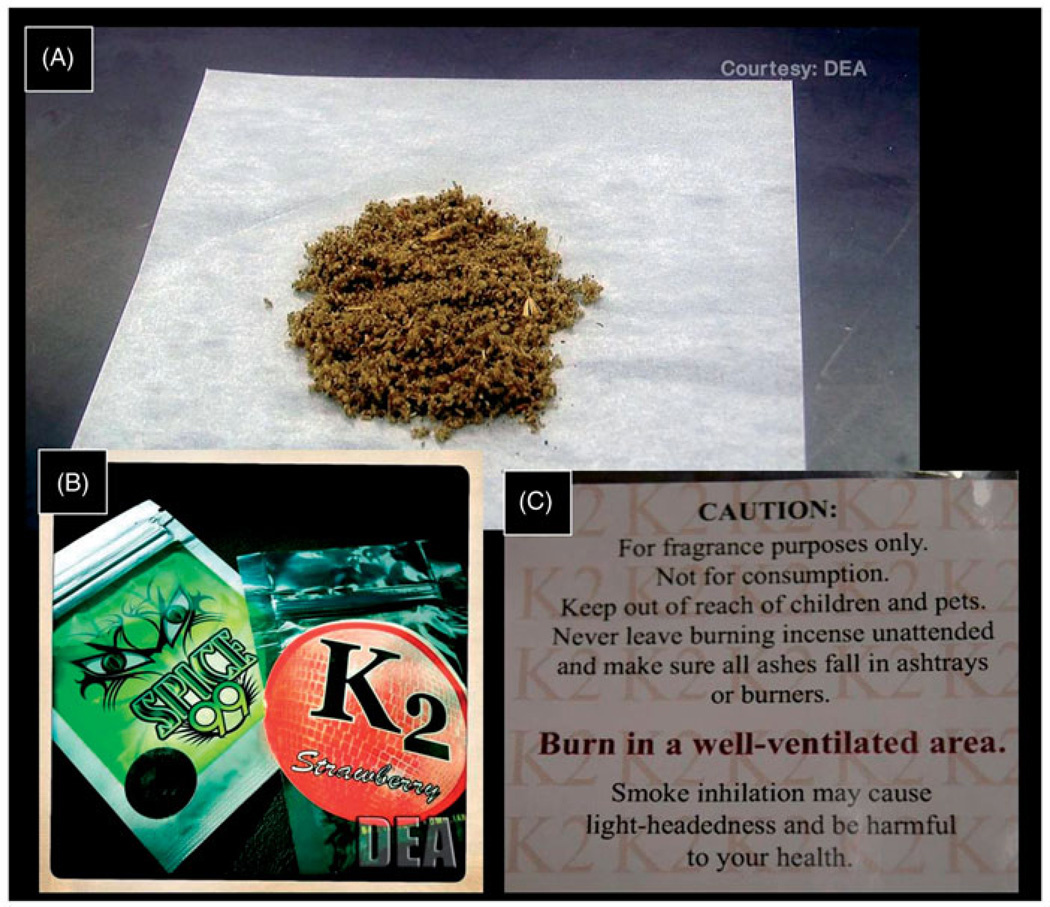
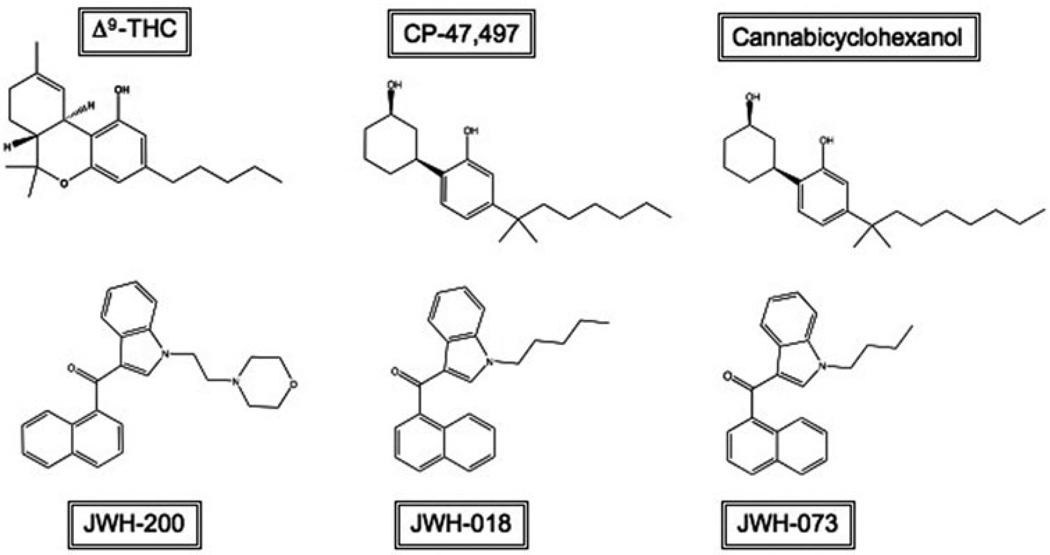
In 2008, the European Monitoring Center for Drugs and Drug Addiction (EMCDDA) detected unregulated, psychoactive synthetic cannabinoids (SCBs) in purportedly all-natural herbal incense products (often known as K2 or Spice) that were being covertly abused as marijuana substitutes. These drugs, which include JWH-018, JWH-073 and CP-47,497, bind and activate the cannabinoid receptors CB1R and CB2R with remarkable potency and efficacy. Serious adverse effects that often require medical attention, including severe cardiovascular, gastrointestinal and psychiatric sequelae, are highly prevalent with SCB abuse. Consequently, progressively restrictive legislation in the US and Europe has banned the distribution, sale and use of prevalent SCBs, initiating cycles in which herbal incense manufacturers replace banned SCBs with newer unregulated SCBs. The contents of the numerous, diverse herbal incense products was unknown when SCB abuse first emerged. Furthermore, the pharmacology of the active components was largely uncharacterized, and confirmation of SCB use was hindered by a lack of known biomarkers. These knowledge gaps prompted scientists across multiple disciplines to rapidly (1) monitor, identify and quantify with chromatography/mass spectrometry the ever-changing contents of herbal incense products, (2) determine the metabolic pathways and major urinary metabolites of several commonly abused SCBs and (3) identify active metabolites that possibly contribute to the severe adverse effect profile of SCBs. This review comprehensively describes the emergence of SCB abuse and provides a historical account of the major case reports, legal decisions and scientific discoveries of the "K2/Spice Phenomenon". Hypotheses concerning potential mechanisms SCB adverse effects are proposed in this review.
Figures
References
-
- AAPCC. [last accessed 17 Dec 2011];Synthetic marijuana data. 2011 [Online] Available from: http://www.aapcc.org/dnn/Portals/0/Synthetic%20Marijuana%20Data%20for%20....
-
- AAPCC. [last accessed 6 Jun 2013];Synthetic marijuana data [Online] 2013 Available from: https://aapcc.s3.amazonaws.com/files/library/Synthetic_Marijuana_Data_fo....
-
- Ashton JC, Rahman RM, Nair SM, et al. Cerebral hypoxia-ischemia and middle cerebral artery occlusion induce expression of the cannabinoid CB2 receptor in the brain. Neurosci Lett. 2007;412:114–117. - PubMed
Publication types
MeSH terms
Substances
Grants and funding
LinkOut - more resources
Full Text Sources
Other Literature Sources
Miscellaneous
