Antenatal hypoxia and pulmonary vascular function and remodeling
- PMID: 24063380
- PMCID: PMC4527655
- DOI: 10.2174/1570161111311050006
Antenatal hypoxia and pulmonary vascular function and remodeling
Abstract
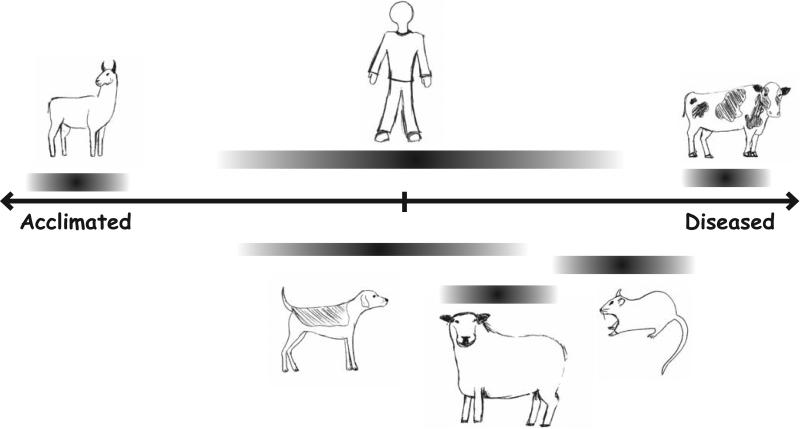
This review provides evidence that antenatal hypoxia, which represents a significant and worldwide problem, causes prenatal programming of the lung. A general overview of lung development is provided along with some background regarding transcriptional and signaling systems of the lung. The review illustrates that antenatal hypoxic stress can induce a continuum of responses depending on the species examined. Fetuses and newborns of certain species and specific human populations are well acclimated to antenatal hypoxia. However, antenatal hypoxia causes pulmonary vascular disease in fetuses and newborns of most mammalian species and humans. Disease can range from mild pulmonary hypertension, to severe vascular remodeling and dangerous elevations in pressure. The timing, length, and magnitude of the intrauterine hypoxic stress are important to disease development, however there is also a genetic-environmental relationship that is not yet completely understood. Determining the origins of pulmonary vascular remodeling and pulmonary hypertension and their associated effects is a challenging task, but is necessary in order to develop targeted therapies for pulmonary hypertension in the newborn due to antenatal hypoxia that can both treat the symptoms and curtail or reverse disease progression.
Figures
References
-
- Martin JA, Hamilton BE, Sutton PD, Ventura SJ, Mathews TJ, Osterman MJ. Births: final data for 2008. Natl Vital Stat Rep. 2010;59(1):1, 3–71. - PubMed
-
- Walsh-Sukys MC, Tyson JE, Wright LL, et al. Persistent pulmonary hypertension of the newborn in the era before nitric oxide: practice variation and outcomes. Pediatrics. 2000;105(1 Pt 1):14–20. - PubMed
-
- Niermeyer S, Andrade Mollinedo P, Huicho L. Child health and living at high altitude. Arch Dis Child. 2009;94(10):806–11. - PubMed
-
- Greaves L. Sifting the evidence: Gender and tobacco control. World Health Organization. 2007:1–40.
Publication types
MeSH terms
Grants and funding
LinkOut - more resources
Full Text Sources
Other Literature Sources
Medical