


Bioactivity of fungal endophytes as a function of endophyte taxonomy and the taxonomy and distribution of their host plants
- PMID: 24066037
- PMCID: PMC3774686
- DOI: 10.1371/journal.pone.0073192
Bioactivity of fungal endophytes as a function of endophyte taxonomy and the taxonomy and distribution of their host plants
Abstract
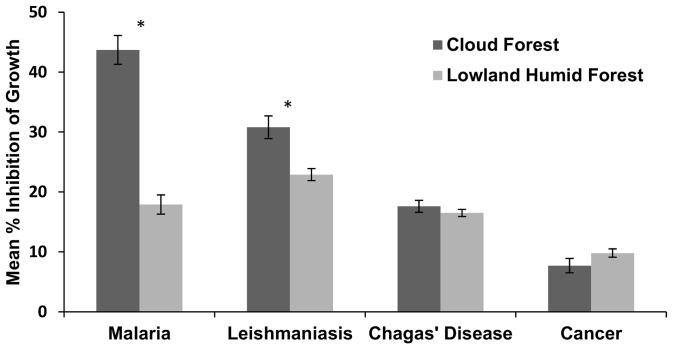
Fungal endophytes--fungi that grow within plant tissues without causing immediate signs of disease--are abundant and diverse producers of bioactive secondary metabolites. Endophytes associated with leaves of tropical plants are an especially exciting and relatively untapped source of novel compounds. However, one major challenge in drug discovery lies in developing strategies to efficiently recover highly bioactive strains. As part of a 15-year drug discovery project, foliar endophytes were isolated from 3198 plant samples (51 orders, 105 families and at least 232 genera of angiosperms and ferns) collected in nine geographically distinct regions of Panama. Extracts from culture supernatants of >2700 isolates were tested for bioactivity (in vitro percent inhibition of growth, % IG) against a human breast cancer cell line (MCF-7) and the causative agents of malaria, leishmaniasis, and Chagas' disease. Overall, 32.7% of endophyte isolates were highly active in at least one bioassay, including representatives of diverse fungal lineages, host lineages, and collection sites. Up to 17% of isolates tested per assay were highly active. Most bioactive strains were active in only one assay. Fungal lineages differed in the incidence and degree of bioactivity, as did fungi from particular plant taxa, and greater bioactivity was observed in endophytes isolated from plants in cloud forests vs. lowland forests. Our results suggest that using host taxonomy and forest type to tailor plant collections, and selecting endophytes from specific orders or families for cultivation, will markedly increase the efficiency and efficacy of discovering bioactive metabolites for particular pharmaceutical targets.
Conflict of interest statement
Figures
References
-
- World Health Organization. Global Health Observatory (GHO): Cancer mortality and morbidity [Online]. Available: http://www.who.int/gho/ncd/mortality_morbidity/cancer/en/index.html. Accessed: 30 Apr 2013.
-
- World Health Organization. Media Centre: Malaria [Online]. Available: http://www.who.int/mediacentre/factsheets/fs094/en/index.html. Accessed: 30 Apr 2013.
-
- Fenwick A (2012) The global burden of neglected tropical diseases. Public.Health 126: 233–236. - PubMed
-
- Chirac P (2004) Strong medicine: Creating incentives for pharmaceutical research on neglected diseases. Nature 431: 629–630.
-
- Longo DL (2012) Tumor heterogeneity and personalized medicine. N Engl J Med 366: 956–957. - PubMed
Publication types
MeSH terms
Substances
Grants and funding
LinkOut - more resources
Full Text Sources
Other Literature Sources
Medical
Molecular Biology Databases
