


Incubation periods of viral gastroenteritis: a systematic review
- PMID: 24066865
- PMCID: PMC3849296
- DOI: 10.1186/1471-2334-13-446
Incubation periods of viral gastroenteritis: a systematic review
Abstract
Background: Accurate knowledge of incubation period is important to investigate and to control infectious diseases and their transmission, however statements of incubation period in the literature are often uncited, inconsistent, and/or not evidence based.
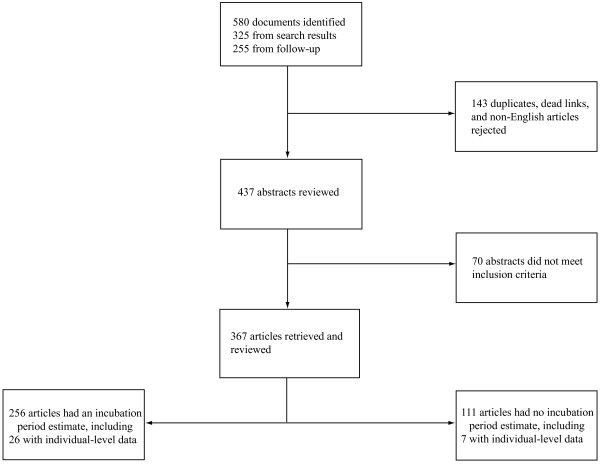
Methods: In a systematic review of the literature on five enteric viruses of public health importance, we found 256 articles with incubation period estimates, including 33 with data for pooled analysis.
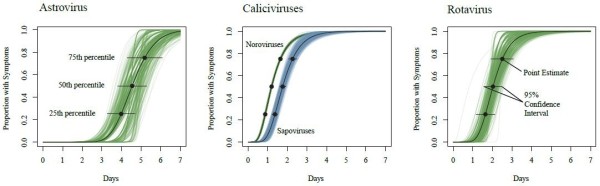
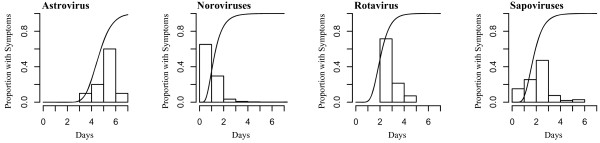
Results: We fit a log-normal distribution to pooled data and found the median incubation period to be 4.5 days (95% CI 3.9-5.2 days) for astrovirus, 1.2 days (95% CI 1.1-1.2 days) for norovirus genogroups I and II, 1.7 days (95% CI 1.5-1.8 days) for sapovirus, and 2.0 days (95% CI 1.4-2.4 days) for rotavirus.
Conclusions: Our estimates combine published data and provide sufficient quantitative detail to allow for these estimates to be used in a wide range of clinical and modeling applications. This can translate into improved prevention and control efforts in settings with transmission or the risk of transmission.
Figures
References
Publication types
MeSH terms
Grants and funding
LinkOut - more resources
Full Text Sources
Other Literature Sources
Medical
