


Geographical variation and factors influencing modern contraceptive use among married women in Ethiopia: evidence from a national population based survey
- PMID: 24067083
- PMCID: PMC3850415
- DOI: 10.1186/1742-4755-10-52
Geographical variation and factors influencing modern contraceptive use among married women in Ethiopia: evidence from a national population based survey
Abstract
Background: Modern contraceptive use persists to be low in most African countries where fertility, population growth, and unmet need for family planning are high. Though there is an evidence of increased overall contraceptive prevalence, a substantial effort remains behind in Ethiopia. This study aimed to identify factors associated with modern contraceptive use and to examine its geographical variations among 15-49 married women in Ethiopia.
Methods: We conducted secondary analysis of 10,204 reproductive age women included in the 2011 Ethiopia Demographic and Health Survey (DHS). The survey sample was designed to provide national, urban/rural, and regional representative estimates for key health and demographic indicators. The sample was selected using a two-stage stratified sampling process. Bivariate and multivariate logistic regressions were applied to determine the prevalence of modern contraceptive use and associated factors in Ethiopia.
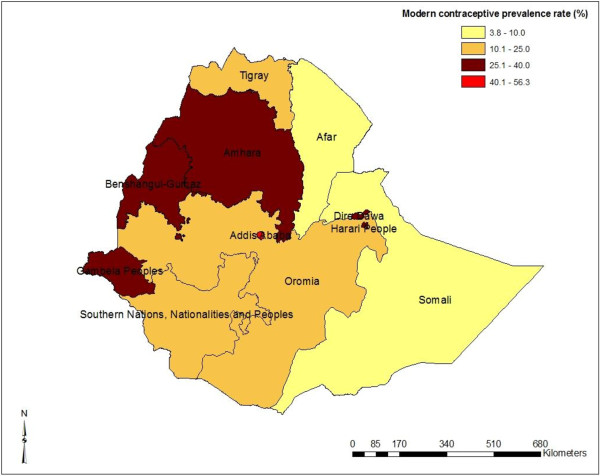
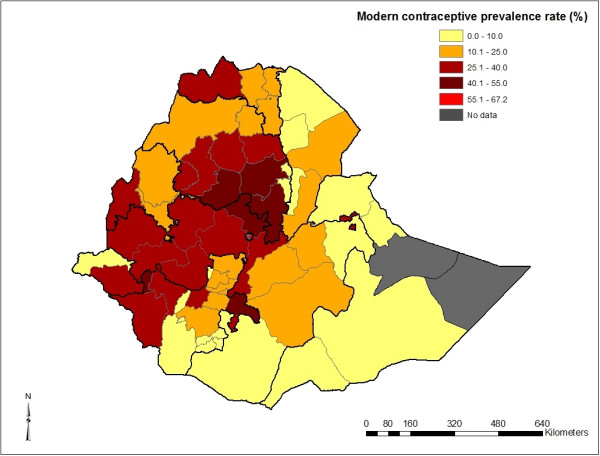
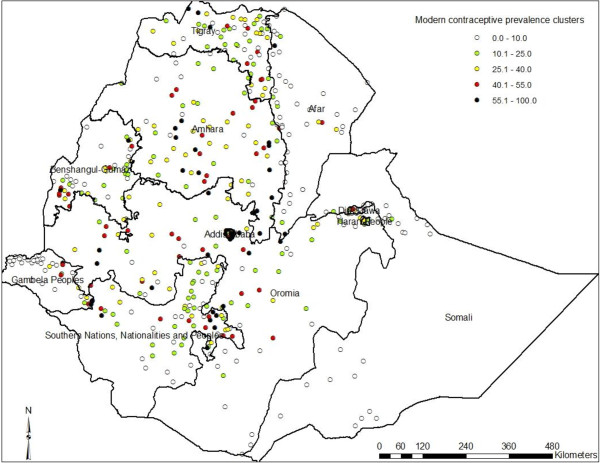
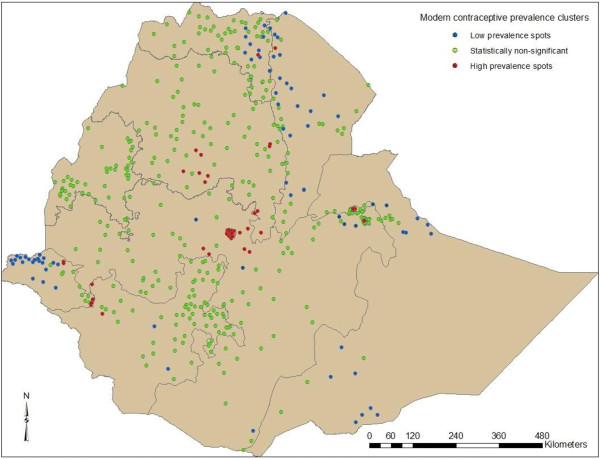
Results: Being wealthy, more educated, being employed, higher number of living children, being in a monogamous relationship, attending community conversation, being visited by health worker at home strongly predicted use of modern contraception. While living in rural areas, older age, being in polygamous relationship, and witnessing one's own child's death were found negatively influence modern contraceptive use. The spatial analysis of contraceptive use revealed that the central and southwestern parts of the country had higher prevalence of modern contraceptive use than that of the eastern and western parts.
Conclusion: The findings indicate significant socio-economic, urban-rural and regional variation in modern contraceptive use among reproductive age women in Ethiopia. Strengthening community conversation programs and female education should be given top priority.
Figures
References
-
- Central Statistical Agency [Ethiopia], and ICF International. Ethiopia Demographic and Health Survey 2011. Addis Ababa, Ethiopia and Calverton, Maryland, USA: Central Statistical Agency and ICF International; 2012.
-
- Central Statistical Authority and ORC Macro. Ethiopia demographic and health survey 2000. Addis Ababa, Ethiopia and Calverton, Maryland, USA: Central Statistical Agency and ORC Macro; 2000.
-
- Central Statistical Authority and ORC Macro. Ethiopia demographic and health survey 2005. Addis Ababa, Ethiopia and Calverton, Maryland, USA: Central Statistical Agency and ORC Macro; 2005.
-
- World Bank. World Development Indicators. Washington, DC: World Bank; 2009.
MeSH terms
Grants and funding
LinkOut - more resources
Full Text Sources
Other Literature Sources
Medical
