Review
. 2013 Sep 25:8:32.
doi: 10.1186/1750-1326-8-32.

Dominant optic atrophy, OPA1, and mitochondrial quality control: understanding mitochondrial network dynamics

Affiliations
Review

Dominant optic atrophy, OPA1, and mitochondrial quality control: understanding mitochondrial network dynamics

Marcel V Alavi et al. Mol Neurodegener. .

Abstract

Mitochondrial quality control is fundamental to all neurodegenerative diseases, including the most prominent ones, Alzheimer's Disease and Parkinsonism. It is accomplished by mitochondrial network dynamics - continuous fission and fusion of mitochondria. Mitochondrial fission is facilitated by DRP1, while MFN1 and MFN2 on the mitochondrial outer membrane and OPA1 on the mitochondrial inner membrane are essential for mitochondrial fusion. Mitochondrial network dynamics are regulated in highly sophisticated ways by various different posttranslational modifications, such as phosphorylation, ubiquitination, and proteolytic processing of their key-proteins. By this, mitochondria process a wide range of different intracellular and extracellular parameters in order to adapt mitochondrial function to actual energetic and metabolic demands of the host cell, attenuate mitochondrial damage, recycle dysfunctional mitochondria via the mitochondrial autophagy pathway, or arrange for the recycling of the complete host cell by apoptosis. Most of the genes coding for proteins involved in this process have been associated with neurodegenerative diseases. Mutations in one of these genes are associated with a neurodegenerative disease that originally was described to affect retinal ganglion cells only. Since more and more evidence shows that other cell types are affected as well, we would like to discuss the pathology of dominant optic atrophy, which is caused by heterozygous sequence variants in OPA1, in the light of the current view on OPA1 protein function in mitochondrial quality control, in particular on its function in mitochondrial fusion and cytochrome C release. We think OPA1 is a good example to understand the molecular basis for mitochondrial network dynamics.


Figures
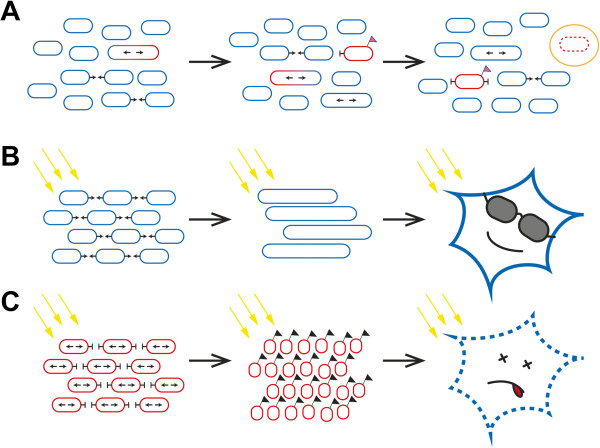
Figure 1
Figure 1
Basic role of mitochondrial network dynamics in cell maintenance termed mitochondrial quality control. Mitochondrial fission separates dysfunctional (red) from functional (blue) mitochondria. Refusion of dysfunctional mitochondria to the mitochondrial network is prevented and dysfunctional mitochondria are removed and recycled by mitochondrial autophagy (A). If a cell is stressed (yellow arrows in B and C), mitochondria fuse in order to protect themselves and to warrant that they are still functional (B). If the stress prevails, mitochondrial fusion is prevented, mitochondria fragment, and mitochondria signal their stressed host cell to undergo cell death thereby removing the whole cell from the organism (C).
Figure 2
Figure 2
Principle of mitochondrial quality control with focus on OPA1 function and its contribution to mitochondrial network dynamics. DRP1 recruitment to mitochondria is necessary and sufficient for mitochondrial fission. In healthy mitochondria there is a continuous equilibrium between mitochondrial fission (top) and fusion (left side). Dysfunctional mitochondria can be repaired and rescued by re-fusion to the mitochondrial network (not depicted for the sake of clarity). OPA1L and OPA1S (together with MFN1/2 on the mitochondrial outer membrane) are necessary and sufficient for maintaining fusion competent mitochondria. Fusion is prevented in dysfunctional mitochondria by proteolytic cleavage of OPA1L to OPA1S (right side). The best-characterized example of dysfunctional mitochondria so far is dissipation of the mitochondrial membrane potential (ΔΨm), which leads to proteolytic cleavage of OPA1L by OMA1. OPA1 cleavage, however, occurs under various conditions enabling the integration of various parameters into mitochondrial network dynamics. Higd-1a, for example, regulates mitochondrial network dynamics by binding to OPA1L and thereby inhibiting its proteolytic cleavage. Dissipation of the mitochondrial membrane potential activates in the long run also the PINK1/parkin pathway (pink flag), which targets dysfunctional mitochondria for mitochondrial autophagy. OPA1L counteracts cytochrome C release and cell death (black flag) and therefore acts anti-apoptotic. OPA1S (presumably together with BNIP3) is necessary to promote cytochrome C release and cell death. This outer membrane permeabilization might be independent or happen in cooperation with BAX and DRP1 dependent outer membrane permeabilization (dotted line). BNIP3 is also necessary for mitochondrial autophagy and therefore could play an important role in the decision whether to remove single dysfunctional mitochondria or to recycle the whole cell by undergoing cell death.
Figure 3
Figure 3
Molecular model of the dual function of OPA1 in mitochondrial inner membrane (IM) fusion and cytochrome C release and cell death. Membrane bound OPA1L and soluble OPA1S form a complex that is able to attract two mitochondrial membranes to enable inner membrane fusion (left) and cristae organization. Proteolytic cleavage of OPA1L to the soluble OPA1S allows the formation of OPA1S complex, which together with BNIP3 promotes mitochondrial outer membrane (OM) permeabilization, cytochrome C release, and cell death (right) by bringing the mitochondrial inner membrane in proximity to the mitochondrial outer membrane, thereby facilitating membrane hemi-fusion states that are energetic favorable for membrane permeabilization.

References

    1. Cho DH, Nakamura T, Lipton SA. Mitochondrial dynamics in cell death and neurodegeneration. Cell Mol Life Sci. 2010;67(20):3435–3447. - PMC - PubMed
    1. Piquereau J, Caffin F, Novotova M, Lemaire C, Veksler V, Garnier A, Ventura-Clapier R, Joubert F. Mitochondrial dynamics in the adult cardiomyocytes: which roles for a highly specialized cell? Front Physiol. 2013;4:102. - PMC - PubMed
    1. Grandemange S, Herzig S, Martinou JC. Mitochondrial dynamics and cancer. Semin Cancer Biol. 2009;19(1):50–56. - PubMed
    1. Wang W, Lu J, Zhu F, Wei J, Jia C, Zhang Y, Zhou L, Xie H, Zheng S. Pro-apoptotic and anti-proliferative effects of mitofusin-2 via Bax signaling in hepatocellular carcinoma cells. Med Oncol. 2012;29(1):70–76. - PubMed
    1. Gomes LC, Di Benedetto G, Scorrano L. During autophagy mitochondria elongate, are spared from degradation and sustain cell viability. Nat Cell Biol. 2011;13(5):589–598. - PMC - PubMed

MeSH terms
